
Will Robots Be Replacing Caregivers In The Future?
Caregiving stays human, while AI augments home care by automating admin, boosting compliance, speed, and satisfaction.

Sage Care Editorial
Content & Communications Team
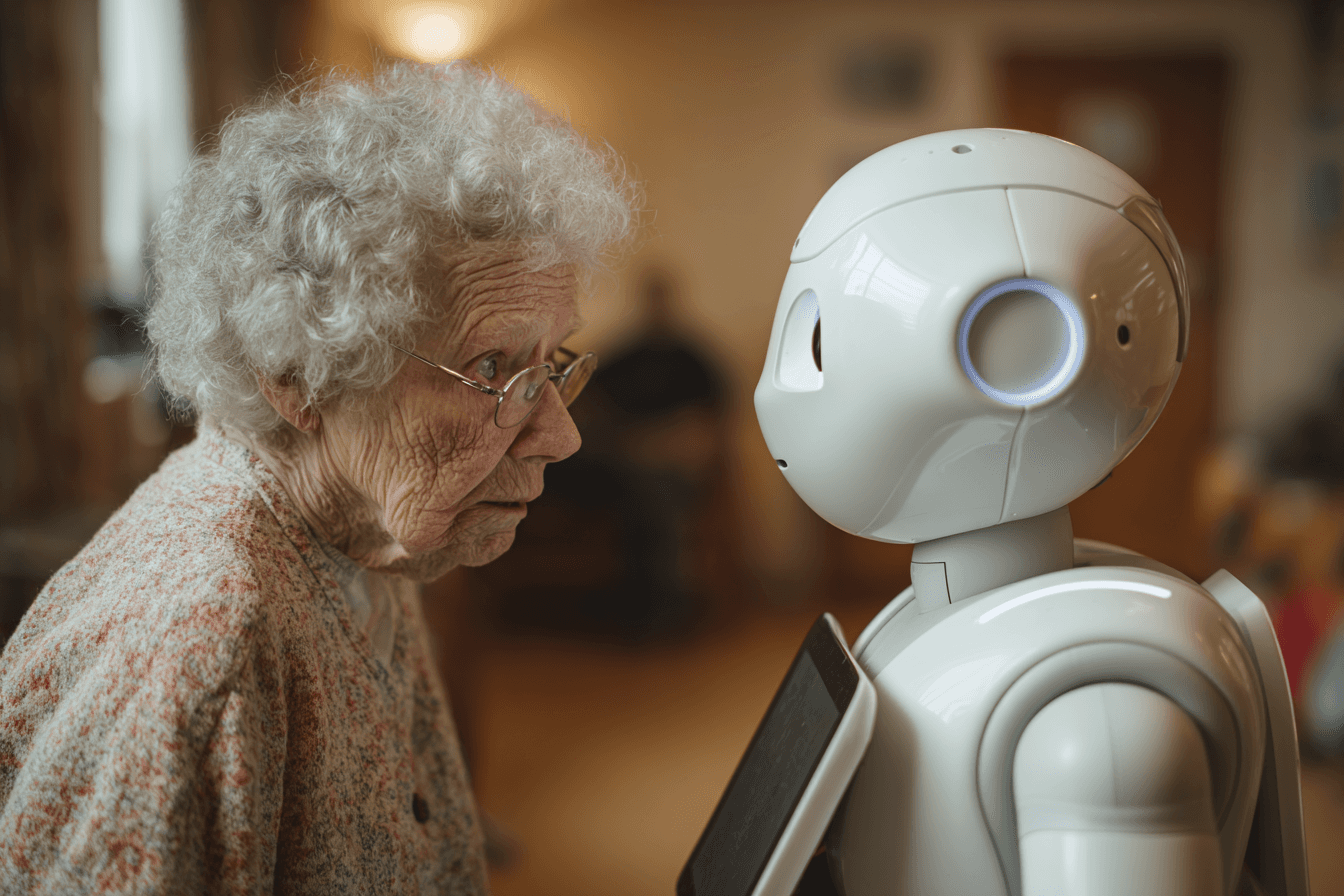
Caregiving is fundamentally human. Families don’t invite a robot into the home for reassurance at 2 a.m., advocacy at the doctor’s office, or the quiet dignity of helping a parent bathe. That said, automation is moving quickly, and the smartest home care agencies are already using technology to reduce administrative drag and elevate care. The future isn’t caregiver replacement; it’s caregiver augmentation—pairing people with tools that make them more present, more efficient, and more reliable.
Here’s what that looks like for a home care business today, and how it’s likely to evolve over the next five years.
Where automation actually helps right now
The biggest pain in home care isn’t the visit—it’s everything around it. Intake, scheduling, authorizations, EVV, care plan updates, shift changes, missed visits, family communications, incident reporting, and logging notes into EMRs. These workflows swamp staff time, create compliance risk, and fracture the client experience.
This is where home care software has matured. Modern platforms centralize scheduling and EVV, streamline payroll, and unify client records. Layer home care AI technology on top and you can automatically transcribe calls, summarize visit notes, flag compliance gaps, and route urgent issues to the right coordinator without the back-and-forth (for more about how Sage is automating the repetitive tasks of client intake that create busywork for staff and create friction for families, see here). Agencies aren’t replacing caregivers with robots—they’re replacing repetitive, error-prone tasks with automation so caregivers can focus on people.
What won’t be automated
Three things remain stubbornly human:
Empathy: The reason families choose home care is the human relationship. No algorithm can replicate trust built in the living room.
Judgment in the gray: Care is full of nuance—balancing a client’s preferences with safety, reading mood, deciding when to escalate. This is professional craft.
Advocacy: Guiding families through insurance, navigating providers, resolving conflicts. Clients rely on a human champion.
Robotics can assist with mobility, reminders, and monitoring; for instance, check out WellNuo's blog about living in a sensor-enabled home. But they won’t lead a difficult conversation about end-of-life wishes, de-escalate a confused client, or win over a skeptical daughter.
What will be automated
Expect steady gains in the back office and at the edges of care delivery:
Intake and triage: AI captures details across phone, web, and text, verifies coverage, proposes a care plan template, and books a consult slot that matches caregiver availability.
Scheduling precision: Dynamic matching of caregivers to clients based on skills, preferences, proximity, and overtime risk—updated in real time when shifts change.
Documentation and compliance: Automatic generation of visit summaries, incident forms, and EVV validations pushed directly into your EMR, with alerts for missing signatures or expiring authorizations.
Proactive monitoring: Pattern detection across vitals, notes, and no-shows to flag risk early—falls, medication adherence, or caregiver burnout—so coordinators can intervene.
Family communications: Consistent updates, visit summaries, and billing clarity delivered automatically, with escalation rules for urgent issues.
In practical terms, agencies will see fewer manual clicks, fewer missed details, and faster response times—without adding headcount.
How this changes the caregiver’s day
Caregivers benefit most when tools disappear into their workflow. Instead of texting coordinators, juggling paper, and rewriting the same notes, they speak naturally into a phone after a visit and the AI turns that into clean documentation, checks the care plan, updates the EMR, and notifies the family. Shift changes and instructions arrive clearly, with the right context. The result is higher job satisfaction and more time with clients.
For operators, this becomes a competitive advantage. Faster intake, tighter scheduling, better documentation, and happier families translate to higher conversion, stronger retention, and fewer compliance headaches. That’s the core of a scalable home care business.
Measure what matters
If you’re evaluating home care software or AI copilots, focus on outcomes over features:
Intake speed: Time from first contact to scheduled assessment.
Caregiver utilization: Fill rate, overtime avoidance, and travel time reduction.
Documentation completeness: Percentage of visits with compliant notes and EVV.
Family satisfaction: Update cadence and issue resolution time.
Revenue integrity: Reduced write-offs due to authorization or documentation errors.
AI should make these metrics predictably better within weeks, not months.
A pragmatic roadmap
You don’t need robots to modernize. Start with the highest-friction workflows:
Standardize intake and scheduling with templates and rules.
Automate documentation capture and EMR logging from phone calls, texts, and visits.
Implement alerting for compliance gaps and high-risk clients.
Unify family communications—one source of truth, automatically updated.
From there, add targeted monitoring and predictive risk scoring as your data matures. Keep change management simple: train coordinators first, then caregivers, and measure results quickly.
The bottom line: Technology won’t replace the heart of caregiving. It will remove the bottlenecks that keep your team from delivering it. Agencies that embrace home care AI technology will outcompete by being more responsive, more compliant, and more human—because their people have the time to be.
To see how an AI copilot can streamline intake, documentation, and communications for your home care business, schedule a demo today and learn about how Sage can help you grow your business.


