
How to Streamline Home Care Intake When You Are a Team of One
Running intake solo? Here's how to stay organized, respond faster, and convert more leads without burning out.

Sage Care Editorial
Content & Communications Team
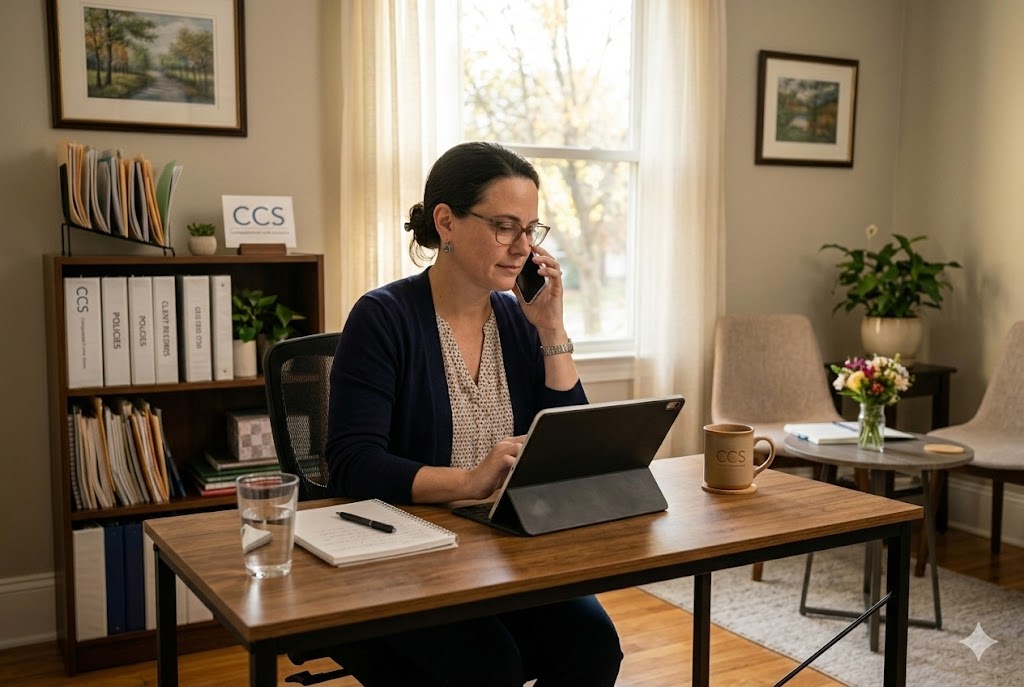
Most home care agency owners did not start their business to spend hours every day writing follow-up emails, re-entering contact information, and trying to remember which leads they called back last week. But that is exactly where a lot of solo operators end up.
When you are running intake alone, every inquiry matters. A missed callback or a delayed follow-up is not just an inconvenience. It is a client you did not convert, which means revenue you did not earn. The good news is that a learner intake process is not about working harder. It is about removing the steps that waste your time without adding value. Many solo operators find that the turning point comes when they stop trying to manage everything in their heads and move into a CRM system that tracks every lead, conversation, and follow-up in one place.
Why Solo Intake Is So Hard to Get Right
The Problem Is Not You. It Is the Process.
Running intake as a team of one means you are handling every part of the funnel simultaneously. You take the inquiry call, gather information, assess the family's needs, write up notes, send a follow-up email, update your records, and then do it all again for the next lead. Meanwhile, you are also scheduling, managing caregivers, and handling everything else the business needs.
The result is a process that works fine when volume is low and completely breaks down when things get busy. Leads fall through the cracks. Follow-ups go out late or not at all. Documentation is inconsistent. And the families you were hoping to convert end up choosing an agency that responded faster. This is not a discipline problem. It is a systems problem. And it has a practical solution.
Step 1: Define Your Intake Stages Clearly
Streamlining intake starts with knowing exactly what your intake process looks like from start to finish. Many solo operators have a general sense of their workflow, but have never written it down. Without a defined process, every inquiry gets handled slightly differently, which makes it impossible to identify where things are breaking down.
A basic home care intake workflow typically includes these stages:
Initial inquiry: Phone call, web form, or referral source contact
Needs assessment: Gathering information about the prospective client's care needs, schedule, and budget
In-home assessment: Meeting the family to evaluate fit and detail the care plan
Follow-up: Sending a summary, answering questions, and moving toward a signed agreement
Onboarding: Finalizing the care plan and transitioning to service delivery
Once you have defined these stages, you can start evaluating where time is being lost and which steps could be handled more efficiently. To understand which metrics to track at each stage, this breakdown of home care intake KPIs is a useful reference.
Step 2: Stop Relying on Memory and Paper
Build a Single System of Record
If your intake process lives across a combination of sticky notes, a spreadsheet, your email inbox, and your memory, you are going to lose things. That is not a reflection of your organizational ability. It is just what happens when information is scattered across multiple places.
A home care CRM gives you one place where every lead, contact, call, and follow-up lives. You can see at a glance which families are waiting for a callback, which assessments are scheduled, and which leads went quiet. That kind of visibility is not a luxury for a solo operator. It is what makes it possible to stay on top of a full pipeline without a team behind you.
The transition from spreadsheets to a proper CRM does not have to be complicated. The key is choosing a tool built for home care workflows rather than a generic sales CRM that requires extensive customization. Understanding what to look for in home care software before you commit to a platform will save you time and frustration.
Step 3: Cut the Time You Spend on Post-Call Admin
The Hidden Time Drain in Every Intake Call
Here is where most solo operators lose the most time without realizing it. The call itself might take 20 minutes. But the work that follows, writing notes, updating records, and drafting a follow-up email, sometimes takes just as long. Multiply that across five or ten inquiries per week and you are looking at several hours of admin work that could be spent on higher-value tasks.
AI-powered tools now handle a significant portion of this automatically. After a call or in-home assessment, the right platform can generate a structured summary, draft a follow-up email, and suggest care plan updates for you to review and approve. What used to take 20 to 30 minutes of focused writing can be completed in under five.
Solo operators using AI call summaries consistently report that faster documentation leads to faster follow-up, which directly improves their lead-to-client conversion rate. When the notes are already written and the draft email is ready to send, there is no reason to wait until tomorrow.
Step 4: Respond Faster Without Sacrificing Quality
Speed matters more in home care intake than most agency owners realize. Industry data consistently shows that families who reach out to multiple agencies tend to move forward with the one that responds first and follows up most consistently. For a solo operator competing against agencies with dedicated intake coordinators, response time is one of the few areas where you can actually close the gap.
A few practical ways to improve response speed:
Use call recording and transcription so you never have to re-listen to a full call to find a detail
Create email templates for common follow-up scenarios that you can personalize quickly
Batch your administrative work rather than interrupting every task to update records manually
Use AI-generated drafts as a starting point rather than writing every email from scratch
The goal is not to sound like a robot. It is to spend less time on the mechanical parts of follow-up so you can spend more time on the parts that actually require your judgment and your personality.
Step 5: Know When Manual Is Costing You More Than Software Would
There is a common assumption among small agency owners that managing intake manually is the budget-friendly option. In reality, the cost of manual processes shows up in slower response times, inconsistent follow-up, and leads that convert at lower rates. For a solo operator, those losses can be significant.
When evaluating whether a tool is worth the cost, the question to ask is not just what it costs per month. It is how many hours per week it saves you, and what you would do with those hours if you had them back.
Building an Intake Process That Scales With You
The intake workflow you build as a solo operator does not just affect your business today. It becomes the foundation that either supports your growth or creates a ceiling on it. Agencies that invest in clean, documented, technology-supported intake processes early find it much easier to onboard additional staff, bring on more clients, and operate consistently as they grow.
You do not need a large team to run a professional, efficient intake process. You need the right systems and the willingness to let go of the manual work that is slowing you down.
Ready to Simplify Your Intake Process?
Sage is built specifically for home care agencies that need to do more with a small team. After every call or assessment, Sage generates summaries, draft emails, and care plan updates that you review and approve in minutes, not hours. It also handles your CRM, call recording, and contact management in one HIPAA-compliant platform.
Schedule a demo to see how Sage works for solo operators. Sage offers a 30-day free trial so you can experience the difference before committing.
Frequently Asked Questions
What is the biggest intake mistake solo home care operators make?
Relying on memory and informal notes instead of a documented system. When volume increases, informal processes break down and leads get lost.
How much time should intake admin take after each call?
With the right tools, post-call documentation and follow-up drafting should take under five minutes. Without automation, the same work typically takes 15 to 30 minutes per call.
Do I need home care intake software if I only have a few leads per week?
Yes. Building good systems early makes it easier to scale. It also ensures you are not losing the leads you do have to slow follow-up or inconsistent documentation.


