From Sticky Notes to Structured Data: Using AI Call Summaries to Improve Client Acquisition
Turn chaotic intake notes into structured insights that fuel home care growth.

Sage Care Editorial
Content & Communications Team
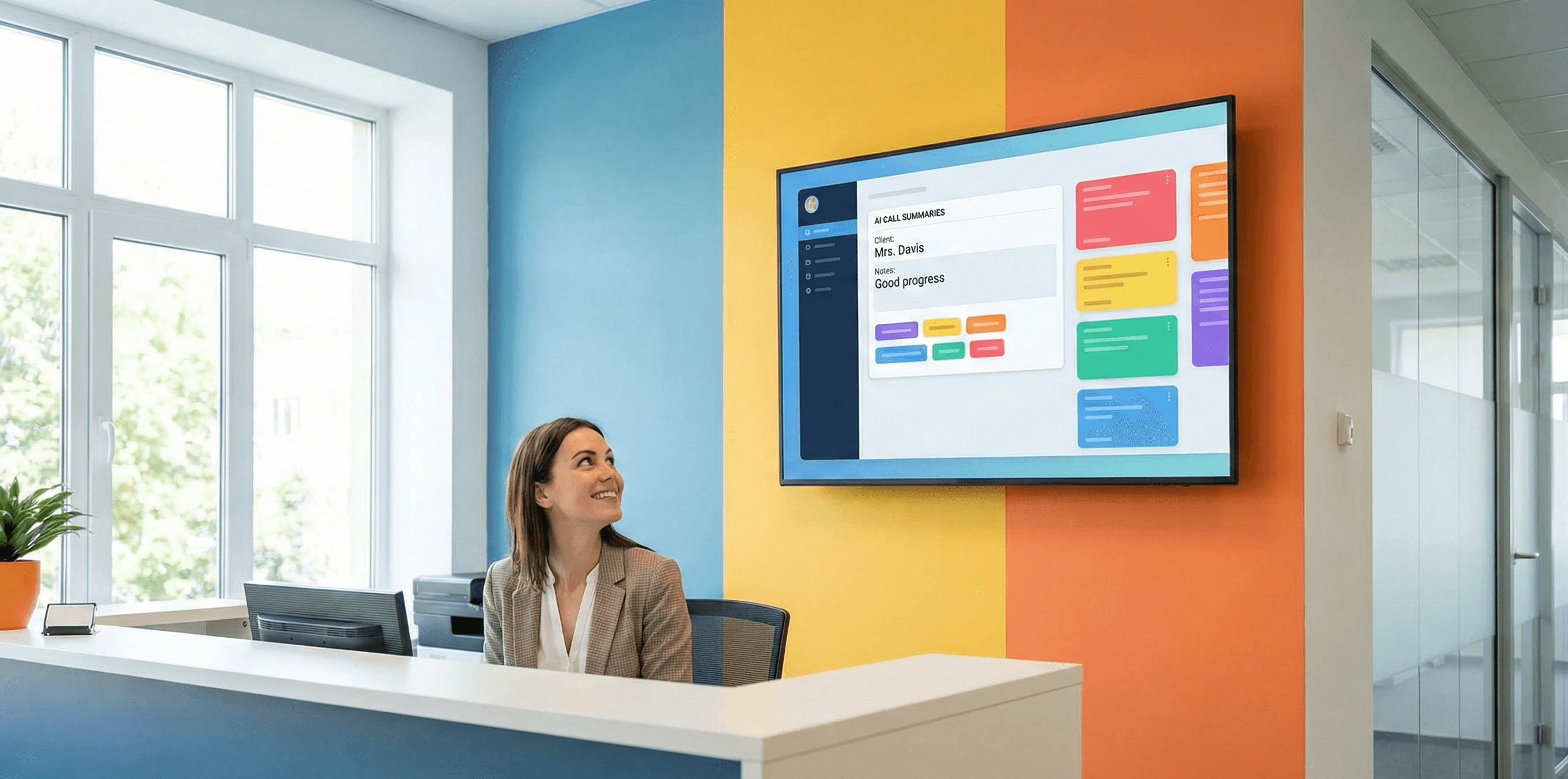
If you are like most home care agency owners, your intake notes live everywhere. A few scribbles on sticky notes. Half-filled spreadsheets. Call details are buried in staff email threads or on a whiteboard by the front desk. It works right up until it does not, when a hot lead slips through the cracks, a family never gets a promised follow-up, or you cannot explain why one referral source converts and another does not.
AI call summaries offer a way out of that chaos. By transforming every phone call into structured, searchable data, you can finally see what is really happening in your intake funnel and use those insights to grow your home care business.
Why unstructured call notes are holding your growth back
Most agencies still rely on manual note-taking during intake calls. Staff are juggling ringing phones, emotional families, and multiple systems, so it is no surprise that documentation is inconsistent. The result is a patchwork of partial details that makes it hard to:
Track which leads are high intent versus just browsing
Understand why some inquiries convert quickly while others stall
Ensure every caller gets a timely, personalized follow-up.
Train new intake coordinators on what good looks like
In other words, the information that should drive home care marketing and sales decisions is trapped in people’s heads or on pieces of paper. You might know anecdotally that evening and weekend calls are often urgent and high-value, but without structured data, you cannot prove it or build reliable processes around it.
For instance, if structured summaries show that 30 percent of your weekend calls are families needing care to start within 48 hours, but your team only returns those calls on Monday, you have identified a concrete revenue leak.
In a market shaped by rising responsiveness standards and changing consumer expectations across home care, qualifying those leads in real time and queuing up personalized follow-ups for your staff first thing in the morning can make a measurable difference.
What AI call summaries actually do
Modern AI technology in home care can listen to intake calls, transcribe the conversation, and automatically generate a concise summary that captures the key details. For home care software like Sage, that means pulling out fields such as:
Caller and care recipient details
Care needs and diagnoses as described by the family
Service preferences and timeframes
Budget or funding source
Objections, concerns, and questions
Next steps and follow up commitments
Instead of a free-form paragraph, you get structured data that fits neatly into your CRM or a well-configured agency management system for home care. Your team still reviews and uses this information, but they do not have to start from a blank page or rely on memory.
With Sage, those call summaries are created by an AI receptionist that already handled the conversation. It answers common service questions, gathers intake details, and moves prospects down the sales funnel 24/7, then turns that interaction into usable data for your staff.
From conversations to insights: how structured data boosts client acquisition
Once you summarize and structure every call, you can begin to ask more insightful questions about your home care marketing and intake performance. For example:
Which referral sources consistently bring in high-urgency, high-value cases
What times of day generate the most bookable assessments
Which questions or objections show up in calls that do not convert
How long does it typically take from the first call to a signed service agreement
This is where AI technology in home care becomes a practical growth lever rather than a buzzword. You are no longer guessing why certain months are strong and others are slow. You can see patterns and adjust.
To see which intake and conversion numbers high-growth agencies actually track, read more about the key performance indicators that matter most in home care.
Improving follow-up without adding more admin work
Even when agencies do capture useful call notes, it often takes 90 minutes or more to complete the follow-up. Writing emails, updating systems, drafting care plans, and coordinating internal handoffs all add up. That delay can cost you the case if another provider responds faster.
Because Sage turns each intake into structured data, it can also power downstream automation in a safe, non-clinical way. Sage’s integrated assistant can:
Draft personalized follow-up emails based on the conversation
Generate non-clinical care plan outlines that your team can refine
Sync intake details back into your home care software or agency management system
Your staff stays firmly in control of decisions and client relationships, but they do not have to spend their day retyping information from call notes into multiple systems. Many agencies using Sage reduce intake admin from over 90 minutes to under 15 while actually improving response times.
Keeping the human at the center of care
It is important to be clear about what AI call summaries and a virtual receptionist cannot do. Sage is not a replacement for your intake team and it is not a clinical tool. It does not:
Provide medical advice or make clinical decisions
Replace licensed professionals or clinical judgment
Handle scheduling, caregiver recruitment, compliance, billing, or internal HR
If you are evaluating these tools from a leadership perspective, you can discover more about using AI responsibly in home care operations and what that means for privacy and compliance.
Instead, Sage is designed to scale your existing team. It gives you always-on coverage so no inquiry goes unanswered and provides clean, structured data so your staff can focus on higher value, high-touch work, reassuring families, building trust, and crafting the right care solution.
Turning data into a competitive advantage
In a market where most families expect a response within an hour and many choose their provider based on responsiveness, being first and most prepared matters. Agencies that treat intake calls as a rich source of structured data rather than a series of one off conversations have a clear edge.
When every call becomes a standardized record, you can:
Design more targeted home care marketing campaigns based on real questions families ask
Train staff using examples of top performing calls surfaced by your data
Forecast staffing and capacity needs based on actual demand patterns
Demonstrate responsiveness and professionalism to referral partners with clear metrics
The technology behind this does not have to be complicated. With Sage, you can set up an off-hours, HIPAA-compliant AI receptionist in minutes, have it handle calls when your team is busy, and immediately start building a clean dataset that supports better decisions.
Bringing it all together
Moving from sticky notes to structured data is not about chasing the latest tool. It is about making sure that every family who reaches out to your agency is heard, responded to quickly, and guided through a consistent, professional intake experience. AI call summaries are simply the mechanism that turns those conversations into fuel for predictable, scalable growth.
If you are ready to turn more first calls into long-term clients and give your team more time for the human side of care, schedule a demo today to learn more about how Sage can help you grow your business.


