How Small Home Care Businesses Are Using AI Receptionists to Look Big and Stay Personal
How AI receptionists help small home care agencies look bigger while staying personal.

Sage Care Editorial
Content & Communications Team
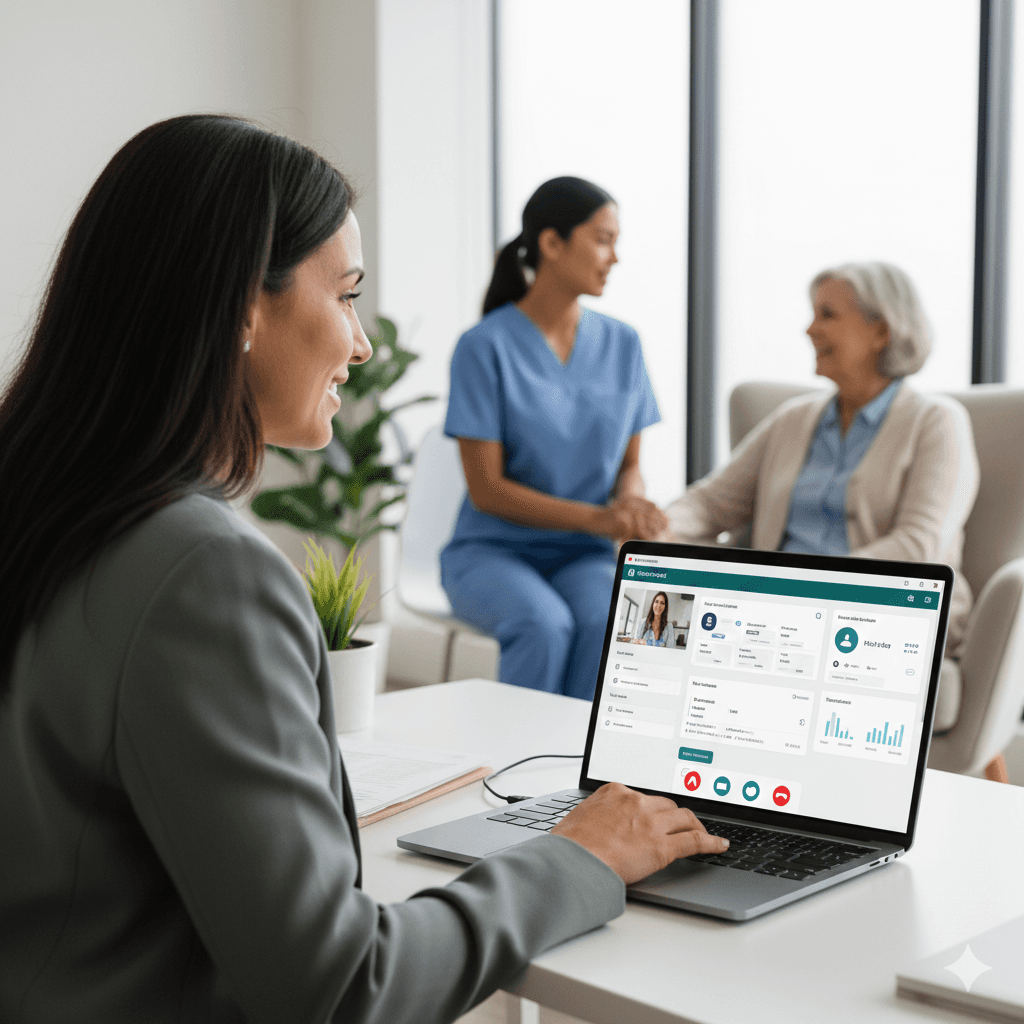
Running a small home care business is a balancing act. You want every family to feel known, heard and cared for, yet you are constantly juggling staffing, scheduling, compliance and marketing. When the phone rings, it is often a high-stakes moment for a worried daughter or spouse. If you miss that call, they rarely try again. They move on to the next agency.
That is exactly where AI receptionists are starting to change the game. Used well, AI technology in home care can help small agencies appear as responsive and professional as large franchises, while still feeling local and personal. Instead of replacing your team, the right tools act like a highly trained, always-on extension of your office.
In this article, we will walk through how small agencies are using AI receptionists to make them look bigger, stay more personal, and grow more reliably.
The new bar for responsiveness
Families of today have become accustomed to instant service from banks, airlines, and online retailers, and this shift in consumer expectations is also impacting home care services.
They bring the same expectations to their search for a home care provider. Industry-wide, 81 percent of consumers expect a response within an hour, and about 30 percent choose their provider based on responsiveness alone. If your agency only reliably answers calls during business hours, you are already behind.
For small agencies, this is especially painful. You do not have the budget for a full call center or overnight staff, yet referrals often come in the evenings and weekends when adult children are finally off work and have time to research options. A single missed call can mean thousands of dollars in lost monthly revenue and a family left without support.
AI receptionists are helping home care businesses close that gap by ensuring that no inquiry goes unanswered, even when your team is in the field or the office is closed.
How AI receptionists work in a home care setting
Modern AI receptionists are different from the basic answering services of the past. Instead of taking messages and promising a call back, they can actually handle real intake conversations.
For example, Sage is a HIPAA-compliant home care software designed specifically for client intake. It can answer your phone 24 or 7, during off hours, when your office staff is already on another line, or as a safety net if your internet or phone system glitches. When someone calls, Sage greets them in your agency’s voice, asks thoughtful questions about their loved one and documents everything in a structured format.
Because Sage is built using AI technology specifically for home care, it can do more than simple scripting. It can answer common service questions, explain your service area, describe the types of caregivers you employ and clarify basic pricing ranges based on your guidance. It moves callers down your sales funnel instead of letting them drift away to competitors.
Small agencies use this to project the reliability of a much larger operation. Callers hear a confident, consistent, professional receptionist every time they dial, whether it is at 10 am on a Tuesday or 9 pm on a Sunday.
To understand how the underlying phone infrastructure supports this kind of always-on experience, you can learn more about what a VoIP provider is and why home care agencies need one.
Looking big without becoming impersonal
A common fear is that AI will make a home care business feel cold or robotic. The reality is that many agencies are using AI receptionists to become more human, not less.
Here is why. When intake staff are stuck in repetitive admin work, they have less bandwidth for genuine connection. They are worrying about getting every detail entered correctly into the agency management system, drafting follow up emails and creating basic care plan notes. It is hard to be fully present with a grieving son or an overwhelmed spouse while also doing data entry in the background.
Sage tackles that administrative load. Agencies can pair the virtual receptionist with an integrated AI assistant that drafts personalized follow up emails, generates care plan summaries and syncs everything back to their home care software. Intake that used to take 90 plus minutes can drop to under 15.
That time savings is not just an efficiency win. It is what allows owners and care coordinators to slow down and have deeper conversations with the highest intent families. The AI receptionist handles the initial call, captures the basics and books a consultation. Your team steps in for the parts where human empathy and clinical judgment matter most.
In practice, this looks like more eye contact during meetings, more thoughtful care planning and fewer rushed phone callbacks.
Turning every call into a real opportunity
One of the biggest advantages of AI technology in home care is consistency. Humans have good days and bad days. Phones get set to silent. People get sick. A small team can only do so much. As competition intensifies, market saturation in California is making responsiveness and consistency critical differentiators for small agencies.
An AI receptionist, by contrast, never forgets to ask for an email address, never skips a key intake question and never fails to log the source of a lead. Over time, this creates a clean, reliable dataset about your inquiries. You can see which referral partners are sending you the best-fit clients, which marketing campaigns lead to booked assessments and what kinds of services are most in demand.
Home care marketing becomes less guesswork and more data-driven. Instead of just hoping your new postcard campaign worked, you can point to specific calls that came in, how quickly they were handled and whether they turned into clients.
Small agencies are using this to refine their messaging, adjust their service mix and prioritise the partnerships that actually drive growth. Strong intake consistency also supports referrals; to understand how agencies systematize this, read this guide on growing a referral pipeline for home care agencies.
Making setup realistic for small teams
A tool is only valuable if a busy owner can realistically get it off the ground. The most effective AI tools for home care businesses respect that reality. Choosing tools built for the realities of home care and using AI responsibly in home care operations allows agencies to modernize intake while maintaining privacy, compliance, and family trust.
Sage can be set up in minutes. You define your basic script, key FAQs, service area and scheduling rules. From there, you decide when you want the AI to answer. Many small agencies start by routing after-hours calls first. Once they build trust with the system, they expand to overflow during the day or use Sage as a full time receptionist with staff as backup.
Because Sage is designed as home care software and not a generic contact center tool, it comes with templates and workflows that reflect real world home care operations. You are not starting from a blank page.
This kind of structure also makes it easier for small teams to monitor metrics for home care performance, such as response times, inquiry volume, and conversion rates, as they grow.
Staying compliant and building trust
For any home care agency, privacy and compliance are non-negotiable. Families share sensitive information about health, finances, and living situations. You need technology that treats that information with the same care you do.
Sage is built to be HIPAA compliant and to integrate smoothly with existing agency management systems. That means intake details flow into your existing record-keeping rather than living in a separate, risky system. It also reduces manual copying and pasting, which is often where errors and privacy risks creep in.
When families experience quick, professional, confidential responses from your agency, it builds trust from the first interaction. You come across as both modern and deeply caring, which is exactly the combination that sets winning agencies apart.
Final Words
AI receptionists are not about turning your home care business into a faceless machine. They are about giving small teams the tools to show up like the responsive, reliable, professional providers they already strive to be.
By ensuring that every call is answered, every inquiry is documented, and every family receives timely follow-up, AI technology in home care helps you:
Capture more high-intent leads
Free your staff to focus on human connection
Improve the quality and consistency of your intake
Make smarter home care marketing and growth decisions
If you are ready to see how an AI receptionist could fit into your own agency’s workflow, schedule a demo today to learn more about how Sage can help you grow your business. You can schedule a demo to see Sage in action with your real-world scenarios.


