Offshore Virtual Assistant vs AI Receptionist for Home Care Agencies
How AI receptionists and offshore VAs really compare for home care agencies.

Sage Care Editorial
Content & Communications Team
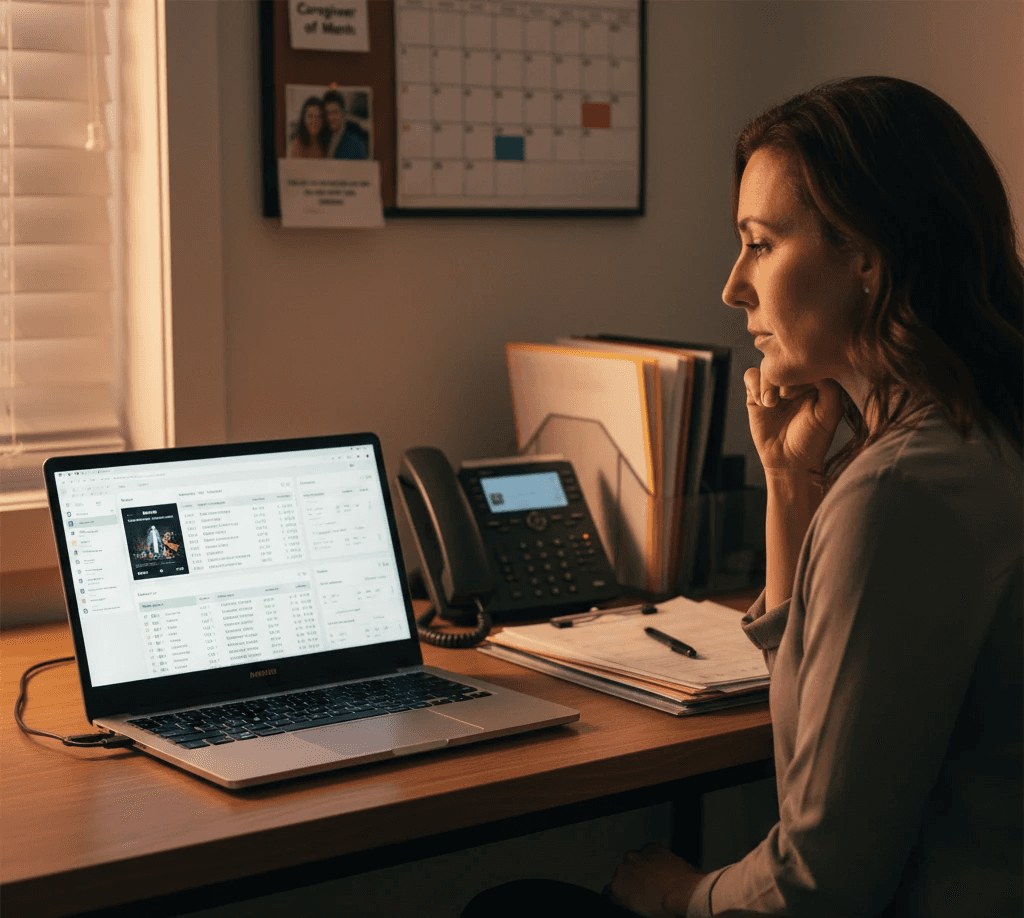
As home care agencies grow, one operational challenge becomes unavoidable: handling inbound calls without losing leads or overwhelming staff. Missed calls, slow follow-ups, and inconsistent intake documentation quietly drain revenue and damage trust with families.
To solve this, many agencies consider two options: hiring an offshore virtual assistant or implementing an AI receptionist. While both aim to improve responsiveness, they work in very different ways, and those differences matter in today’s competitive home care landscape.
This article breaks down offshore virtual assistants versus AI receptionists so home care leaders can decide which approach best supports growth, compliance, and family experience.
Why Responsiveness Has Become a Growth Lever in Home Care
Families searching for home care are often under stress and short on time. They rarely wait for callbacks. Instead, they contact multiple agencies and move forward with whoever responds first and inspires confidence.
This shift is not anecdotal. Consumer expectations are reshaping home care services, changing the intake process from a back-office function into a frontline growth driver. Speed, clarity, and professionalism now directly influence which agency earns the business.
At the same time, increased competition means agencies can no longer rely on reputation alone. In many regions, market saturation in non-medical home care is forcing providers to differentiate through responsiveness and experience rather than availability of services alone.
What Is an Offshore Virtual Assistant for Home Care Agencies?
An offshore virtual assistant (VA) is a human worker, typically based outside the U.S., who supports administrative tasks remotely. In-home care, offshore VAs are often hired to:
Answer phones during scheduled hours
Return voicemails
Enter intake details into systems
Send basic follow-up emails
Where Offshore Virtual Assistants Can Be Effective
For agencies with predictable call volume and clearly defined scripts, offshore VAs can provide affordable administrative support. They can reduce workload for local staff and help manage routine tasks during business hours.
However, offshore VAs still function like any human employee: they work shifts, require training, and are limited by availability, turnover, and handoffs.
The Limitations of Offshore Virtual Assistants for Intake
Offshore virtual assistants can extend your intake hours, but they still miss calls during spikes, need ongoing training, and often deliver inconsistent caller experiences. They also introduce added risks around HIPAA compliance in home care, especially with data access and quality control, that agencies must constantly monitor and manage.
Coverage Gaps and Delays
Even with careful scheduling, offshore VAs rarely provide true 24/7 coverage. Nights, weekends, and holidays, when many families actually call, often still lead to voicemail or delayed responses.
Inconsistent Intake Documentation
Different VAs may capture different details, summarize calls differently, or miss qualifying information altogether. Over time, this inconsistency creates fragmented records that are difficult to analyze or act on.
Scaling Becomes a Management Problem
As call volume increases, scaling an offshore VA team means hiring, training, and supervising more people. For owner-led agencies, this quickly becomes another operational bottleneck.
What Is an AI Receptionist in a Home Care Setting?
An AI receptionist is a voice-based system designed to answer calls automatically, conduct intake conversations, and capture structured data, without replacing your human team.
An AI receptionist like Sage functions as an always-on first point of contact, answering calls 24/7 when staff are busy, unavailable, or off-hours.
Unlike offshore VAs, AI receptionists are not constrained by shifts or call spikes. Every caller receives the same consistent, professional intake experience.
Offshore Virtual Assistant vs. AI Receptionist: Key Differences
The key difference between offshore virtual assistants and AI receptionists is how they handle scale, consistency, and compliance.
Availability and Coverage
Offshore Virtual Assistant: Limited to scheduled hours
AI Receptionist: Always available, including nights and weekends
Consistency of Intake
Offshore Virtual Assistant: Varies by individual and workload
AI Receptionist: Standardized intake questions every time
Speed of Response
Offshore Virtual Assistant: May return calls later
AI Receptionist: Answers immediately
Scalability
Offshore Virtual Assistant: Requires hiring and management
AI Receptionist: Scales automatically with demand
Why Structured Call Data Is the Real Advantage of AI
One of the biggest differences between offshore VAs and AI receptionists is what happens after the call ends. AI receptionists generate structured call summaries that capture:
Caller type and urgency
Care needs and start timelines
Location and service coverage
Budget signals and decision factors
This structured data integrates directly into your home care software. When supported by a well-designed agency management system for home care, intake becomes faster, clearer, and more actionable for your team. Instead of chasing notes or listening to recordings, staff start follow-ups with full context.
Faster Follow-Up Without Losing the Human Touch
AI receptionists do more than answer phones. When paired with AI-assisted workflows, agencies can:
Draft personalized follow-up emails based on actual intake conversations
Prepare staff before callbacks
Reduce intake admin time from over 90 minutes to under 15
This blend of automation and human oversight allows teams to respond quickly while preserving empathy and judgment.
Using Intake Data to Strengthen Marketing and Referrals
Every intake call contains valuable insight into what families care about most. When calls are summarized consistently, agencies gain real voice-of-the-customer data that informs:
Website messaging
Blog content and FAQs
Campaigns targeting high-demand services
Strong intake systems also support growing a referral pipeline for home care agencies by ensuring every referral inquiry is handled consistently and professionally. To understand how this works in practice, read this guide on building a referral program that grows your home care agency.
Measuring Performance From Call to Client
Structured intake data makes it possible to track meaningful performance metrics such as:
Inquiry volume by time and source
Conversion from call to assessment
Responsiveness impact on outcomes
Without this structure, tracking KPIs in home care becomes guesswork. With it, agencies can see exactly where growth is being won or lost.
Privacy and Compliance in AI-Driven Intake
Any technology touching client information must meet strict standards. Evaluating AI in home care operations requires understanding both operational impact and compliance considerations.
AI receptionists built for home care are designed to be HIPAA-compliant, protecting sensitive information while supporting intake efficiency. Importantly, AI does not replace licensed professionals or make clinical decisions, it supports administrative workflows at scale.
Which Option Makes Sense for Your Agency?
An offshore virtual assistant can be helpful for agencies with low call volume and predictable needs. But for agencies focused on growth, responsiveness, and operational clarity, an AI receptionist offers a more scalable and consistent solution.
Final Takeaway
If you already have strong systems and just need additional hands for general office work, an offshore VA may still play a role. The key is to reserve human work capacity that truly benefits from human judgment and connection, such as care consultations, family meetings, and relationship building with referral partners.
For most growing agencies, AI technology in home care is not about replacing people. It is about extending your reach, standardizing your intake process, and freeing your staff to focus on the human side of care.
To see how a HIPAA-compliant AI receptionist designed specifically for home care can help you capture more leads and reduce intake admin time, schedule a demo today to learn more about how Sage can help you grow your business.


