What Is An In-Service (Lunch & Learn) In Home Care Marketing?
In‑services build trust and streamline handoffs to drive higher‑quality referrals.

Sage Care Editorial
Content & Communications Team

An in‑service — often called a lunch and learn — is a focused, on‑site presentation you deliver to potential referrers to educate them about your services and demonstrate how you make their work easier. Think discharge planners, social workers, senior living teams, and therapy practices. Done well, an in‑service builds trust, differentiates your home care business, and drives high‑quality referrals. (For more on building a referral strategy see this blog on "How to build a referral program that grows your home care agency".)
Why in‑services work
In‑services meet referrers where they are. Instead of a cold email or a brochure drop, you offer practical education tailored to their daily challenges. You position your agency as a partner who reduces friction for their staff and improves outcomes for their patients or residents. When you align your message with their priorities — speed to start of care, reliable communication, clean documentation, and minimal callbacks — referrals follow.
Credibility: You show process maturity and clinical alignment, not just marketing claims.
Memorability: Face‑to‑face education plus leave‑behind materials keeps you top of mind.
Utility: Teams walk away with usable resources, not generic pitch decks or promises.
What to include in your first in‑service
Aim for a crisp 20 to 30 minute session with clear, visual materials. Structure it around how you help the referrer’s workflow, then show proof.
1. Problem framing: The typical handoff pain points — delays, incomplete documentation, family confusion, missed follow up.
2. Your service model: Eligibility, care plans, start‑of‑care speed, geographic coverage, after‑hours support.
3. Communication standards: How and when you update referrers, families, and facilities. Provide sample touchpoints.
4. Documentation and compliance: What your packets include, how you maintain accuracy, and your HIPAA safeguards.
5. Outcomes and evidence: Short case studies, timeliness metrics, satisfaction scores, readmission reductions where applicable.
Bring printed flyers and one‑page workflows, plus a QR code to your intake form. Make materials easy to photocopy or attach to discharge packets, and make sure you leave some business cards with your headshot on it. Keep design clean and legible.
Positioning your differentiation
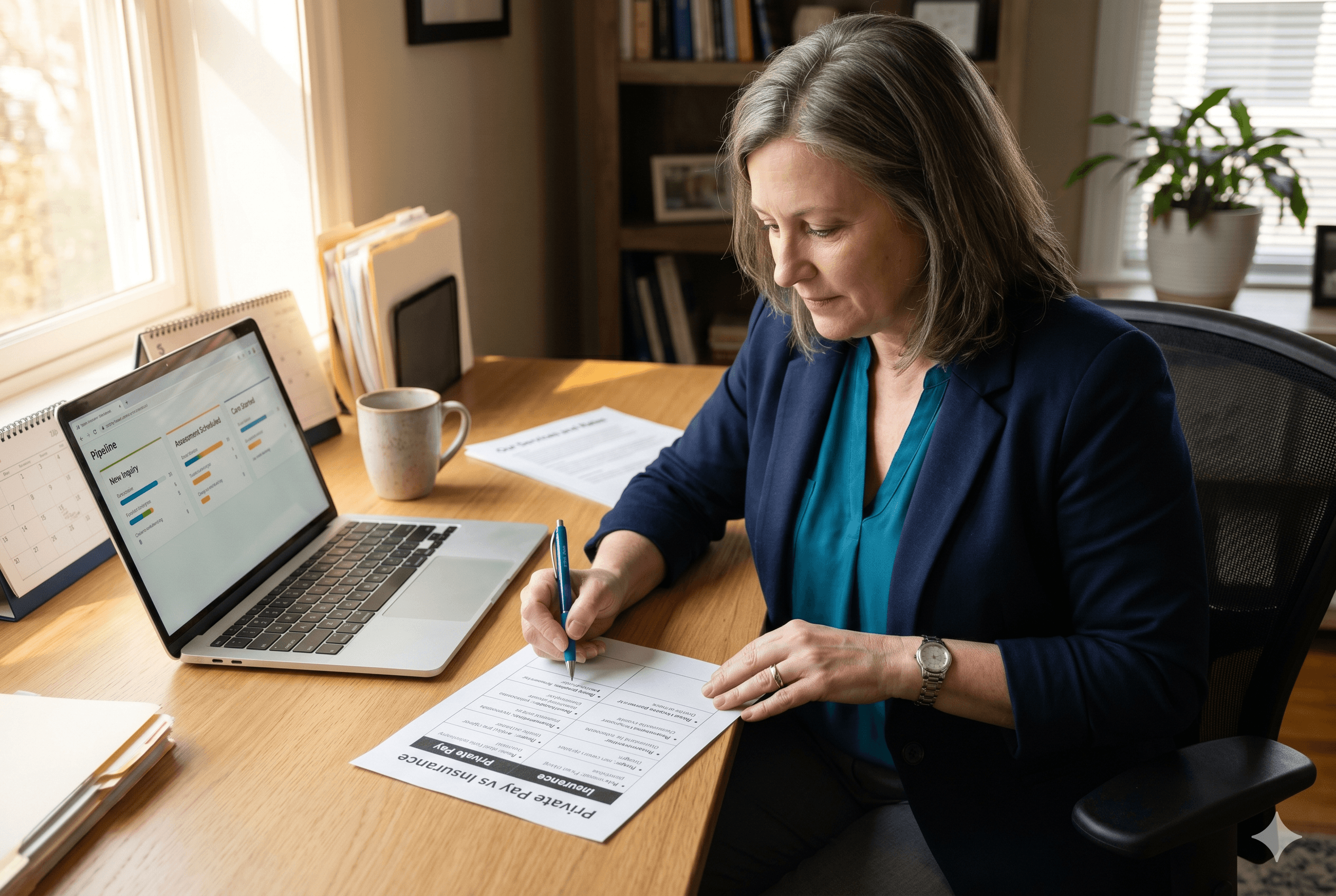
Most agencies promise reliability. Your job is to prove it with specific systems. If your team uses home care software to standardize intake and scheduling, show the flow. If you leverage technology for documentation audits and timely follow up, explain how that reduces errors and speeds communication. Referrers care less about the buzzwords and more about whether their staff will spend fewer minutes chasing updates and fixing paperwork.
Beyond the intro: educational in‑services and resident activities
After your initial overview, rotate topic‑based in‑services that educate teams and directly support their operational needs. This is where marketing becomes community and trust building.
Care team training: Safe transfers, dementia communication strategies, family expectations setting, falls risk screening.
Administrative support: Documentation best practices, discharge packet checklists, HIPAA refresher, incident reporting flow.
Resident and family sessions: Brain health activities, mobility classes, caregiver respite planning, benefits navigation.
Keep each session practical with templates, checklists, and handouts. Track attendance and share a short recap afterward with any promised resources.
Execution tips
Secure the slot: Offer lunch and handle the logistics. Confirm AV needs and attendee list.
Design for visual learners: Diagrams of workflows beat text‑heavy slides.
Timeboxing: 20 minutes presentation, 10 minutes Q&A. Respect their schedule.
Local proof: Use case studies from nearby partners whenever possible.
Leave‑behind clarity: A single sheet with services, coverage, intake steps, and contact.
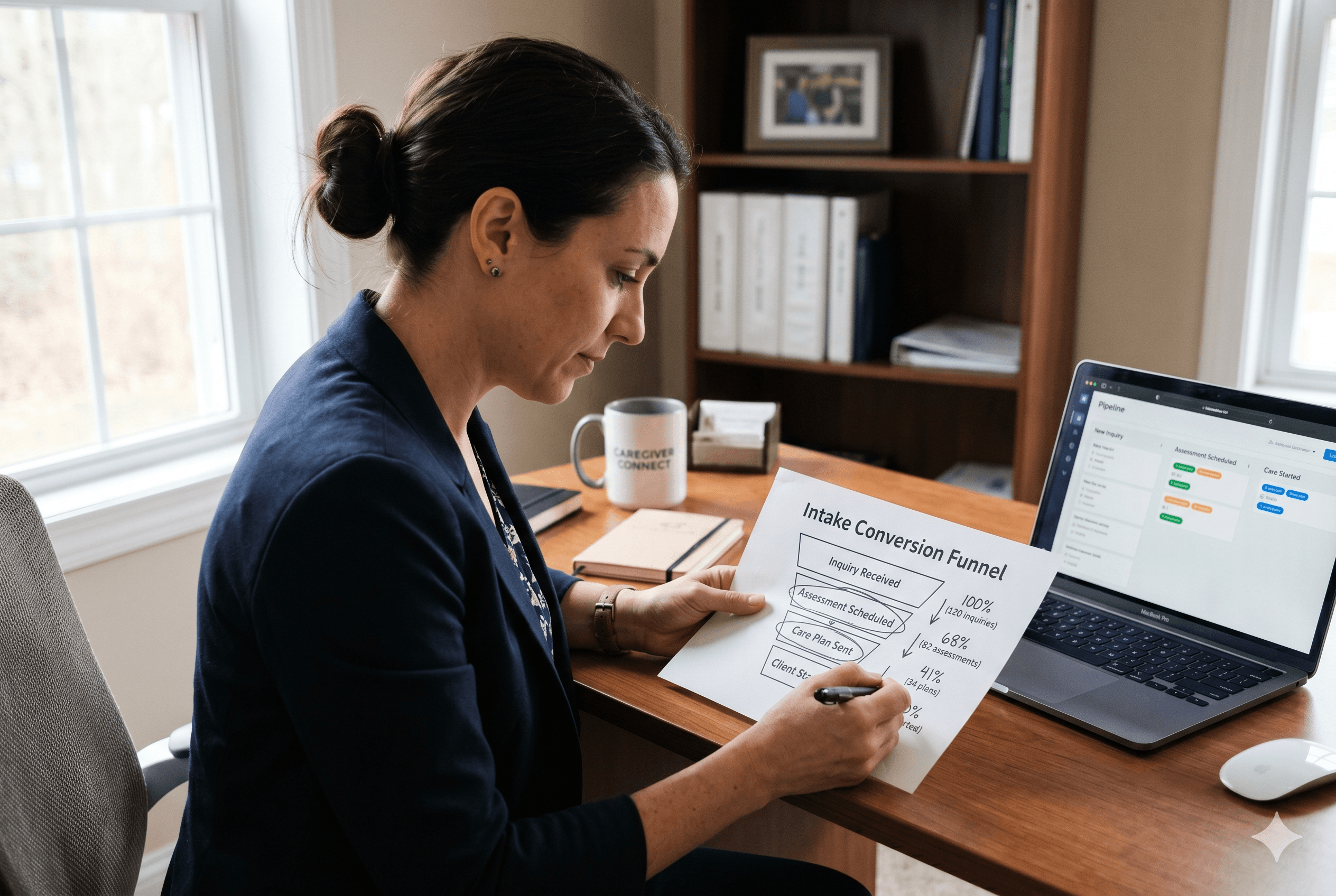
Track each in‑service like a campaign within your home care marketing efforts. Record attendees, follow ups, and resulting referrals. Send a concise thank you with materials, your intake link, and a standing offer for future training topics.
Measure what matters
Outcome‑oriented metrics will keep your in‑services sharp and defensible:
Attendance and role mix — are you getting decision makers and frequent referrers.
Referral quality — appropriateness, conversion to start of care, and time to start.
Communication friction — fewer clarification calls or documentation resubmissions.
Satisfaction — quick pulse checks from staff and families after transitions.
Use these insights to refine your content and cadence. Agencies that treat in‑services as a program, not a one‑off, build durable referral pipelines and stronger community relationships.
Why in-services supercharge your top of funnel
An in-service is one of the highest-ROI ways to open relationships with facilities. You get facetime with the care team, show your expertise, and earn trust — so when a new need arises, you’re top of mind. And when that first intake comes through, Sage closes the loop.
It automates updates back to the referrer, confirms key milestones, and keeps communication tidy and on time. The result: referrers feel informed and respected, patients feel cared for, and your agency stands out as the partner that follows through. That’s how one in-service turns into steady referrals — not just a one-off.