What Families Actually Want When They Call a Home Care Agency for the First Time
What families really look for in that first home care agency phone call

Sage Care Editorial
Content & Communications Team
When a family member picks up the phone to call a home care agency for the first time, they are rarely in a calm, research mode. More often, they are exhausted, overwhelmed, and quietly afraid. Maybe a parent just had a fall. Maybe a hospital discharge came faster than expected. Maybe they have been quietly worrying for months and finally worked up the nerve to ask for help.
That first call is one of the most emotionally loaded moments in the entire client relationship. How your agency shows up in that moment determines whether a family moves forward with you, or quietly calls the next agency on the list.
Many agencies lose leads not because their services are inferior, but because their intake process fails to meet families where they are emotionally. If you are working to build a more consistent intake workflow, understanding what families actually need in this moment is the right place to start.
They Want to Feel Heard Before They Hear Your Rates
This is the single most common mistake agencies make on intake calls: jumping too quickly into logistics. Families are not ready to hear about your caregiver vetting process or your service tiers in the first two minutes of a call. What they need first is acknowledgment.
They need to feel that the person on the other end of the phone understands that this is hard, that asking for help took courage, and that their loved one matters as an individual, not as a billing unit.
Practically, this means your intake calls should start with open-ended questions and genuine listening before moving into information gathering. Ask what prompted the call today. Ask how their loved one is doing. Let them talk.
This is not just good bedside manner. It directly affects conversion. Families who feel rushed or processed during a first call are unlikely to move forward, even if your services are competitive on price.
They Want Clarity, Not a Sales Pitch
Once a family feels heard, they do want information. But they want it delivered simply and honestly, not as a polished pitch.
The questions families most commonly ask on a first call include:
How quickly can care start?
Who will actually be coming into our home?
What happens if the caregiver does not show up?
Is this covered by insurance or Medicare?
What does this typically cost?
Notice that none of these are about your agency's history or awards. They are practical, grounded concerns from people trying to make a stressful decision with incomplete information.
Your intake team should be ready to answer these questions directly. Vague or overly qualified answers erode trust fast. If you do not know the answer to something yet, say so and commit to following up. That honesty builds more confidence than a polished non-answer.
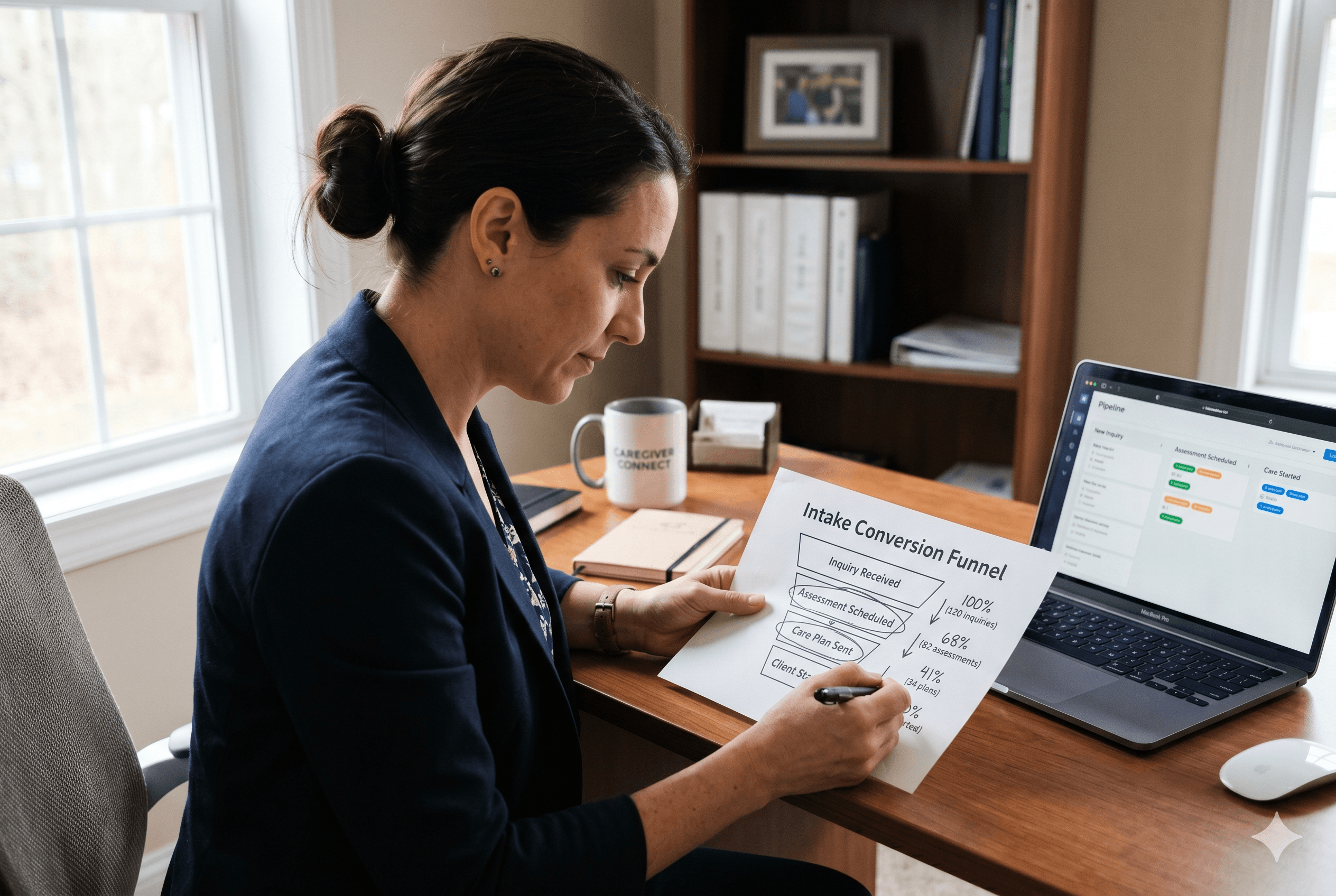
Tracking which questions come up most often in intake calls is a habit that pays off over time. Understanding patterns in what families ask is one of the more underrated intake metrics home care agencies should monitor regularly.
They Want Responsiveness More Than Perfection
Speed matters more than most agencies realize. Research on lead response in service industries consistently shows that the probability of converting a lead drops sharply after the first hour of no contact. For home care, this effect is amplified because families in crisis mode are often calling multiple agencies at once. The first agency to respond with warmth and competence has a significant advantage.
This does not mean rushing through calls or cutting corners on empathy. It means having systems in place so that no inquiry goes unanswered for hours, and so that follow-up after an initial call happens the same day, not two days later.
One of the biggest operational drains on small agencies is the time it takes to document a call, draft a follow-up email, and update the client record after an intake conversation. When that process takes 20 to 30 minutes per call, responsiveness suffers because staff are buried in admin rather than making the next call. AI call summaries can significantly reduce that documentation burden, freeing your team to stay responsive when it matters most.
They Want to Trust You With Someone They Love
Underneath every question about rates and scheduling is a deeper question families are not always able to say out loud: can I trust you with my mom?
Trust is built through small signals. A calm, unhurried tone on the call. A follow-up that actually arrives when you said it would. Materials and communications that feel professional and clear. A staff member who remembered what was shared in the first conversation.
For small agencies competing against larger, more established providers, this is actually a competitive advantage if you lean into it. Bigger agencies can feel impersonal. Your size allows you to offer genuine continuity and attention that a high-volume operation cannot always match.
But that advantage evaporates if your operations cannot keep up. Families who experience dropped follow-ups, inconsistent communication, or disorganized intake processes will assume those patterns reflect how care itself will be delivered. Many agencies lose winnable clients at this exact stage, not because of pricing or services, but because manual workflows create gaps that signal disorganization.
It is also worth understanding what it actually costs to rely on manual processes when your client relationships depend on getting this right.
How to Make Every First Call Count
Here is a simple framework your intake team can use on every first call:
Listen first. Ask what prompted the call and let the family talk before moving into questions.
Acknowledge the situation. A brief, genuine statement of empathy goes a long way.
Answer their practical questions clearly. Have honest, simple answers ready for the most common concerns.
Set expectations for next steps. Tell them exactly what happens after the call ends, and when they will hear from you.
Follow up the same day. A brief, personalized follow-up email reinforces trust and keeps your agency top of mind.
Ready to Make Every Intake Call Your Best One?
The families who call you are trusting you with one of the hardest decisions they will make. Your intake process should reflect that weight, and your operations should support your team in delivering that experience consistently.
Sage helps home care agencies automate the work that happens after every call and assessment, so follow-ups go out faster, records stay accurate, and your team can stay focused on the people who need them. Try Sage free for 30 days or schedule a demo to see how it works.
FAQs
Why do families call multiple home care agencies at once?
They are under time pressure and unfamiliar with the market, so they cast a wide net. Fast, warm responses are what set one agency apart from the rest.
What is the most common reason families do not move forward after a first call?
Usually, it comes down to feeling unheard, getting vague answers, or not receiving a timely follow-up. The decision often has less to do with price than agencies assume.
How can a small agency compete with larger agencies on responsiveness?
By automating the admin work that slows down follow-up. When documentation and draft emails are handled automatically after a call, staff can focus on the next conversation instead of paperwork.