Home Care Marketing Without a Marketing Team: A Realistic Guide for Solo Operators
Realistic home care marketing for solo owners, from visibility to intake follow up.

Sage Care Editorial
Content & Communications Team

Most home care agency owners do not have a marketing team. They have themselves, maybe one or two staff members, and a schedule that fills up before the week even starts. Hiring a dedicated marketing person is not realistic at this stage, and expensive agencies or retainers are even further out of reach.
The good news is that a home care marketing strategy does not require a team. It requires a clear focus, a small number of channels you can sustain consistently, and systems that reduce how much manual effort each activity takes. This guide is written for solo operators and small agencies who need marketing that works in the real world, not in theory.
For agencies that want a broader overview of every available channel, the comprehensive guide to marketing your home care business covers the full landscape.
Why Marketing Is Harder for Solo Operators (and Why That Is Changing)
When you are running a home care business alone or with a very small team, the real challenge with marketing is not strategy. It is capacity. There is no block of time labeled "marketing" in most owner-operator schedules. Marketing happens in whatever gaps remain after assessments, caregiver calls, family updates, and administrative work.
The result is usually one of two patterns: either marketing gets ignored entirely until the caseload drops and there is sudden urgency, or it happens in scattered bursts that never build momentum.
What is changing in 2026 is that AI technology in home care has made it genuinely possible for a one or two-person agency to execute a consistent marketing strategy without spending hours a week on it. The key is knowing which activities to prioritize and which tools remove the friction.
According to Sage Care's survey of 500-plus home care consumers, 29% of families start their search for care on Google, and 51% say they trust Google reviews above all other sources when evaluating an agency. Both of those things are directly within reach for a solo operator who knows where to focus.
Build Your Home Care Marketing Strategy Around Three Pillars
A sustainable home care marketing strategy for a solo operator does not need ten channels. It needs three working consistently. Here is where to concentrate your effort.
Pillar One: Your Google Presence
For most small home care agencies, Google is the single highest-return marketing channel available. Families searching "home care near me" or "in-home care for elderly parents" are already in buying mode. Showing up in those results, and showing up well, is the closest thing to free lead generation that exists.
Two things drive your Google presence:
Your Google Business Profile. Keep it updated with accurate hours, your service area, photos, and a clear description of what you offer. Respond to every review, including the critical ones. Agencies that actively manage their profiles rank higher and convert better.
Your website content. You do not need to blog daily. One well-written post per month that answers a real question families are searching for can compound over time. Consumer research shows that families specifically look for pricing information, service descriptions, and caregiver credentials before contacting an agency. If your website answers those questions clearly, it does marketing work for you around the clock.
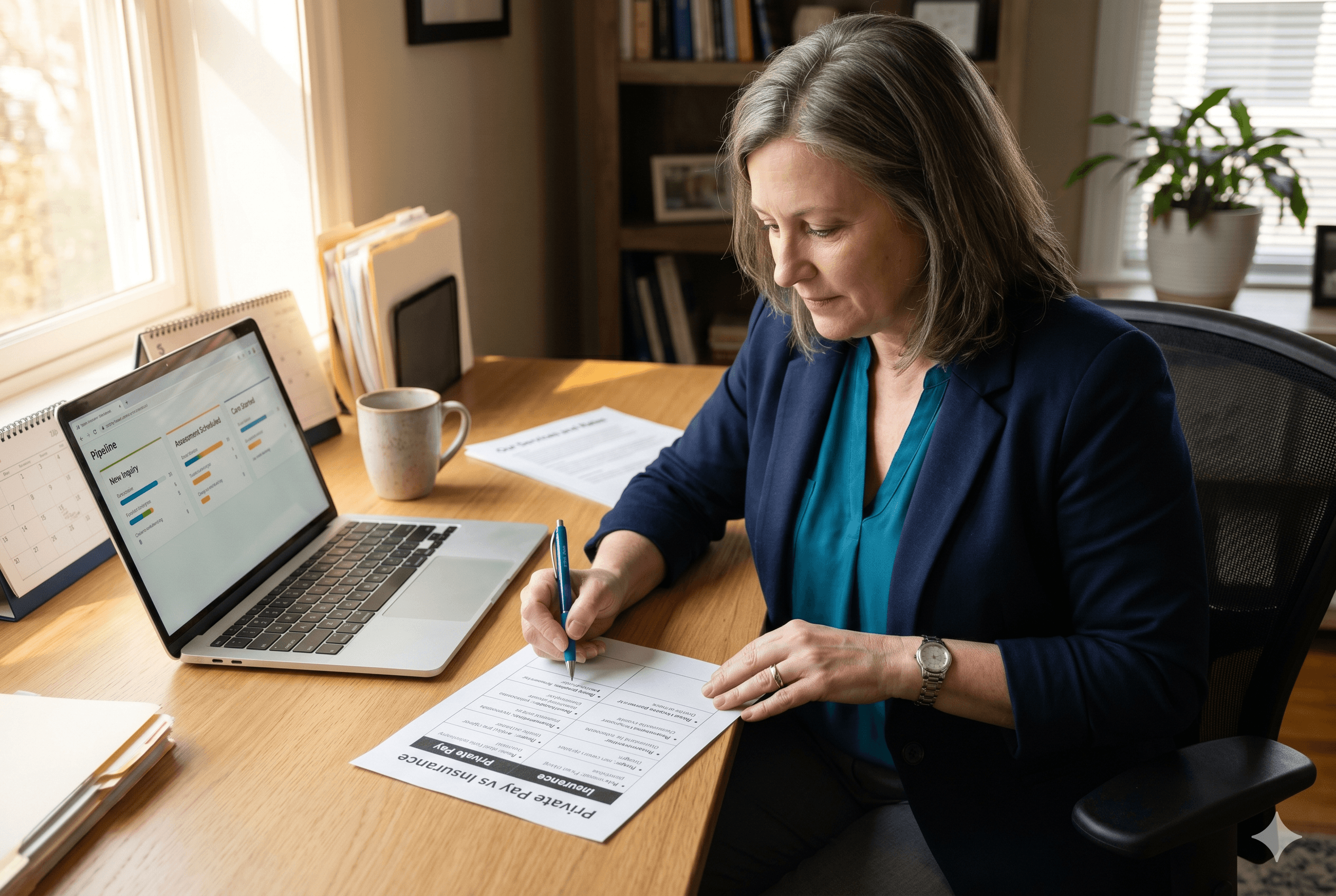
Ninety-one percent of families say seeing price ranges before contacting an agency is important, yet most agency websites omit this entirely. Adding even a general pricing range to your website removes a friction point that is costing you inquiries.
Pillar Two: Referral Relationships
For agencies without marketing budgets, referral relationships are the most cost-effective client acquisition channel available. Hospital discharge planners, social workers, physician office staff, and senior living community directors are all working with families who need exactly what you offer.
The barrier most agencies hit is consistency. Building a referral network requires showing up repeatedly, not just once. A realistic approach for a solo operator looks like this:
Identify five to ten referral sources in your geography who serve your target client profile
Commit to one touchpoint per month per source, whether that is a short visit, a phone call, or an email with something useful
Track which sources send leads and invest more time in those relationships over time
The agencies that win referral business are not always the biggest. They are the most reliable and the most remembered.
If you are just starting to build your outreach system, this resource on home care agency marketing tactics covers how to position your agency in a way that sticks with referral partners.
Pillar Three: Fast, Professional Intake
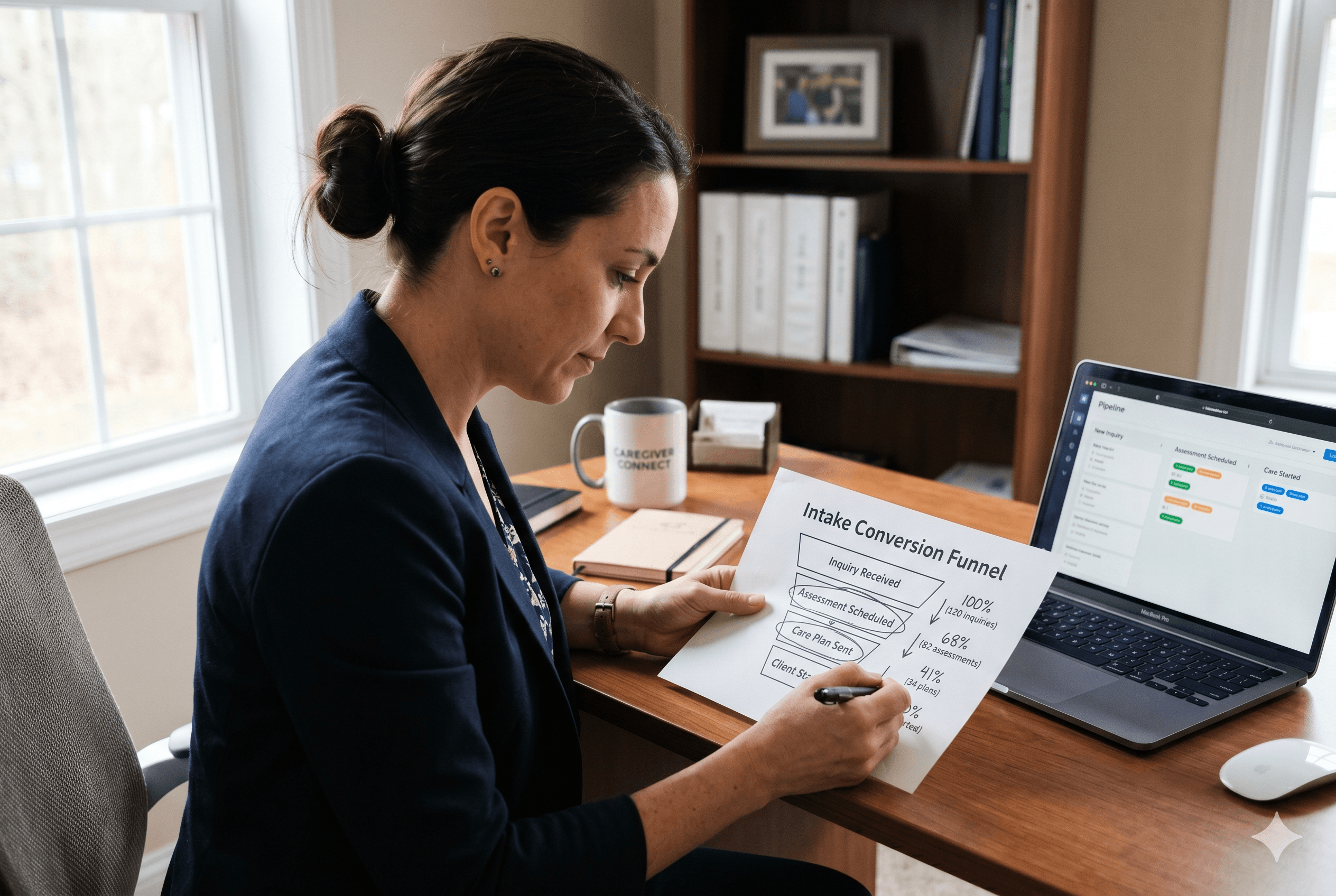
Most agency owners do not think of their intake process as a marketing asset. It is. Families contact multiple agencies before deciding. In Sage Care's consumer survey, 75% said they reached out to more than one agency, and 30% named responsiveness as a top factor in their final decision, ranking it alongside trustworthiness and just behind price.
That means how quickly and professionally you respond to an inquiry is part of your home care marketing strategy, whether you treat it that way or not. Slow, inconsistent follow-up loses clients who might have chosen you.
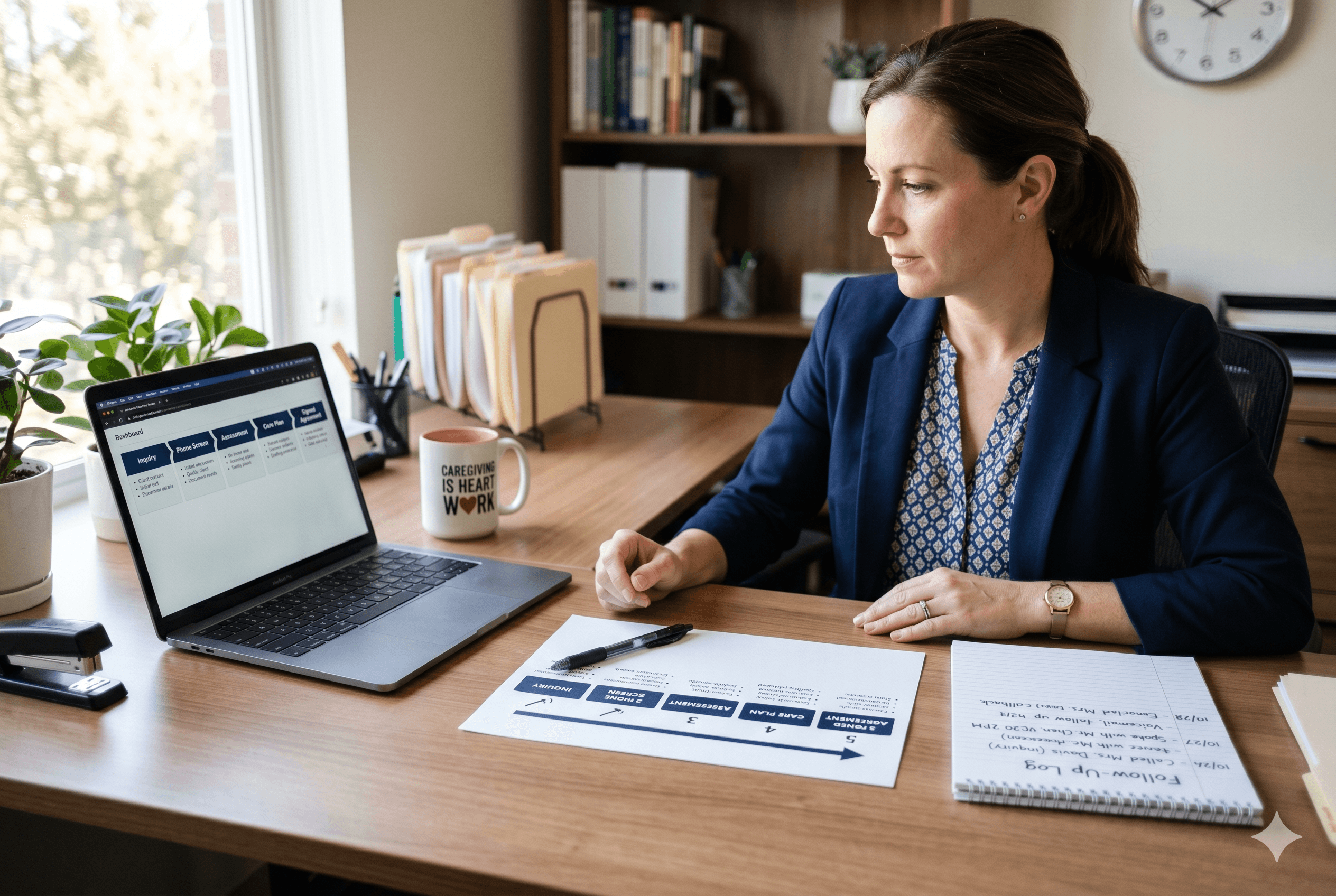
For a solo operator, the solution is not to hire an intake coordinator. It is to build a system that handles the follow-through automatically. Tools that automate the documentation and follow-up work that happens after every call or assessment mean you never lose a lead to slow paperwork or a missed follow-up email.
What to Do When You Have Almost No Time
If your schedule is genuinely maxed out and you can only do one or two things, here is the priority order:
First: Make sure your Google Business Profile is complete and accurate. This is the highest-return 30-minute investment available to a home care business owner. It requires almost no ongoing effort once it is set up correctly.
Second: Ask every satisfied family for a Google review. Fifty-one percent of consumers trust Google reviews above all other sources. A simple ask, sent at the right moment, is one of the most effective home care marketing tactics you have access to.
Third: Tighten your response time. If there are leads coming in that do not get a response within a few hours, fix that before anything else. Every unanswered inquiry is a client who chose someone else. Consumer data shows that 44% of families waited days to hear back from agencies and 15% never received a response at all. The agencies that respond fastest win a disproportionate share of available clients.
How AI Technology Helps Solo Operators Compete
A consistent concern among solo operators is that larger agencies with dedicated staff will always outperform them on responsiveness, follow-up quality, and professionalism. That gap has narrowed significantly with purpose-built AI tools for home care.
Sage Care is built specifically for this. After every call or in-home assessment, Sage Care's AI generates a call summary, a draft follow-up email, and care plan notes that the operator reviews and sends with one tap. What previously took 15 to 30 minutes of admin work takes under five. That means a solo operator can follow up on five inquiries in the time it previously took to follow up on one, without sacrificing quality or personalization.
Sage Care also keeps a full contact and lead history in one place, replacing the spreadsheets and sticky notes that most small agencies rely on. When a family calls back weeks after an initial conversation, you have the full context immediately.
For agencies using WellSky or AxisCare, Sage Care syncs bidirectionally so patient data and care plan information stay consistent without duplicate entry. To understand how that integration works in practice, the Sage Care and WellSky integration info explains the full workflow.
Realistic Expectations for a Solo Operator
Home care marketing without a team takes longer to build momentum than a well-funded campaign. That is not a reason to avoid it. It is a reason to start now and stay consistent.
The agencies that grow from five to twenty clients without a marketing hire are not doing anything exotic. They are showing up on Google, maintaining a handful of referral relationships, and following up faster and more professionally than competitors. Those three things, done consistently over six to twelve months, compound into a reliable new client pipeline.
Understanding how your agency fits into the broader landscape also helps sharpen your positioning. A clear grasp of what home care agencies actually offer and how they differentiate makes it easier to communicate your value to both families and referral partners.
The Bottom Line
Marketing a home care business without a team is not about doing less. It is about doing fewer things better and building systems that reduce how much manual effort each activity requires. Google, referral relationships, and a tight intake process are enough to grow a small agency steadily. AI tools make all three more manageable without adding headcount.
If you want to see how Sage Care helps solo operators follow up faster, stay organized, and convert more leads without adding admin work, schedule a demo. There is a 30-day free trial, and setup takes less time than a morning of manual follow-up emails.
H2: Frequently Asked Questions
What is the most effective home care marketing strategy for a solo operator?
Focus on Google Business Profile, two to three referral relationships, and fast intake follow-up. Consistency across these three beats, trying every channel at once.
How do I market my home care agency without a budget?
Google reviews, referral outreach, and a well-written website are all low-cost or free. Start there before spending on ads.
Does intake speed really affect home care marketing results?
Yes. Consumer data shows 30% of families choose their agency based on responsiveness. Fast, professional follow-up is a direct competitive advantage.