How to Market Your Home Care Business When You’re Busy Running It
Practical, time‑smart marketing strategies for busy home care owners.

Sage Care Editorial
Content & Communications Team

Running a home care business is a full time job. Marketing it can feel like a second one.
Between caregiver call outs, family updates, assessments, scheduling and billing, it is easy to push marketing to “when things slow down.” The problem is that in home care, growth rewards consistency. Agencies that show up reliably online, answer the phone quickly, and follow up fast are the ones that win new clients, even if their services are similar to yours.
The good news is you do not need a full marketing department to compete. With the right systems, a bit of home care software, and thoughtful use of AI technology in home care, you can build a simple, effective marketing engine that runs even when you are busy running the business.
In this post, we will break down time smart marketing strategies that fit into a packed owner operator schedule.
Start with the moments that already exist in your day
You do not need new hours in the day. You need to capture more value from the hours you already spend working on your home care business.
Think about:
The conversations you have with families every week
The questions caregivers ask you over and over
The stories you hear about what made someone choose your agency
Each of these is raw marketing material.
Instead of staring at a blank page, build a simple habit:
Keep a running list of common questions and client stories in your notes app.
At the end of the day, pick one item and write three to five bullet points answering it in plain language.
Once a week, turn one bullet list into a short blog post, FAQ entry, email, or social post.
Over a month, you will naturally create useful content that sounds like you and addresses real family concerns. This is the foundation of strong home care marketing.
Protect the “money hours” with 24/7 responsiveness
You can post on social media every day and still lose business if no one picks up the phone.
Families shopping for a home care provider are usually calling multiple agencies. In today’s market, 81% expect a response within an hour, and >30% choose the provider that responds first. That makes responsiveness part of your marketing, not just your operations. This shift reflects broader changes in consumer expectations across home care, where speed and clarity now influence who gets the client.
If you are on the road, in an assessment, or dealing with an urgent staffing issue, it is unrealistic to answer every call yourself. This is where AI technology in home care can do real work for you.
A HIPAA-compliant AI receptionist like Sage can:
Answer calls 24/7, during off hours, or when your staff is busy
Have professional, structured intake conversations with prospects
Answer common questions about services, coverage areas, and pricing
Capture all lead details and move callers further down your sales funnel
You end up with more qualified leads and fewer missed opportunities without adding a new person to payroll. This is one of the highest-impact changes you can make to your home care marketing, because it directly converts advertising, referrals, and website visits into conversations with your agency.
Turn your intake process into a marketing asset
Most agencies treat intake as a pure operation. In reality, it is one of your most powerful marketing moments.
Families are asking themselves:
“Do I trust this agency with my loved one?”
“Do they understand our situation?”
“Will they follow through?”
You want your intake process to send a clear yes.
Home care software and AI can help you standardize that experience without adding manual work:
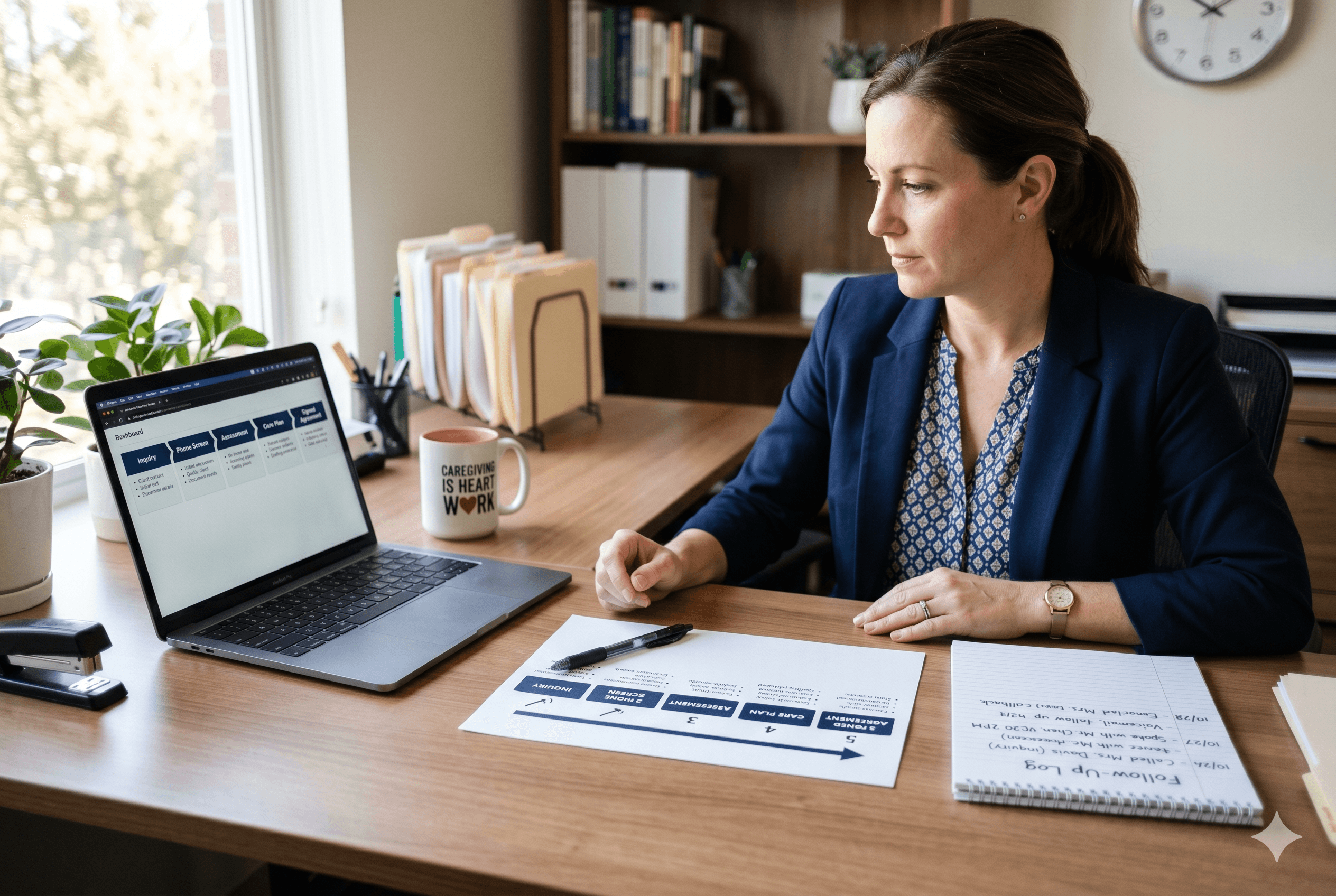
Use a consistent intake script that gathers all essential information and highlights what makes your agency different.
Automate personalized follow-up emails that recap the conversation, outline next steps, and reinforce your value.
Sync notes and care plan drafts into your agency management system, so you never lose context and can respond quickly when families call back.
Agencies using this type of automation routinely cut intake admin time from 90 minutes or more down to under 15 minutes. That freed up time can be reinvested into high touch conversations with the families most likely to start care.
Focus your marketing on a few high leverage channels
When you are busy, trying to do everything is the fastest way to do nothing consistently. Instead, choose two or three marketing channels and commit to doing them well.
For most home care business owners, the highest leverage channels are:
Your website: Make sure it clearly explains who you serve, what services you offer, and how to contact you. Add simple lead forms and click to call buttons.
Local search and reviews: Keep your Google Business Profile updated with accurate hours, photos, and services. Ask happy families to leave reviews and reply to each one.
Referral partners: Build relationships with hospital discharge planners, social workers, senior living communities, and physicians. A short, consistent monthly outreach rhythm can outperform sporadic big pushes.
Use your content habit to feed all three. A blog post on your site can be repurposed into a short email for referral partners and a handful of social posts. A strong review can become a testimonial quote on your homepage. This reuse keeps your workload manageable while amplifying your efforts.
Systematize what happens after a lead comes in
Great marketing gets the phone to ring. Great systems turn those calls into clients.
From a marketing perspective, your follow up process is just as important as your ad spend. Families notice who calls back, how quickly, and how clearly you communicate.
Here are simple systems you can put in place:
Standard response time goals
Automated confirmation messages
A structured follow-up sequence
This is another area where AI technology in home care shines. Sage’s AI assistant can draft personalized follow-up emails that reflect the actual intake conversation, highlight specific concerns mentioned by the family, and make it easy for them to take the next step. That level of responsiveness and personalization differentiates your home care business from competitors who send generic or delayed responses.
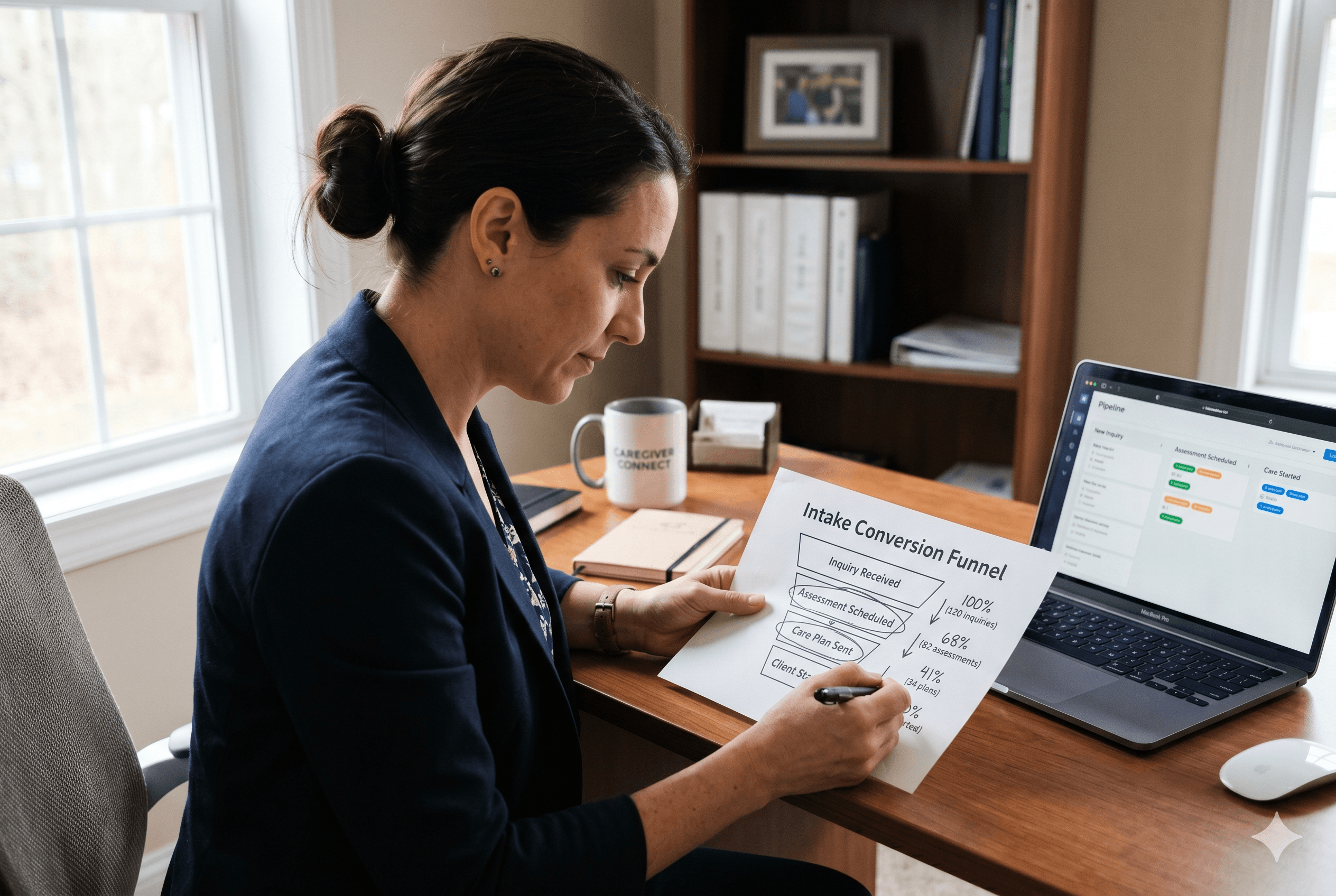
If you want a deeper look at how structured data and follow-up workflows improve conversion, discover how the right KPIs guide smarter growth decisions in home care.
Make marketing part of how you run the business, not an extra project
The busiest home care owners are often the ones running successful, growing agencies. The goal is not to add a separate marketing job on top of that. The goal is to weave marketing into how you operate.
Think in terms of small, repeatable habits:
Five minutes at the end of each day to jot down a client story or answer a common question
Thirty minutes once a week to turn those notes into a piece of content
A monthly calendar reminder to check your website, Google listing, and reviews
A one-time setup of an AI receptionist, so every marketing effort routes to a reliable, professional intake experience
Over time, these habits compound. Families searching online see a credible, active home care business. Referral partners experience you as responsive and organized. Prospects who call after hours feel cared for rather than going to voicemail.
You end up with a marketing engine that reflects the quality of care you already provide.
If you want to see how a 24/7 AI receptionist and integrated AI assistant can support your home care marketing, streamline intake, and help you capture more leads without adding more to your plate, schedule a demo today to learn more about how Sage can help you grow your business.