
From Voicemail Chaos to 24/7 Coverage: Why Every Home Care Agency Needs an AI Receptionist
Stop missed calls and voicemail chaos with 24/7 AI receptionist coverage.

Sage Care Editorial
Content & Communications Team
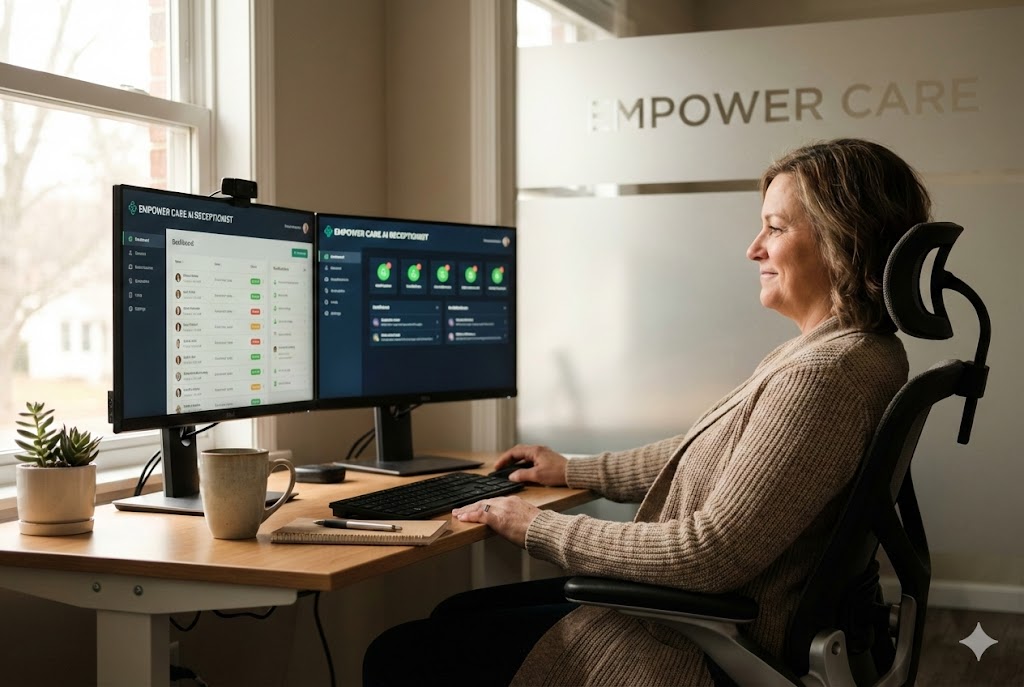
From missed calls to missed revenue
For many home care agencies, the first sign of growth is not more revenue. It is more voicemail. After hours, during weekend shifts, or even on busy weekday afternoons, phones roll to voicemail and inboxes pile up. Families call three or four providers in a row and go with whoever responds first.
Today’s market is defined by a "now" economy. With 81% of consumers expecting a response within an hour and 30% selecting their provider based on speed alone, the message is clear: consumer expectations are fundamentally reshaping home care services.
In this new landscape, "voicemail chaos" is a liability your business cannot afford. It’s no longer just an operational lag; it is a direct threat to your growth. This is the gap an AI receptionist is designed to close. Not by replacing your intake team, but by extending their reach so your agency can offer professional, 24/7 coverage without burning out your staff.
Why voicemail is costing home care agencies real money
Voicemail gives agency owners a false sense of security. The message is saved, so the lead is safe. In reality, every minute that message sits unanswered, the odds of conversion drop.
Families who contact home care providers frequently experience stress, overwhelm, and time constraints. They are not waiting patiently for a call back the next morning. They are navigating a list sourced from Google, their hospital discharge packet, or a friend's recommendation until they receive a call, get answers to their questions, and feel heard.
And as the competition increases in many regions, responsiveness has also become a differentiator in an increasingly crowded market. To understand this dynamic in more detail, you can read our perspective on market saturation in non-medical home care.
The result is a set of common problems:
Leads slip through the cracks when staff are tied up with client visits, assessments, or staff issues.
Prospects who do leave voicemails often get a generic follow-up that does not reflect their specific needs or urgency.
Each week, your intake team dedicates hours to returning calls that they could have handled or pre-qualified earlier.
If you are investing in home care marketing, from paid ads to referral programs, every missed or mishandled inquiry reduces your return on that spend. It is like paying for traffic to a website that is offline half the time.
(Check out this guide on growing a referral pipeline for home care agencies for more on building a great referral program).
What an AI receptionist actually does for a home care agency
An AI receptionist like Sage is built to solve this very specific problem. It functions as a friendly, always-on first point of contact for your existing phone system, often replacing the limitations of a traditional setup with a modern VoIP provider specifically designed for home care agencies.
When a call comes in after hours, during weekends, or when your team is busy, Sage answers on your behalf. It conducts a professional intake conversation, asks the right questions, and gathers key details about the caller’s needs. It can answer common service questions based on how your agency operates and your specific service offering.
Instead of a cold voicemail box, callers speak to a responsive, consistent, and knowledgeable virtual receptionist who represents your brand well and moves them down the sales funnel.
Importantly, Sage is not a replacement for your human staff. It is a way to scale coverage, reduce pressure on your team, and ensure that no inquiry goes unanswered.
Turning conversations into conversions, not just messages
The value of an AI receptionist is not just that it answers calls. It is how it turns those conversations into ready-to-act opportunities for your team.
Sage can:
Capture complete intake information so your staff can start follow-up with context instead of a blank slate.
Provide accurate, consistent answers to routine questions about service areas, hours, types of care, and payment options.
Qualify and prioritize leads so your intake team knows who is most urgent and most likely to convert.
Because Sage integrates with your existing home care software and workflow tools, including a well-defined agency management system for home care, you are not just getting call coverage. You are improving the quality and speed of your entire intake pipeline. This is where AI technology in home care moves from a buzzword to a practical, day-to-day advantage.
Beyond the phone: Automating the follow up that wins trust
Initial contact is only the first step. Families rarely decide after a single conversation. They need follow-up, reassurance, and clear next steps.
Sage can be paired with an integrated AI assistant that handles much of this follow up work for your team. You can:
Generate personalized follow-up emails based on the actual intake conversation.
Draft initial care plan outlines informed by the caller’s situation and preferences.
Sync relevant details back into your agency management system so everything stays organized.
Taken together, this can reduce intake admin time from 90 plus minutes to under 15. Your team spends less time copying notes across systems or writing the same emails over and over, and more time on high-touch, human conversations that build trust with families and referral partners.
This is not clinical decision-making, and it does not replace licensed professionals. For agency leaders evaluating AI tools, this overview of AI in home care operations and compliance considerations explains what to look for and what to avoid.
Protecting privacy while modernizing your intake
For home care agencies, adopting new technology brings a natural concern about privacy and compliance. Any tool that touches client information needs to respect the same standards you hold your team to.
Sage is built to be HIPAA compliant, with safeguards around how information is handled and stored. That means you get the benefits of modern AI technology in home care without compromising the trust you have built with families and referral sources.
Families increasingly expect providers to use technology thoughtfully. Being able to say you have secure, 24/7 coverage in place can be a differentiator for your home care business.
This matters not only for risk management but also for your reputation. Measuring how responsiveness impacts inquiries, conversions, and follow-up is equally important. For a practical framework, see our guide on crucial KPIs in home care.
The competitive advantage of 24/7 responsiveness
Responsiveness has become one of the most important selection criteria for families choosing a provider. When 81% of consumers expect a response within an hour, the agency that answers first often wins the business.
An AI receptionist gives you a concrete way to compete on responsiveness without asking your staff to be on call around the clock. It:
Ensures every caller speaks to someone, even at 2 a.m. on a Sunday.
This ensures that your home care marketing efforts are presented in a consistent and professional manner.
It aids in increasing the conversion rate of your existing inquiries, allowing you to allocate more resources towards generating new ones.
As the market becomes more crowded and referral relationships more competitive, agencies that can reliably pick up the phone and move quickly will stand out.
Implementing an AI receptionist without disrupting your team
One concern many owners have is that adding AI will be complicated or disruptive. In practice, setting up Sage is straightforward. You can configure your virtual receptionist in minutes with your basic service information, coverage preferences, and call routing rules.
From there, Sage can act as off-hours coverage, a backup when your lines are busy, or a primary intake option for specific campaigns or numbers. Your team can adjust settings as your home care business grows, allowing you to maintain control over its use.
Because Sage works alongside your existing tools instead of replacing them, adoption tends to be smooth. Staff quickly see that it is taking repetitive tasks off their plate rather than competing with them.
For owners who want a hands-on way to explore how AI supports intake and communication before changing workflows, you can try HomeCareGPT, a HIPAA-compliant AI assistant built for home care teams, and see how it works in practice.
Bring order to your intake with Sage
Voicemail will always have a place, but it should not be the backbone of your intake process. An AI receptionist transforms chaotic, unpredictable phone coverage into a reliable, scalable system that supports both your team and your growth goals.
If you want to stop losing leads to missed calls and give families the fast, professional response they expect, Sage can help. To see how it works in the context of your agency, schedule a demo today to learn more about how Sage can help you grow your business.


