
7 Low-Cost Ways to Build Trust With Families Before They Choose Your Agency
Seven simple, low-cost trust builders for winning new home care clients as an upstart.

Sage Care Editorial
Content & Communications Team
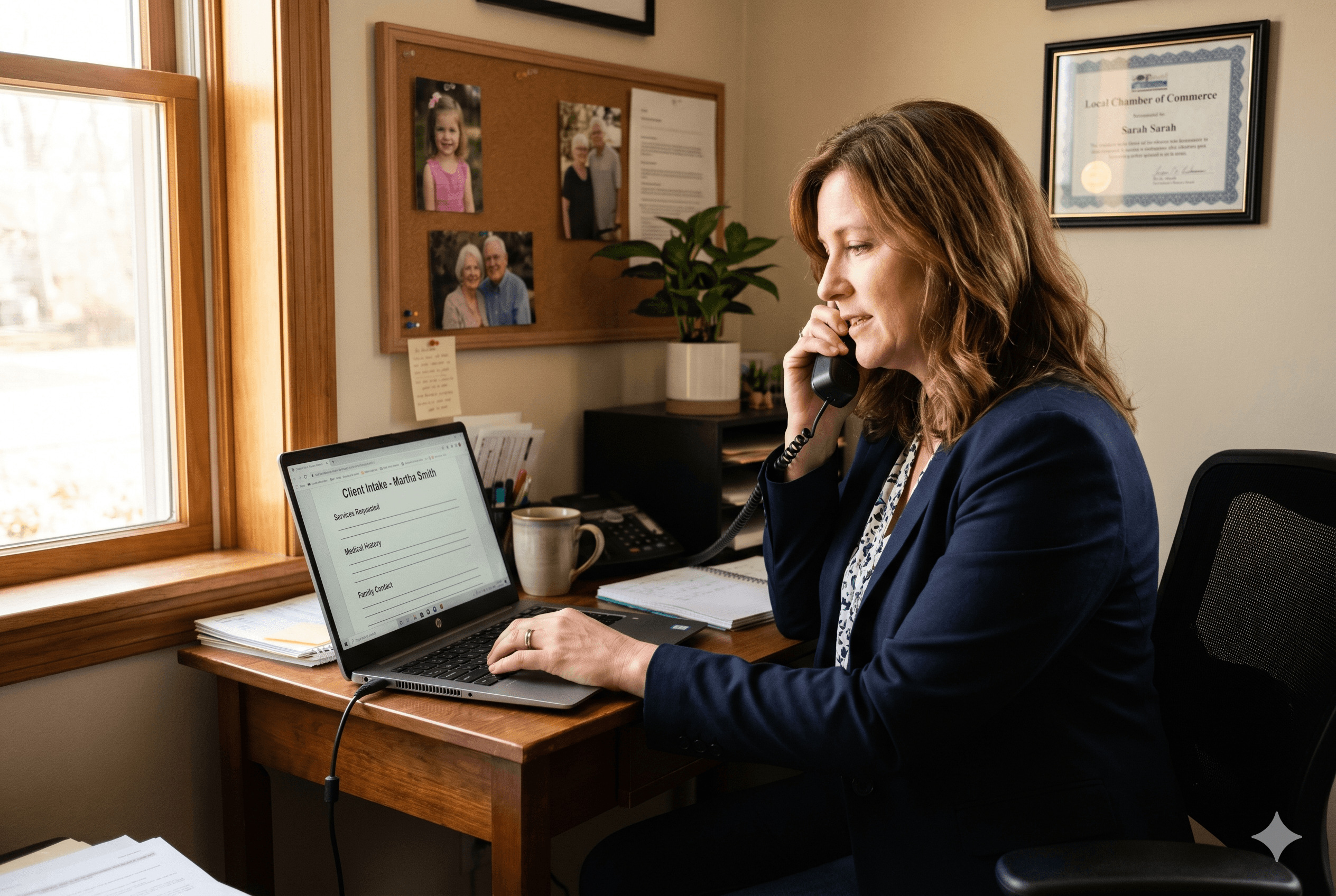
Trust is the deciding factor in home care client acquisition. Families are not just buying a service. They are handing over the care of someone they love to people they have never met. Before they sign anything, they are evaluating every signal your agency sends: how fast you respond, how clear your website is, how professional your follow-up feels, and whether you seem like someone they can rely on.
The challenge for small agencies is that building trust has traditionally meant investing in branding, advertising, or a polished marketing team. None of those are realistic for most owner-operators in the first few years.
The good news is that trust is mostly built through behavior, and behavior does not cost much. Here are seven practical things any agency can do to build credibility with families before they ever sign on the dotted line.
Why Trust Is the Real Barrier to Home Care Client Acquisition
Before getting into the list, it helps to understand what families are actually afraid of. According to Sage Care's survey of 500-plus home care consumers, the top skepticism triggers when evaluating an agency are:
Inconsistent information (58%)
Vague service descriptions (50%)
Hard-to-find licensing information (45%)
Pushy sales behavior (41%)
Too many suspiciously perfect reviews (38%)
Notice that four of those five are about opacity, not quality. Families are not primarily worried that you are bad at care. They are worried they cannot tell whether you are trustworthy or not. That is a communication and transparency problem, and both are entirely within your control regardless of budget.
The bar for what families now expect from home care agencies has risen significantly in recent years. Speed, clarity, and consistency are no longer differentiators. They are the baseline. Meeting that baseline as a small agency is the foundation of client acquisition.
7 Ways to Build Trust Before a Family Chooses You
1. Put Pricing on Your Website
This is the single highest-impact change most small agencies can make, and it costs nothing.
Sage Care's consumer research found that 91% of families say seeing a price range before contacting an agency is important, and 61% say it is extremely important. Yet the majority of agency websites omit pricing entirely.
Families interpret this as a red flag. When pricing is hidden, they assume either it is too expensive or the agency is not confident in its value. You do not need to publish an exact hourly rate. A simple range with a note about what affects the final cost is enough to clear that barrier and move a family from browsing to calling.
2. Respond Within the Hour
Response speed is a trust signal. When a family submits an inquiry and hears back within 30 minutes, it communicates that you are organized, attentive, and serious about their situation. When they wait two days, even a great agency looks unreliable.
The data on this is stark. Eighty-one percent of families expect a response within one hour. But 44% of respondents in Sage Care's consumer survey said they waited days to hear back from an agency, and 15% never heard back at all. That is not a staffing problem for most agencies. It is a systems problem. When follow-up depends entirely on someone remembering to do it between other tasks, it becomes inconsistent by default.
Fast, structured follow-up after every call or inquiry is one of the clearest ways a small agency can outperform larger competitors with more resources during the critical window when a family is still deciding.
3. Show Who Your Caregivers Are
Ninety-two percent of families say transparency about caregiver screening and training is important when evaluating an agency. Yet most agency websites say something generic like "our caregivers are thoroughly vetted" and leave it at that.
Be specific. If your caregivers are CPR certified, say so. If you run background checks through a specific provider, mention it. If you require a minimum number of hours of training before a caregiver goes on their first visit, put that number on your website.
You do not need photos or full bios for every caregiver. A clear, specific description of your hiring and training standards does most of the work. Specific claims build more trust than general assurances.
4. Make Your Licensing Easy to Find
Forty-five percent of families say hard-to-find licensing information is one of their top skepticism triggers. Sixty-three percent actively check state licensing databases when vetting an agency.
Put your license number on your website. Link to your state registry listing if possible. This takes ten minutes to add and removes a meaningful friction point for families who are doing their homework. If your agency is accredited or affiliated with a professional organization, list those too.
5. Ask for Reviews at the Right Moment
Fifty-one percent of consumers say they trust Google reviews above any other source when evaluating a home care agency. Reviews are essentially free social proof, but most agencies collect them inconsistently or not at all.
The right moment to ask is shortly after a positive experience, when a family expresses appreciation after a visit goes well, when a client milestone is reached, or when a caregiver receives a compliment. A simple, warm text or email with a direct link to your Google review page is enough. Most happy families are willing to help. They just need to be asked at the right time and given an easy path to do it.
Building a steady stream of genuine reviews over time does more for home care client acquisition than most paid marketing activities. The key is making the ask a consistent habit rather than a one-off effort.
6. Send a Clear, Professional Follow-Up After Every Conversation
The quality of your follow-up email after an intake call says a lot about how your agency will communicate once care starts. A personalized message that references the specific situation discussed, outlines what happens next, and answers the most likely questions gives families confidence that they will not be left guessing.
Most agencies either skip follow-up entirely or send something generic. A thoughtful, specific message that arrives within an hour of the call is rare enough to stand out. It also reinforces that a real person was listening and that the conversation mattered.
For small agencies managing multiple inquiries at once, AI-generated follow-up drafts that pull from the actual call conversation make this level of responsiveness achievable without the time investment it would otherwise require.
7. Be Clear About What the Intake Process Looks Like
Ninety-two percent of consumers say a clear picture of the intake process from start to finish is valuable. Most agency websites and intake conversations leave families uncertain about what comes next: when will someone call, how long does the assessment take, what happens after that, when does care start?
Families in the process of arranging care are usually managing stress and urgency at the same time. Uncertainty makes that worse. A simple, clear explanation of your process, whether on your website, in your first call, or in a follow-up email, reduces anxiety and builds confidence that you have done this before and know what you are doing.
It does not need to be elaborate. A four-step summary covering inquiry, assessment, care plan, and care start is enough to give families the orientation they need.
How This Connects to Long-Term Growth
These seven things are not just about winning the next client. They compound over time. Agencies that respond fast, communicate clearly, and publish honest information consistently build a reputation that generates referrals, earns better reviews, and makes every future marketing effort more effective.
Consumer expectations in home care have shifted, and families today are comparing your agency not just to other home care providers but to every service business they interact with. Understanding what today's home care consumers actually want across responsiveness, transparency, and communication is the foundation for building an agency that families trust before they have even met you.
The agencies winning client acquisition right now are not always the biggest or the best-funded. They are the ones that show up clearly, respond quickly, and make families feel confident that they made the right call.
Final Words
Trust is not built with a logo or a tagline. It is built through clarity, consistency, and showing up when families need a response. Every item on this list is achievable without a marketing hire, a big budget, or a technology overhaul.
If you want to see how Sage Care helps small agencies respond faster, follow up more consistently, and convert more inquiries into clients, schedule a demo. There is a 30-day free trial, and the setup takes less time than a morning of manual intake work.
Frequently Asked Questions
How do small home care agencies build trust without a big marketing budget?
Transparency and responsiveness are the most cost-effective trust builders available. Pricing on your website, fast follow-up, and consistent review collection cost almost nothing and have an outsized impact on conversion.
What do families look for when choosing a home care agency?
Consumer research shows families prioritize response speed, caregiver transparency, clear pricing, and professional communication above most other factors.
How many Google reviews does a home care agency need to be competitive?
There is no magic number, but a consistent stream of recent, genuine reviews matters more than a large total count. Ten reviews from the past three months outperform fifty reviews from three years ago.