
The Real Cost of Slow Lead Response in Home Care (Backed by 500+ Consumer Surveys)
81% of clients expect a response in under an hour. Here's what slow follow-up is costing your agency.

Sage Care Editorial
Content & Communications Team
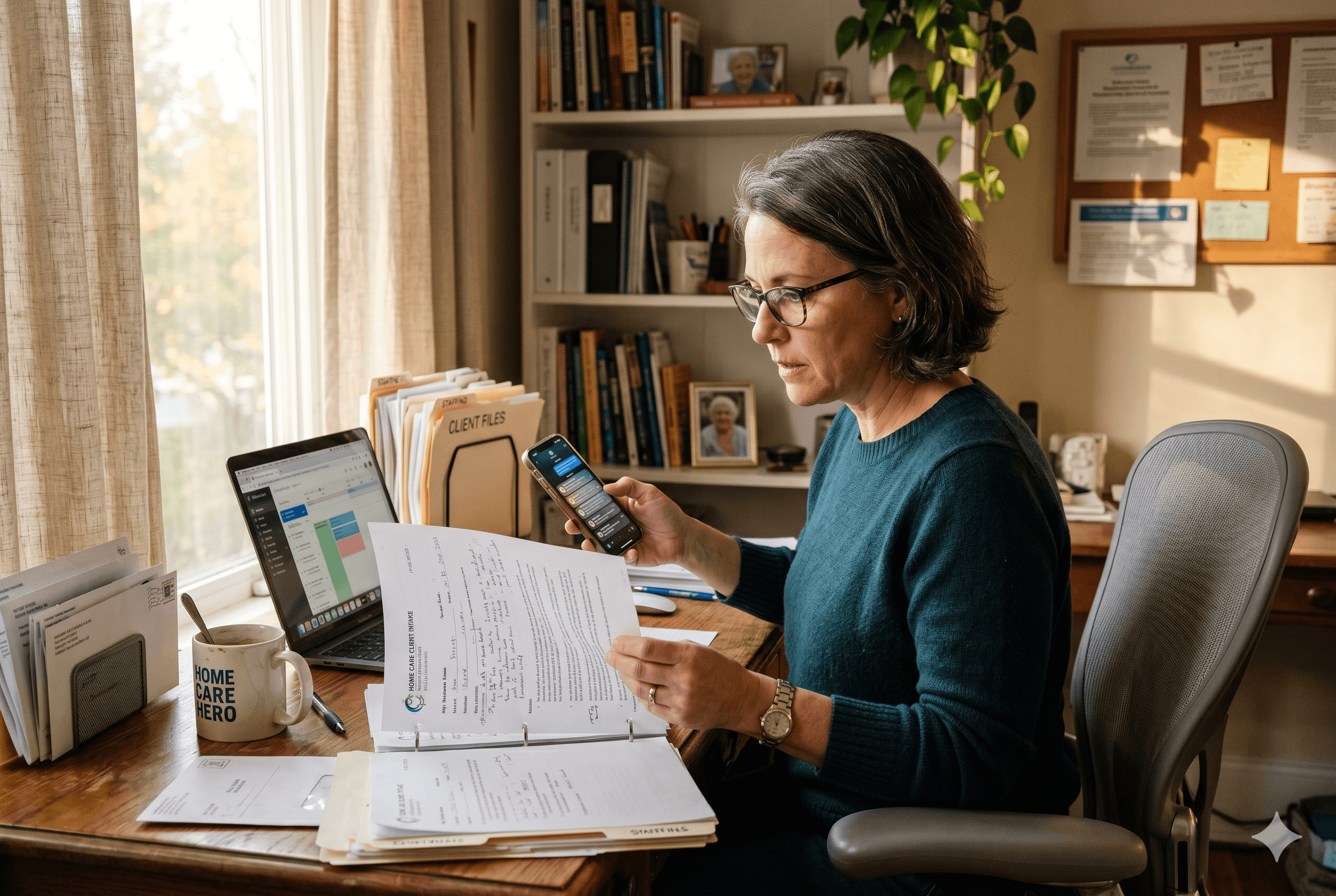
When a family reaches out to a home care agency, the clock starts immediately. New research shows that most agencies are losing clients not because of pricing, reputation, or competition, but simply because they respond too slowly.
The data is hard to ignore. According to what over 500 home care consumers told us in a recent survey, 81% of prospective clients expect a response within one hour of making contact. Yet 44% say they waited days before hearing back from an agency. That gap is where home care businesses lose revenue every single week.
This post breaks down exactly what slow response costs you, why it keeps happening, and what you can do to close the gap without hiring more staff.
Why Response Time Is Your Most Valuable Competitive Advantage
Speed matters more than almost any other factor in the early stages of a client inquiry. Home care decisions are often made under stress, when a family member has just left the hospital or a fall has happened at home. Families are reaching out to multiple agencies at the same time, and the first agency to respond with warmth and clarity has a meaningful edge.
This is not a theory. Consumer research confirms it repeatedly. When families are choosing between agencies with similar services and pricing, responsiveness becomes the deciding factor. An agency that responds within an hour signals professionalism, reliability, and genuine care. One that responds in 48 hours signals the opposite, regardless of how good its actual care is.
If you have been focused on home care marketing to generate more leads without fixing your response process first, you may be spending money to fill a leaky bucket.
What the Numbers Actually Say
The consumer survey data is specific enough to be sobering.
81% Expect a Response Within One Hour
This is not a preference. Consumers framed it as an expectation. When someone reaches out to a home care agency about a parent or spouse, they are not comparison shopping casually. They are often in a stressful, time-sensitive situation. Waiting even two or three hours can feel like an agency does not care.
44% Say They Waited Days
Nearly half of respondents reported waiting multiple days before hearing back from at least one agency they contacted. Many of those families had already made a decision by the time the slow agency followed up. The lead was not lost to a better agency. It was lost to a faster one.
Most Families Contact More Than One Agency
Consumers rarely contact a single provider. That means your window to respond is not just "before the end of the day." It is before one of your competitors picks up the phone.
Calculating the Revenue You Are Losing
Here is a simple way to understand the financial stakes.
If your agency brings in 20 inquiries per month and your average client generates $4,000 in monthly revenue, a 20% loss rate from slow follow-up means you are leaving roughly $16,000 in monthly recurring revenue on the table every single month.
That 20% is conservative. Some agencies with slow or inconsistent follow-up processes see conversion rates well below industry benchmarks. The home care business economics are tight enough that even one or two missed conversions per month makes a meaningful difference to the bottom line.
The Hidden Cost: Staff Time Spent on Leads That Go Nowhere
Beyond lost revenue, there is wasted effort. When follow-up happens two or three days later, staff often spend significant time on calls and emails with families who have already chosen a different agency. That time is not recoverable. It also does not show up anywhere in your cost reporting, so it is easy to overlook.
Why Slow Response Happens at Small Agencies
Slow response is almost never intentional. It happens because of how small agencies are structured.
At a home care agency with a team of one to five people, the person handling intake is also often doing scheduling, answering billing questions, and managing caregiver calls. When a new inquiry comes in during an active stretch, it gets noted and added to a growing task list. By the time someone circles back, hours or days have passed.
The Manual Documentation Problem
One of the biggest time drains in the intake process is the documentation that comes after every inquiry call. Writing a call summary, drafting a follow-up email, updating the client record, flagging the lead in a spreadsheet or basic CRM, and then scheduling the next outreach step can take 15 to 30 minutes per call.
If an agency receives five to ten inquiries per week, that is several hours of pure administrative work just on documentation. That workload is why follow-up slips. Staff are not being negligent. They are overwhelmed.
You can explore how agencies are addressing this in the complete 2026 guide to AI intake software for home care, which covers the full landscape of tools built specifically for this problem.
How Agencies Are Closing the Gap Without Hiring
The most effective solution is not adding headcount. It is reducing the administrative burden that slows your response in the first place.
Automate What Happens After the Call
Home care intake automation tools like Sage Care work by handling the documentation work that follows every call or assessment. After a call ends, Sage Care's AI generates a call summary, drafts a follow-up email, updates the client record, and surfaces suggested next steps. Staff review the output, make any edits, and approve with one tap. What used to take up to 30 minutes now takes under five.
That time savings is what makes faster response possible. When documentation does not pile up, your team can focus on the next inquiry instead of catching up on the last one.
Keep Everything in One Place
A lot of follow-up delay comes from fragmented information. Notes from a call are in one place, the contact record is somewhere else, and the follow-up draft is in a separate email thread. When everything is disorganized, every response requires hunting down context first.
Sage Care combines a built-in home care CRM with automatic activity logging, so every call, transcript, summary, and communication is attached to the same client record. There is no digging. The context is already there. Many agencies have moved away from spreadsheets into exactly this kind of structured system, and the impact on response consistency is immediate.
Build a Response Process You Can Actually Follow
Technology only helps if you have a clear process behind it. Define what a good first response looks like at your agency. That might mean a phone call within 30 minutes of an inquiry, followed by a written summary email within two hours. When the process is defined and the tools reduce the work required, it becomes something your team can actually sustain.
What Faster Response Actually Looks Like
An agency using Sage Care and a defined intake process might handle a new inquiry like this:
Inquiry comes in via phone
Staff member takes the call and conducts the intake conversation
Within seconds of the call ending, Sage Care generates a summary, a draft follow-up email, and updated record suggestions
Staff reviews and approves in under five minutes
Follow-up email goes to the family within 30 minutes of the initial contact
Lead is tracked in the pipeline with a clear next action
That process requires no additional staff. It requires the right tools and a clear workflow. For agencies evaluating what platforms can support this kind of structure, the non-medical home care software comparison guide is a useful starting point.
Stop Leaving Leads Behind
Every inquiry your agency receives represents a family in need and a real revenue opportunity. If your current process means families are waiting hours or days to hear back, you are handing those opportunities to competitors who simply responded first.
Sage Care gives home care agencies the tools to move faster without burning out their team. AI-generated summaries, follow-up drafts, and automatic record updates mean your staff spend less time on paperwork and more time on people.
Schedule a demo to see how Sage Care can help your agency respond faster and convert more leads. Sage Care also offers a 30-day free trial, so you can see the impact before committing.
Frequently Asked Questions
How fast should a home care agency respond to a new inquiry?
Research shows 81% of home care consumers expect a response within one hour. Agencies that respond within that window convert significantly more leads than those that respond the next day.
What causes slow lead response at home care agencies?
Most slow response comes from administrative overload after intake calls. Writing summaries, drafting follow-up emails, and updating records can take 15 to 30 minutes per call, which delays the next response.
Can a small home care agency realistically respond within an hour?
Yes, when intake documentation is automated. Tools like Sage Care reduce post-call admin from 30 minutes to under five, giving small teams the capacity to respond to new inquiries faster without adding staff.


