AI Intake Software for Home Care: Complete 2026 Guide
AI intake software for home care can cut post-call admin from 30 minutes to under 5. See what it does, what it costs, and how to evaluate it.

Sage Care Editorial
Content & Communications Team
A few years ago, AI in home care meant chatbots that answered basic website questions and not much else. In 2026, the category looks completely different. Agencies are now using AI to generate call summaries within minutes of hanging up, draft care plans from assessment recordings, and keep lead records accurate without manual data entry.
The technology has matured. The question is no longer whether AI belongs in home care intake. It is which tools are worth adopting, what they actually deliver, and how to evaluate them without getting distracted by features you will never use.
This guide is written for home care agency owners who want a clear, honest picture of what AI-powered intake software looks like today, what it can and cannot do, and how to decide if it is right for their agency.
What AI-Powered Intake Software Actually Does
Automated Call Summaries and Documentation
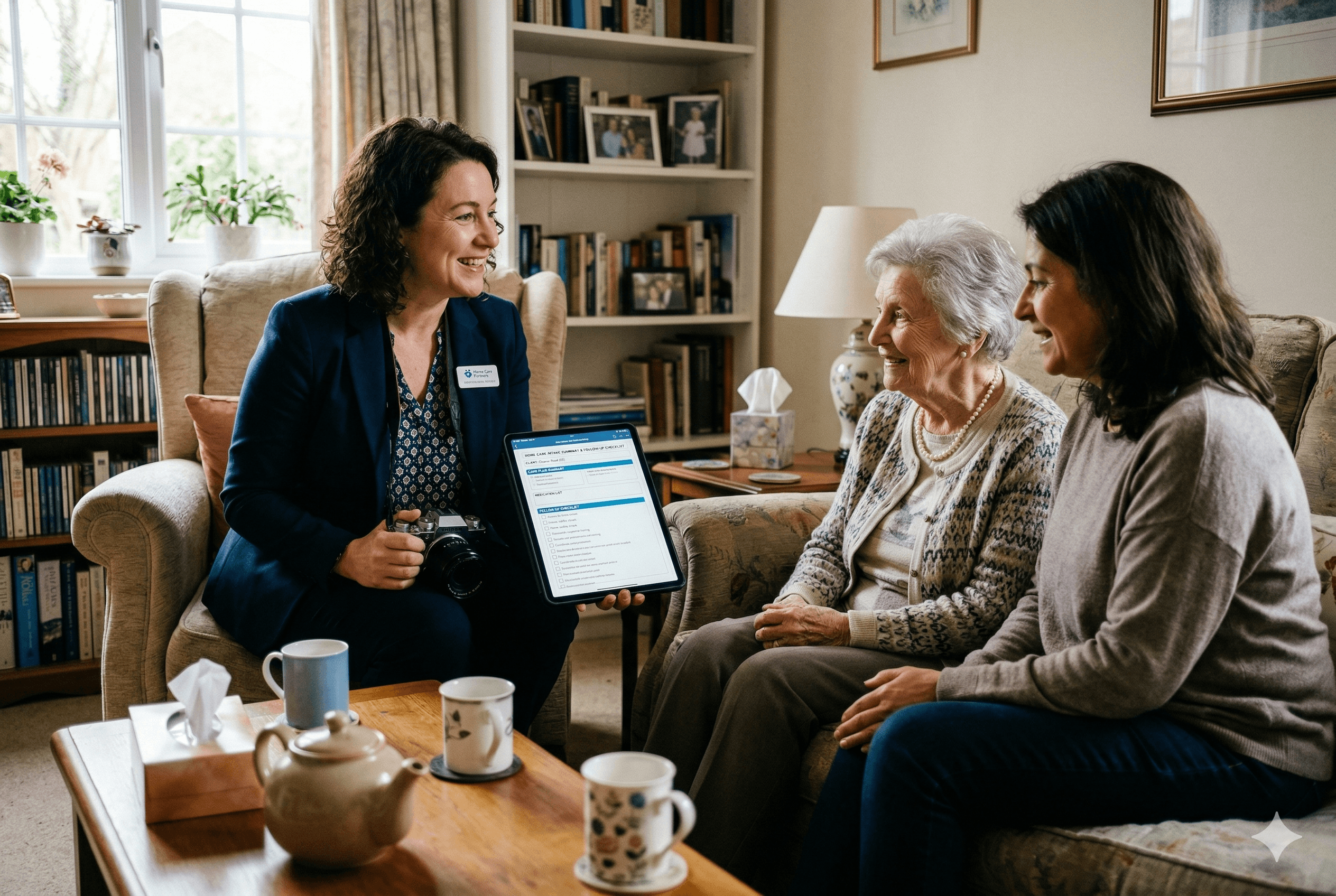
The most immediate and measurable impact of AI intake software is on post-call documentation. After every intake call or in-home assessment, the AI generates a structured summary pulling key details from the recorded conversation.
Care needs, scheduling preferences, family contacts, health history notes, geographic requirements, all organized automatically without the coordinator writing a single sentence from scratch.
The coordinator reviews the summary, edits where needed, and approves it. The entire process takes under five minutes compared to the fifteen to thirty minutes of manual documentation most agencies spend after each call.
This is not a marginal improvement. Across a week of intake calls, that time saving adds up to hours of recovered capacity that can go toward care delivery, relationship building, or business development.
If you want to make sure your intake process captures the right information from the start, use our home care client intake form template with 17 must-ask questions for qualifying leads and preparing for care.
Draft Follow-Up Emails
After generating a call summary, AI intake tools can draft a follow-up email personalized to the specific family and their situation. The draft pulls details from the conversation, mirrors the tone of a professional intake coordinator, and is ready for review within minutes of the call ending.
The coordinator reviews, adjusts tone or detail where needed, and sends. The family receives a thoughtful, specific follow-up email within thirty minutes of the call rather than the next morning. For families contacting multiple agencies simultaneously, that response speed is often the deciding factor.
Care Plan Drafts From Assessment Recordings
For leads that progress to an in-home assessment, AI can generate a draft care plan directly from the assessment recording. Proposed services, visit frequency, caregiver requirements, and care goals are pulled from what was discussed during the visit and structured into a professional document ready for coordinator review.
This eliminates one of the most time-intensive steps in the entire intake pipeline. The care plan still reflects clinical judgment and the coordinator's professional input. The blank-page problem is gone. Agencies that have streamlined the full journey from first inquiry to care plan delivery consistently report that care plan turnaround is where they gain the most time back. This is also what an AI scribe does for home care agencies: turning the recording itself into structured documentation, rather than leaving a coordinator to reconstruct it from memory.
Lead Record Management and CRM Integration
AI intake tools also maintain lead records automatically. Rather than requiring a coordinator to manually update a record after every interaction, the system logs call activity, updates lead status, and surfaces next steps based on what was discussed. Records stay accurate and consistent without manual upkeep.
When this is connected to a home care CRM built for intake, the result is a pipeline that reflects the true state of every lead at any given moment. No outdated statuses, no missing notes, no leads aging out because nobody flagged them for follow-up.
What AI Intake Software Cannot Do
Being clear about limitations matters as much as understanding capabilities. AI intake tools are not:
A replacement for human judgment. AI generates drafts. Coordinators review, edit, and approve everything. Clinical and relational decisions remain with your team.
An AI receptionist. These tools do not answer your phones or handle calls autonomously. They automate the work that happens after calls, not during them.
A scheduling or caregiver management tool. AI intake software handles the pipeline from inquiry to signed care plan. Scheduling, caregiver recruitment, and shift management sit outside its scope.
A compliance guarantee. Using a HIPAA-compliant platform is necessary but does not replace your agency's own compliance responsibilities.
Understanding what these tools are designed for prevents the frustration of adopting software that does not solve the problem you actually have.
What to Look for When Evaluating AI Intake Software in 2026
HIPAA Compliance Is Non-Negotiable
Home care intake calls contain protected health information. Any AI tool processing call recordings, generating summaries from those recordings, or storing client health details must operate under a business associate agreement and meet HIPAA standards.
This rules out general-purpose AI tools that were not built for healthcare-adjacent workflows. Before evaluating any platform's features, confirm its compliance posture first.
You must have thorough understanding of what HIPAA compliance actually requires when using AI in home care before signing up for any intake software.
Built-In Communications
AI intake software delivers significantly more value when it is connected to your phone system rather than operating separately from it. When calls are recorded, transcribed, and summarized within the same platform, the documentation workflow is seamless. When the AI has to work from manual uploads or disconnected recordings, the friction adds back much of the time you were trying to save.
Look for platforms with built-in VoIP, inbound and outbound call handling, call recording, and voicemail, all automatically logged to the right record. Communications and intake documentation belong in the same system, and seeing what a connected phone setup delivers in practice makes that case more clearly than any feature list.
AMS Integration
If your agency uses an agency management system like WellSky or AxisCare, your intake software should connect to it bidirectionally. Entering the same patient information twice across disconnected systems is one of the most common sources of error and wasted time in home care operations.
A platform with native AMS integration means data flows automatically from intake into your operational system without manual re-entry. For agencies evaluating how their intake software fits into their broader tech stack, this practical guide to agency management systems covers how these systems connect and what to look for in an integration.
Designed for Small Teams
Enterprise home care software is often built for large organizations with dedicated admin staff, IT support, and training budgets. Small agencies adopting these platforms often find that the tool requires more overhead to manage than the time it saves.
Look for software designed specifically for lean operator teams, one to five people handling intake alongside other responsibilities. The interface should be intuitive enough that a coordinator can get up to speed in a day, not a week. Setup should not require a consultant.
Transparent Pricing Without Hidden Costs
Home care agencies operate on tight margins. Software pricing that looks reasonable upfront but adds per-user fees, integration charges, or usage limits can quickly become unworkable for a small agency. Before committing to any platform, you must get clarity on:
Total monthly cost at your current call volume
Whether integrations with your AMS are included or billed separately
What happens to pricing as your agency grows
Whether there is a free trial period before you commit
A thirty-day free trial gives you enough time to run real intake calls through the system and evaluate whether the AI-generated outputs actually save time and meet your quality bar.
How to Know If Your Agency Is Ready
Not every agency is at the stage where AI intake software will deliver immediate ROI. The tool works best when:
Your agency is handling five or more intake inquiries per week
Post-call documentation is consuming more than an hour of coordinator time daily
Follow-up consistency is a known problem
You are ready to move away from spreadsheets and disconnected tools
If you are still at very early stage volume, a simpler CRM may be the right first step before layering in AI capabilities. But if documentation delays and inconsistent follow-up are already costing you placements, the gap between staying manual and adopting structured software is likely wider than it appears.
How AI Intake Software Fits Into a Competitive Market
Home care is one of the fastest-growing sectors in healthcare, and competition for clients is intensifying in most markets. Families have more options than ever, and their expectations around responsiveness and professionalism have risen alongside them.
Agencies competing against established franchises with dedicated intake staff cannot match that headcount. But with the right tools, a two-person team can match or exceed the response speed and documentation quality of a much larger competitor. That operational efficiency translates directly into conversion rates, referral relationships, and sustainable growth.
Consumer expectations in home care are evolving fast, and how families now evaluate and choose agencies means that professionalism and responsiveness at every intake touchpoint are no longer optional for agencies that want to grow.
The Right AI Intake Tool Changes What Your Team Can Do in a Day
The best AI intake software does not add complexity to your workflow. It removes the parts that were consuming the most time and delivering the least value, the blank-page documentation, the delayed follow-ups, the inconsistent records, so your team can focus on the work that actually requires a human.
Sage Care is built specifically for home care agencies: HIPAA-compliant, integrated with WellSky and AxisCare, with built-in VoIP, AI-generated summaries, care plan drafts, and a CRM designed around how intake actually works. One platform. One workflow. No stitching together disconnected tools.
Schedule a demo to see Sage Care in action. Sage Care offers a 30-day free trial with no commitment required.
Frequently Asked Questions
Is AI intake software suitable for a very small home care agency?
Yes, particularly if documentation and follow-up are already consuming significant time. Even a one or two person team benefits from automated summaries and faster care plan turnaround.
How accurate are AI-generated call summaries for home care intake?
Accuracy depends on recording quality and the platform. Summaries are drafts reviewed by a coordinator before use. Most agencies find them highly accurate for structured intake conversations.
What is the difference between AI intake software and a standard home care CRM?
A CRM tracks leads and contacts. AI intake software adds automated documentation, draft generation, and communications on top of CRM functionality. The best platforms combine both in one system.
Do I need technical knowledge to set up AI intake software?
No. Platforms built for small home care teams are designed to be set up and running within a day without IT support. Look for tools with onboarding support and a free trial period.
How does AI intake software handle sensitive health information?
HIPAA-compliant platforms process protected health information under business associate agreements with appropriate security controls. Always verify compliance before adopting any tool that handles client health data.


