The Home Care Sales Playbook: From Inquiry to Signed Care Plan
A step-by-step sales playbook for home care agencies from first inquiry to signed care plan.

Sage Care Editorial
Content & Communications Team

Every home care agency has a sales process. Most just have not written it down. It lives in the owner's head, gets executed differently depending on who is available, and produces inconsistent results because it depends on individual memory rather than a repeatable system.
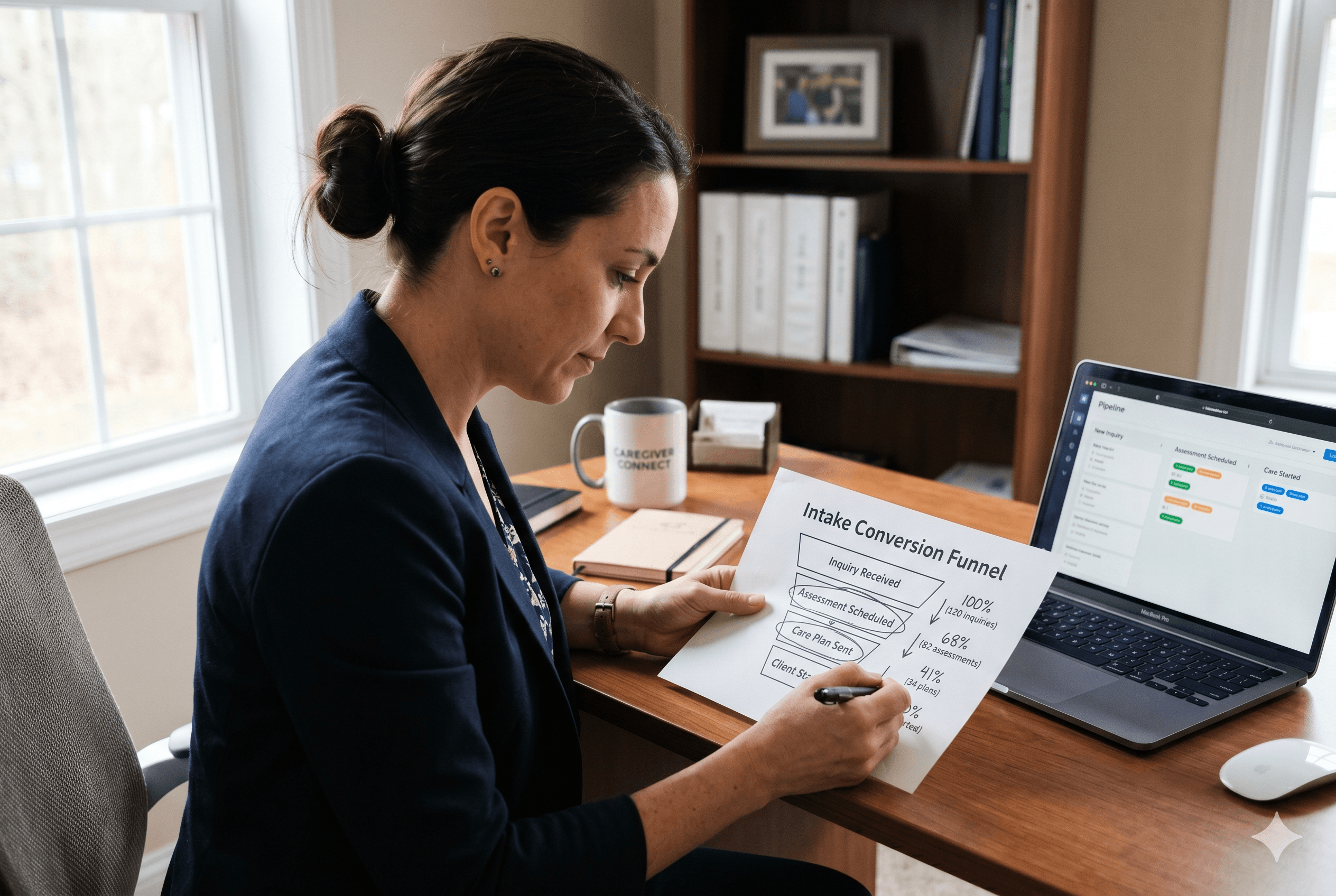
The agencies that convert the most inquiries into clients are not necessarily the best at care. They are the most consistent at the steps between first contact and signed agreement. This playbook maps that process from the moment an inquiry comes in to the moment care starts, with guidance on what to do at each stage, what to avoid, and what to measure.
Why a Defined Sales Process Matters in Home Care
Home care is not a product people shop for casually. Families reaching out are usually in a stressful situation with limited time and limited patience for agencies that seem disorganized. The sales process in home care is really a trust-building process, and every touchpoint either adds to that trust or erodes it.
The data on this is clear. Sage Care's survey of 500-plus home care consumers documented exactly what home care consumers actually want from agencies when evaluating their options, with responsiveness ranking alongside price as a top deciding factor. Seventy-five percent of families contact more than one agency before deciding. The agencies with a defined, consistent process win a disproportionate share of those competitive situations.
Stage One: The Initial Inquiry
What to Do
The first response to any inquiry, whether it comes in by phone, web form, or referral call, sets the tone for everything that follows. The goal at this stage is simple: acknowledge the inquiry immediately, gather enough information to qualify the situation, and book a next step.
Every inquiry response should include:
A warm, direct acknowledgment that you received their message and understand the situation is likely urgent
Three to five qualifying questions covering the care recipient's location, primary care needs, timeline, and who is making the decision
A specific proposed next step, either a phone screening call or an in-home assessment, with a suggested time
What to avoid:
Jumping straight to pricing before understanding the care situation
Asking for information the family has already provided in their initial message
Ending the conversation without a confirmed next step
What to Measure
Time to first response. The benchmark that matters here is under one hour during business hours. Eighty-one percent of families expect a response within one hour. Anything beyond two hours is a competitive disadvantage in most markets.
Inquiry to phone screening conversion rate. What percentage of inquiries result in a scheduled screening call? A rate below 50% usually signals either slow response time or a first contact that fails to create urgency around the next step.
Stage Two: The Phone Screening
What to Do
The phone screening is the first real conversation between your agency and the family. Its purpose is to assess fit, build rapport, and qualify the inquiry enough to determine whether an in-home assessment makes sense.
A structured phone screening covers:
Care situation. What is happening with the care recipient right now? What triggered the inquiry today?
Care needs. What types of support are needed: personal care, companionship, medication reminders, transportation?
Schedule and geography. How many hours per week, which days, and is the location within your service area?
Decision-making structure. Who is involved in the decision and who has the authority to sign a service agreement?
Timeline. When does care need to start? Is there urgency?
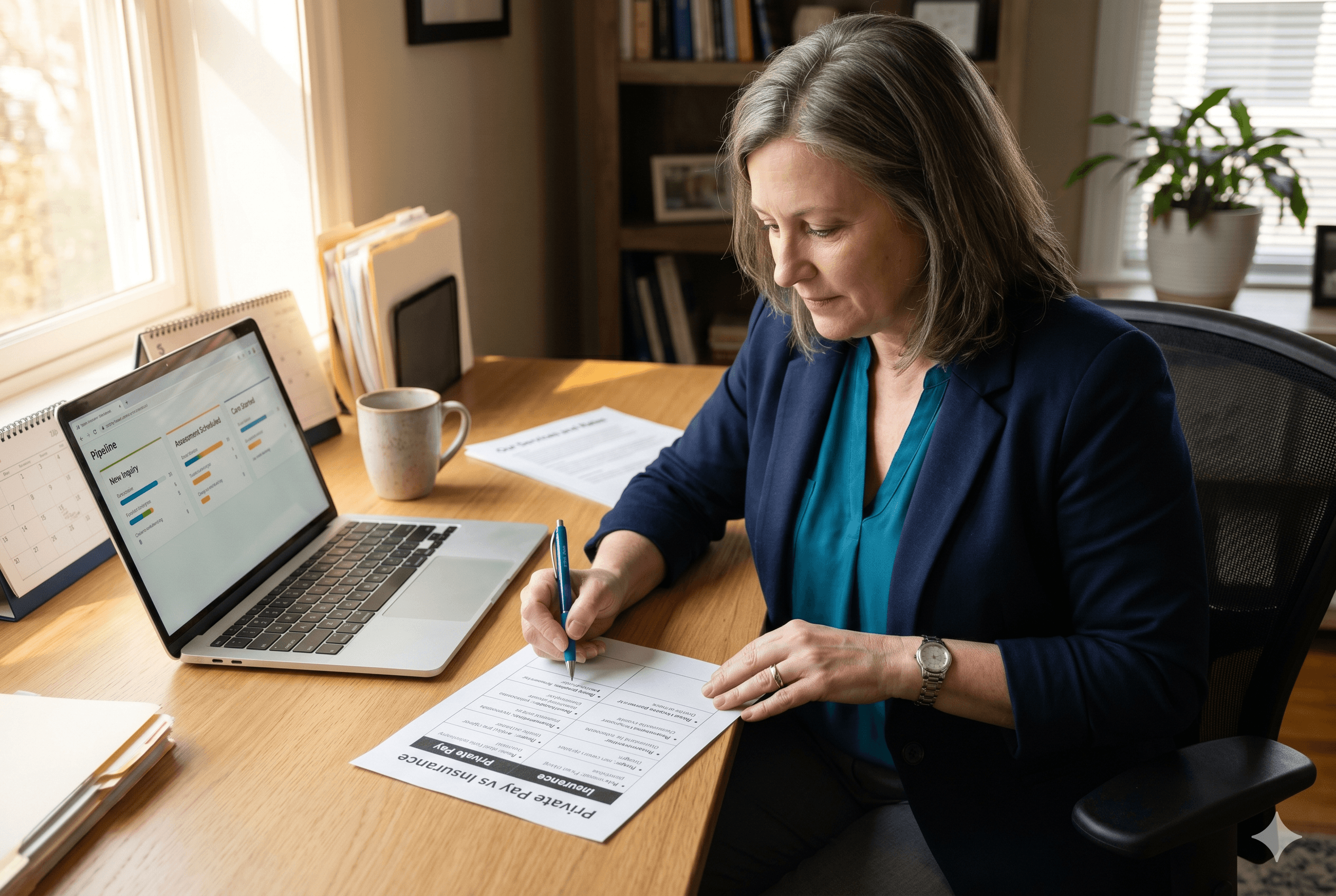
Payer type. Is the family funding privately, through long-term care insurance, or another source?
The screening is also the moment to give a clear, honest summary of your agency's services, pricing range, and intake process. Families who understand what happens next are more likely to stay engaged through the assessment stage.
What to avoid:
Letting the call run without structure, ending with no clear next step confirmed
Being vague about pricing when asked directly
Overselling before you understand whether the situation is actually a good fit
What to Measure
Phone screening to assessment conversion rate. What percentage of screening calls result in a booked assessment? Agencies with a structured screening process typically convert 60 to 75% of qualified calls into assessments.
Time from inquiry to assessment scheduled. Best-in-class agencies schedule the assessment within 24 to 48 hours of first contact. Delays beyond 72 hours significantly increase the chance that the family has already committed to a competitor.
Tracking these numbers consistently is the starting point for improving them. For agencies that want a complete framework for measuring intake performance at every stage, home care intake KPIs covers the benchmarks worth tracking and what good looks like at each pipeline stage.
Stage Three: The In-Home Assessment
What to Do
The in-home assessment is the most important event in the home care sales process. It is the moment the family sees your agency in person, evaluates your competence and care, and decides whether to trust you with someone they love.
A well-run assessment covers:
Physical environment. Safety hazards, home layout, accessibility, and anything relevant to caregiver logistics
Care recipient status. Current health, cognitive status, mobility, continence, and sensory limitations
ADLs. Bathing, dressing, grooming, eating, toileting, ambulation
IADLs. Meal preparation, housekeeping, laundry, errands, medication management, transportation
Social and emotional needs. Preferences for companionship, hobbies, routine, and caregiver personality
Family dynamics. Who is involved in day-to-day oversight, who is the primary contact, and what has prompted the decision to seek help now
Care plan inputs. Preferred schedule, caregiver preferences, specific instructions or restrictions
Take structured notes during the assessment. The information captured here feeds directly into the care plan, the caregiver match, and the service agreement. Assessments where notes are vague or incomplete produce care plans that do not reflect the actual situation, which leads to poor caregiver matches, family dissatisfaction, and early churn.
What to avoid:
Spending the majority of the assessment talking rather than listening
Leaving without confirming the next step and timeline
Taking unstructured notes that are difficult to convert into a care plan afterward
What to Measure
Assessment to care start conversion rate. What percentage of completed assessments result in a client starting care? A rate below 60% typically indicates a problem in the post-assessment follow-up, not the assessment itself.
Time from assessment to care plan delivered. Best-in-class agencies deliver a care plan draft within 24 hours of the assessment. Delays beyond 48 hours give families time to reconsider or engage a competing agency.
Stage Four: The Care Plan and Proposal
What to Do
The care plan and service proposal are the documents that convert a verbal agreement into a formal commitment. They need to arrive quickly, read clearly, and reflect exactly what was discussed during the assessment.
A complete care plan covers:
Client demographics and emergency contacts
Summary of care needs and relevant health information
ADL and IADL support required with specific instructions
Preferred schedule, shift times, and any flexibility needed
Caregiver match criteria and any specific preferences or restrictions
Goals of care and how progress will be monitored
The service proposal that accompanies the care plan should include:
The proposed rate with a clear breakdown of what is included
The start date and initial schedule
The service agreement terms in plain language
A clear and simple path to sign and confirm
Families who receive a clear, specific, professionally presented care plan and proposal within 24 hours of their assessment are significantly more likely to sign than those who receive a generic document three days later.
What to avoid:
Sending a care plan that reads as if it was copied from a template with minimal personalization
Burying pricing in unclear language that requires a follow-up call to interpret
Sending the proposal without a follow-up call to walk through it together
What to Measure
Time from assessment to proposal delivered. Target: under 24 hours.
Proposal to signature conversion rate. If this rate is consistently below 70%, the problem is usually in the proposal itself: unclear pricing, slow delivery, or lack of follow-up after sending.
For agencies that want to understand how documentation at this stage can be produced without manual reconstruction after every assessment, AI call summaries for home care explains how structured assessment notes feed directly into care plan drafts automatically.
Stage Five: The Follow-Up Between Stages
This stage is not a single event. It is the connective tissue between every step in the playbook above, and it is where most home care agencies lose clients they should have converted.
After every stage, there should be a documented follow-up within 24 hours that:
Confirms what was discussed and what was agreed
States clearly what happens next and when
Invites the family to ask questions or raise concerns
The format matters less than the consistency. A brief, personalized email that arrives the same day as a screening call tells a family that your agency is attentive and organized. The same email arriving three days later tells them the opposite.
A structured follow-up process does not require more time per inquiry. It requires a system that produces a personalized, professional message quickly enough that it goes out before the next task takes priority. For agencies building this kind of consistency into their intake process, streamlining home care client acquisition with AI covers how agencies maintain that standard across every inquiry rather than just the ones that come in on a quiet day.
Stage Six: The Signed Agreement and Care Start
What to Do
Once the family has verbally agreed to move forward, the path to a signed agreement should be as frictionless as possible. Every day between verbal agreement and signed contract is a day the family might reconsider, talk to another agency, or be pulled in a different direction by competing priorities.
Best practices at this stage:
Send the service agreement digitally with a simple e-signature option
Follow up by phone within 24 hours if the agreement has not been returned
Confirm the start date, first caregiver, and any specific instructions in writing before care begins
Send a brief welcome message to the family the day before the first visit
The care start is also the moment to set expectations for ongoing communication. Let the family know how often they will hear from the agency, who their primary contact is, and how to reach someone if a concern comes up outside of business hours.
What to Measure
Time from verbal agreement to signed contract. Target: under 48 hours.
Overall inquiry to care start cycle time. Best-in-class agencies close in three to seven days from first inquiry. Cycles longer than fourteen days typically reflect gaps in follow-up or documentation at one of the earlier stages.
How Sage Care Supports Every Stage of This Playbook
The playbook above describes a specific, consistent, well-documented intake process. For a solo operator or a small team wearing multiple hats, executing every step of that process for every inquiry is the challenge.
Sage Care is built around this exact workflow. Every call is recorded and transcribed automatically. After each screening call or in-home assessment, the AI generates a structured summary and a draft follow-up email ready to review and send in under five minutes. Care plan drafts are produced from assessment data rather than typed from scratch. Client records sync directly into WellSky or AxisCare when care begins, without duplicate entry.
The result is that every inquiry moves through the playbook at the same speed and with the same quality of follow-up, regardless of how many other things are happening that day.
The Bottom Line
The home care sales process is a trust-building sequence more than it is a sales sequence. Every stage, from the first response to the signed agreement, is an opportunity to demonstrate that your agency is organized, attentive, and worthy of the responsibility the family is about to hand over.
Agencies that define this process, execute it consistently, and measure it at each stage convert more inquiries, close faster, and retain clients longer. The ones that leave it to memory and circumstance get inconsistent results regardless of how good their care actually is.
If you want to see how Sage Care helps agencies execute this playbook consistently for every inquiry without adding admin time, schedule a demo. The 30-day free trial gives you enough runway to run the full process on real inquiries before committing.
Frequently Asked Questions
What is a typical home care sales cycle?
From first inquiry to signed service agreement, best-in-class agencies close in three to seven days. The cycle typically includes a phone screening within 24 hours, an assessment within 48 hours, and a care plan and proposal delivered within 24 hours of the assessment.
How do home care agencies close more clients?
Consistent, fast follow-up at every stage is the single most controllable factor. Agencies that respond within the hour, deliver care plans within 24 hours of an assessment, and follow up the same day after every conversation convert significantly more inquiries than those that do not.
How long does it take from inquiry to first home care visit?
For agencies with a defined process, three to seven days is the benchmark from first inquiry to care start. Agencies without a structured follow-up process often take two to three weeks, which significantly increases the risk of losing the client to a faster competitor.