Why 2026 Is the Year Small Home Care Agencies Should Invest in AI
2026 is the year small home care agencies turn AI into real operational advantage.

Jon Levinson
CEO & Co-Founder, Sage
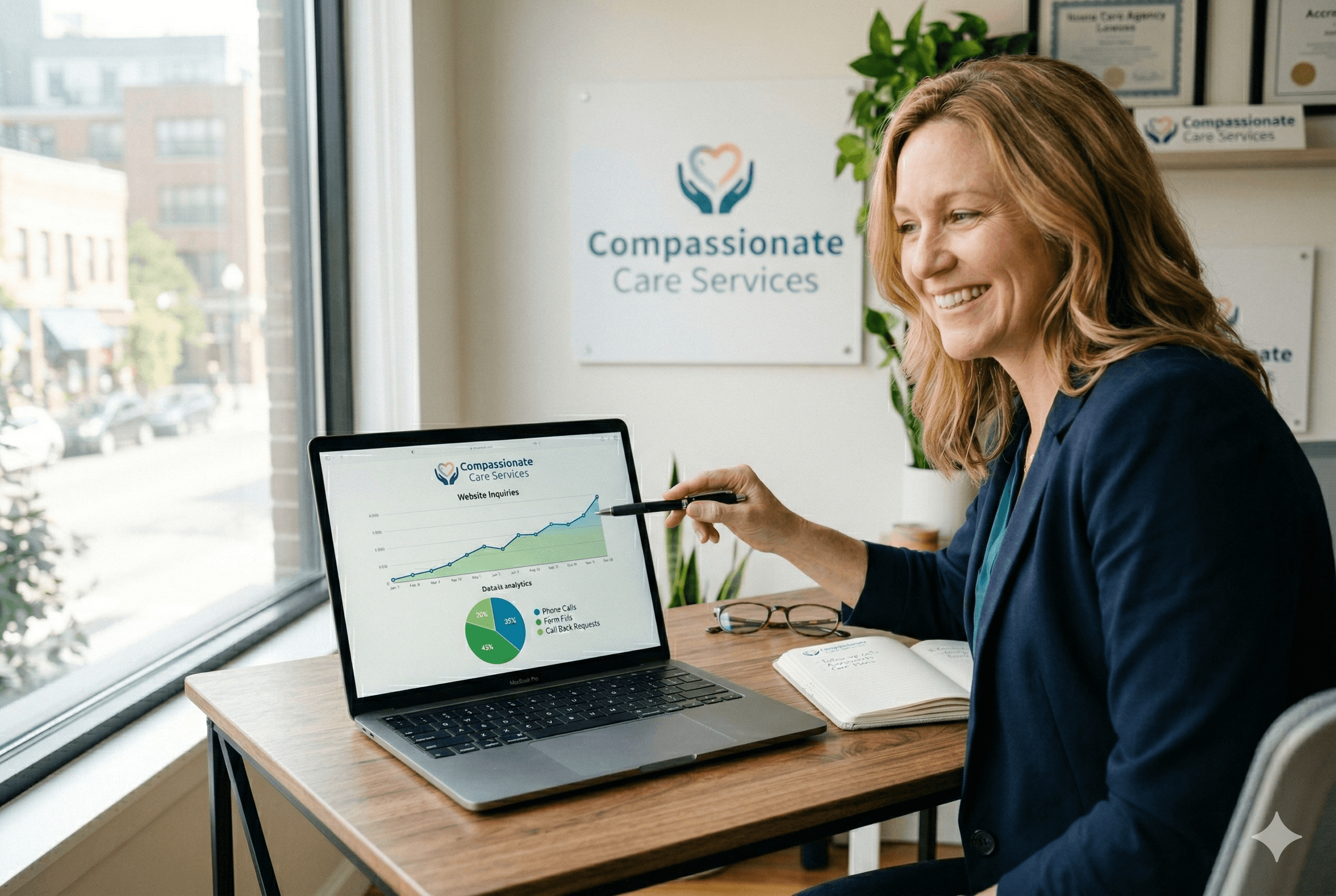
The agencies investing in AI right now are not the biggest ones. They are the scrappiest ones. The owner-operators who are tired of losing leads to better-resourced competitors and are looking for a way to punch above their weight without adding headcount.
AI in home care is no longer experimental. It is practical, affordable, and increasingly necessary. And 2026 is the year that the gap between agencies using it and agencies still running on spreadsheets and gut instinct becomes impossible to ignore. For agencies still weighing the real cost of staying manual, there is a strong operational case for making the switch now.
What Has Changed in the Last Two Years
AI Tools Have Moved From Experimental to Practical
Two years ago, AI tools in home care were largely theoretical. Pilots, proof of concepts, enterprise integrations that cost more than most small agencies earn in a month.
That has changed. AI tools built specifically for home care intake workflows are now accessible, affordable, and designed for teams of one or two, not enterprise IT departments. The barrier to entry has dropped significantly and the use cases are concrete: generating call summaries, drafting follow-up emails, creating care plan drafts, logging records automatically.
These are not futuristic capabilities. They are available today and agencies using them are processing inquiries faster, following up more consistently, and converting more leads with the same or smaller teams. Small agencies that have moved from manual intake processes to AI-assisted workflows are seeing the most immediate impact on response time and lead conversion.
Family Expectations Have Risen
Families searching for home care in 2026 have higher expectations than they did three years ago. They are used to fast, personalized responses from every service business they interact with. When they contact a home care agency and hear back the next morning with a generic email, the contrast is jarring.
Agencies meeting modern expectations are responding within the hour, sending personalized follow-ups, and delivering care plans within twenty-four hours of an assessment. That standard was set by larger, better-staffed agencies. AI is what allows a small agency to meet it. To understand how these rising expectations are reshaping home care across the board, this breakdown of shifting family expectations is worth reading alongside this post.
The Competitive Landscape Is Tightening
Home care is a growing market but it is not an easy one. In high-density markets, small agencies are competing against franchises with centralized intake teams, national brand recognition, and marketing budgets that dwarf anything an independent agency can deploy.
AI does not eliminate that gap entirely. But it narrows it in the places that matter most: response speed, documentation quality, follow-up consistency, and intake capacity. A two-person agency with the right tools can operate with the intake efficiency of a team twice its size. In markets where saturation is increasing and differentiation is harder to maintain, operational efficiency is becoming a genuine competitive advantage.
Where AI Creates the Most Value for Small Agencies in 2026
Post-Call Documentation
This is the highest-impact use case for most small agencies. Every intake call generates twenty to thirty minutes of documentation work: call notes, follow-up emails, record updates, care plan flags. Multiply that by five to ten calls a week and you have several hours of admin that delays every subsequent touchpoint.
AI eliminates the blank-page problem. After every call, a structured summary, draft follow-up email, and record update are generated automatically and ready for review within minutes. The coordinator approves, edits where needed, and moves on. What used to take thirty minutes takes under five.
That time saving compounds. Faster documentation means faster follow-up. Faster follow-up means warmer leads. Warmer leads convert at higher rates. The mechanics of how AI call summaries work in a home care context explain exactly how this plays out in a real intake workflow.
Lead Management and Pipeline Visibility
Small agencies lose leads not because they do not care but because nothing in their current setup flags a lead that has gone quiet for four days. A spreadsheet does not send a reminder. A sticky note does not update itself.
AI-assisted CRM tools surface aging leads, flag incomplete records, and keep the intake pipeline visible without requiring the owner-operator to manually review everything each morning. The result is a pipeline that moves consistently instead of one that surges when things are quiet and stalls when they get busy.
Agencies tracking the right metrics already know where their pipeline is breaking down. For those that are not yet measuring their intake performance, starting with a few key intake KPIs makes it far easier to see where AI investment will have the most direct impact.
Care Plan Creation
Care plan drafting is one of the most time-intensive steps in the intake process and one of the most directly addressable with AI. Agencies using AI-assisted intake platforms can generate a structured care plan draft from assessment notes or recordings within minutes, rather than spending one to two hours building a document from scratch.
The clinical judgment and final review still belong to the coordinator. AI handles the structural first draft. The family receives a polished, personalized care plan faster, and the coordinator recovers hours of their week.
Communications and Follow-Up
Consistent follow-up is what separates agencies that convert thirty percent of their leads from those converting sixty percent. The difference is rarely the quality of the care. It is the reliability of the follow-up process.
AI-assisted platforms help agencies maintain that consistency by drafting follow-up emails automatically, logging every communication against the right record, and ensuring that no lead goes cold because someone got busy. For agencies evaluating how their communications stack supports intake, using an agency management system to connect these moving parts is a powerful way to frame the workflow.
What Small Agencies Get Wrong About AI Adoption
Waiting Until They Are Bigger
The most common mistake small agency owners make is assuming AI tools are for larger agencies. The logic goes: once we are bigger and have more leads to manage, then we will invest in better systems.
That logic is backwards. AI creates the operational efficiency that enables growth. Agencies that wait until they are bigger often find that their manual systems are actively limiting how big they can get. The intake bottlenecks that feel manageable at five inquiries a week become serious at fifteen.
Worrying That AI Will Feel Impersonal
A common concern among home care operators is that AI-generated emails or summaries will feel cold or generic, undermining the warmth that families expect from a care provider.
In practice, the opposite is often true. AI-generated follow-up emails that reference specific details from a call, the family member's name, the care needs discussed, the questions that were raised feel more personal than a generic template sent manually. The AI handles the structure. The coordinator adds their voice. The result is faster and more specific than anything written from scratch under time pressure.
Overlooking HIPAA Requirements
AI tools that process call recordings or intake information are handling protected health information. This is not a reason to avoid AI. It is a reason to choose platforms built specifically for healthcare-adjacent workflows with proper HIPAA controls in place.
Generic AI tools are not built for this. Home care specific platforms are. Before adopting any AI tool for your intake process, see what HIPAA compliance actually requires and why this one is a critical step that too many agencies skip.
How to Start Without Getting Overwhelmed
Adopting AI does not mean rebuilding your entire operation overnight. The agencies that integrate AI most successfully start with a single high-impact use case and expand from there.
A practical starting point for most small agencies:
Identify the single biggest time drain in your intake process, for most agencies this is post-call documentation
Find a platform that addresses that specific bottleneck and is built for home care
Run it for thirty days and measure the time saved and the impact on follow-up speed
Expand from there once the first use case is working
That is it. One problem, one tool, thirty days. The compounding effect of even a small efficiency gain at the intake stage shows up quickly in lead conversion and client growth.
Final Thoughts
The agencies investing in AI now are building an operational advantage that will be very difficult for their competitors to close in two or three years. They are processing more leads with smaller teams, converting at higher rates, and spending less time on admin that does not require a human.
The cost of waiting is not just the time lost today. It is the compounding advantage you are handing to competitors who are already moving.
Sage is built for home care agencies that want to operate with the efficiency of a much larger team. AI-generated call summaries, care plan drafts, automated follow-up, built-in communications, and a HIPAA-compliant CRM, all in one platform designed for owner-operators.
Schedule a demo to see how Sage fits into your workflow. Sage offers a 30-day free trial with no commitment required.
Frequently Asked Questions
Is AI in home care actually affordable for a small agency?
Yes. Platforms built for small home care teams are priced for owner-operators, not enterprise budgets. The time saved on admin alone typically offsets the cost within the first month.
Will AI replace my intake coordinator?
No. AI handles documentation, drafting, and record-keeping. Coordinators still manage relationships, apply judgment, and make decisions. AI removes the admin burden, not the human element.
What is the first AI tool a small home care agency should adopt?
Start with post-call documentation. AI-generated call summaries and draft follow-up emails deliver the fastest, most measurable return for agencies managing intake with a small team.
Do I need technical expertise to use AI intake tools?
No. Platforms built for home care are designed for operators, not developers. If you can review an email and tap approve, you can use AI-assisted intake software.