
The 7 Administrative Tasks Slowing Down Your Home Care Intake Process
Discover the seven admin tasks quietly hurting your home care intake speed and growth.

Sage Care Editorial
Content & Communications Team
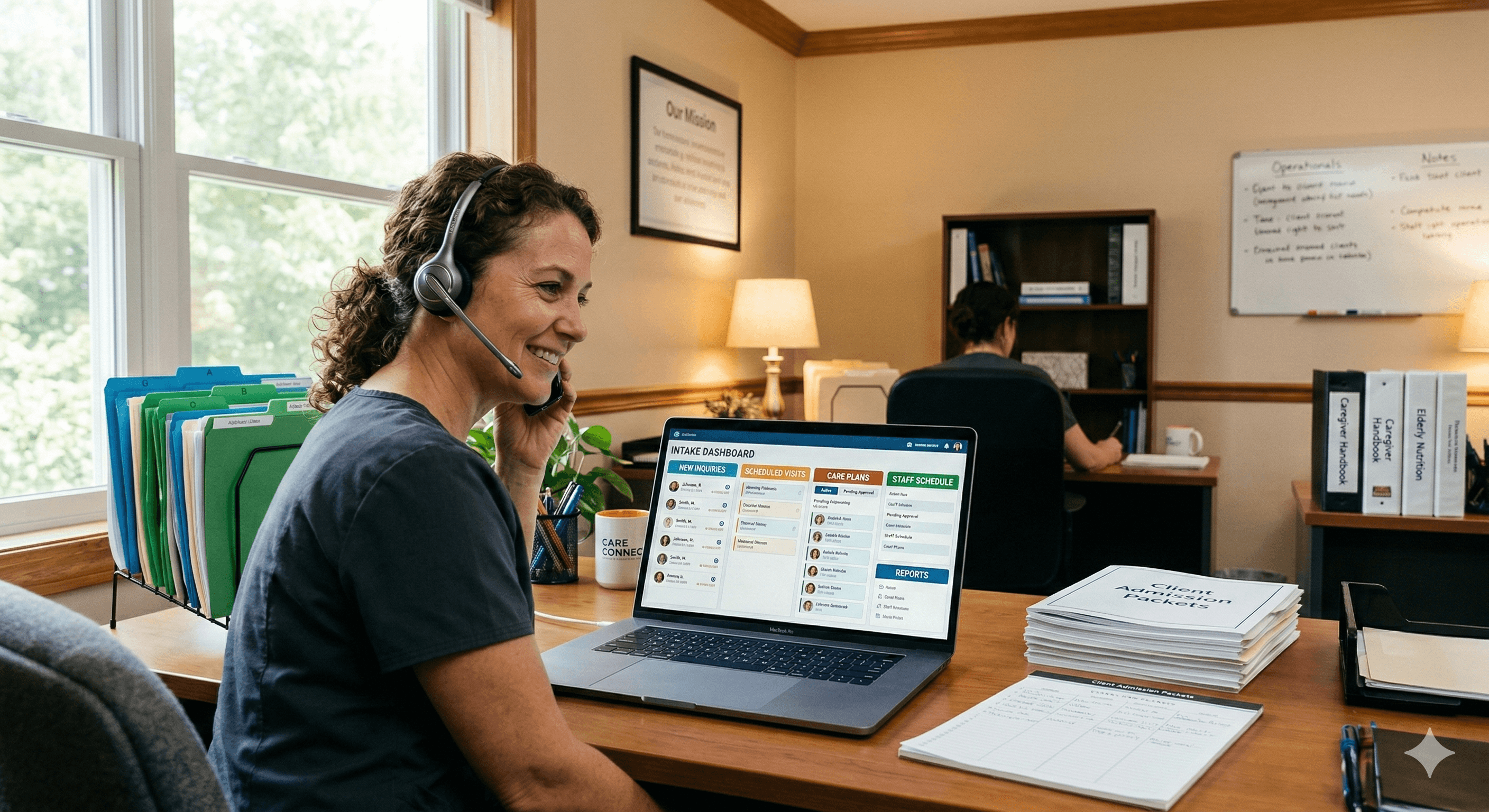
Running a small home care business means every new inquiry matters. But most agencies lose time and leads to slow, manual intake work. The problem is not your care quality. It is the hidden administrative tasks that stretch a 10-minute call into 30 minutes of follow-up.
What feels simple today often becomes the bottleneck tomorrow. The time lost to paperwork, double entry, and missed follow-ups is exactly why agencies are moving away from manual workflows to automated home care software that can scale with them.
1. Manually Logging Every Call and Inquiry
For most agencies, every new inquiry starts with a phone call. After the call, someone has to type notes into a spreadsheet or basic CRM, save voicemails, and remember who called about whom.
That usually means:
Re-listening to call recordings
Typing summaries from memory
Copy-pasting details into multiple systems
This turns a simple conversation into 10 to 20 minutes of admin work. It also creates gaps. If you forget to log a call or mistype a phone number, that lead may be gone for good.
A modern home care CRM should capture call activity in one place and connect it to the right client or family contact. When you add AI technology in home care, you can go further and have summaries and follow-ups drafted for you. This capability is exactly why agencies using AI call summaries consistently outperform manual workflows.
2. Rewriting the Same Follow-Up Emails and Texts
After every inquiry, you need to send something. A recap of what you discussed. A request for documents. The first step is to schedule a home assessment time. Many agencies still write them from scratch or copy old emails.
The result is:
Inconsistent tone and level of detail
Slow responses, especially after hours
Missed opportunities when you forget to follow up at all
Fast follow-up is one of the biggest drivers of marketing performance in home care. Families often call multiple agencies on the same day. The person who responds clearly and quickly wins trust.
Automating home care intake can generate draft follow-up emails and texts based on the actual call or in-home assessment. That speed is the same conversion advantage described in the journey from first inquiry to a completed care plan, where reducing admin time directly improves response time.
3. Double Entry Between CRM and Agency Management System
Many agencies use one tool for intake and a separate Agency Management System (AMS) for ongoing care.
Without such systems, your staff has to:
Create the client in your intake or home care CRM
Re-enter the same data into your AMS
Copy details about care needs and preferences into a care plan template
This double entry not only wastes time, but it also creates errors. A better approach is to use home care software that integrates your intake records with your AMS.
If you are evaluating how these systems work together, you can check out this guide on what an agency management system is to understand the complete structure.
4. Searching Through Disconnected Notes and Files
During intake, information ends up scattered across sticky notes, email threads, call recordings, and paper forms. When a family member calls back, you may need several minutes just to remember who they are and what you discussed.
This creates:
Awkward pauses while you search for the right record
Re-asking the same questions families have already answered
A less professional experience that hurts referrals and reviews
Centralized contact management changes this. A structured home care CRM keeps patients, family contacts, referrers, and activity history in one place. This visibility is also what allows agencies to track performance using home care intake KPIs for growth instead of relying on guesswork.
5. Turning Assessments Into Actionable Care Plans
In home assessments are rich with detail. Translating that conversation into an organized care plan is where many agencies get bogged down.
Without automation, your staff has to:
Listen back to long recordings or read handwritten notes
Type out condition summaries and care goals
Update care plan templates by hand
With home care intake automation, AI can generate structured summaries and care plan suggestions from the assessment recording. Staff then review, adjust, and approve.
This is the same operational improvement that shortens the path from first call to start of care and helps agencies convert more of the leads they already have.
6. Manually Tracking Lead Status and Next Steps
Most small agencies rely on spreadsheets or memory to track where each lead is in the intake pipeline.
Manual lead tracking creates:
Leads that go cold because no one followed up
Confusion when multiple team members touch the same client
No clear view of conversion rates or bottlenecks
A dedicated home care lead management workflow lets you see every inquiry from first contact through admission. That pipeline visibility is what turns intake into a predictable growth engine and informs smarter home care marketing decisions.
7. Rebuilding Context Every Time Someone Calls Back
Families rarely decide after a single conversation. They may call back days or weeks later with new questions.
Common issues include:
Asking for details already shared in previous calls
Giving inconsistent information
Wasting call time on background instead of next steps
When your VoIP system, call recordings, and home care CRM live together, every call is automatically linked to the right record. AI-generated summaries give you a quick refresher before you pick up the phone.
How Sage Helps Remove These Intake Bottlenecks
Sage is built for small home care agencies that need to look organized and responsive without hiring a large back office team.
It can help you by:
Capturing calls and in-home assessments with built-in telephony and recording
Using AI to generate summaries, follow-up emails, and care plan updates, you can approve in under 5 minutes
Acting as a focused home care CRM with patient and contact directories, activity history, and lead tracking
Synchronizing with your AMS systems, like WellSky, so you can avoid doing double entry
Because it operates in a secure, compliant environment, it also supports the safeguards we have mentioned in our AI, compliance, and PHI in-home care operations guide.
The result is less time on manual documentation and more time on the high-touch conversations that grow your home care business.
Ready to automate your intake admin?
If you are tired of spending 15 to 30 minutes on admin after every call, it may be time to rethink your intake tools. Sage offers a 30-day free trial so you can see how home care intake automation fits your existing workflow without a big upfront commitment.
To see Sage in action and understand how it can streamline your intake process end-to-end, schedule a demo.
FAQs about Home Care Intake Process 
How can I speed up my home care intake process?
Standardize your workflow, centralize records in a home care CRM, and use intake automation to handle repetitive documentation.
Is AI technology in home care safe to use for intake?
Yes, when you use HIPAA-compliant home care software that keeps humans reviewing and approving all AI-generated outputs.
Do I need a separate tool for home care lead management?
Not necessarily. A well-designed home care CRM can combine lead tracking, communication history, and intake automation in one place.