
What We Learned Cold-Calling Over 50 Home Care Agencies
We called 50+ home care agencies as a prospective client. Here is exactly what we found.

Jon Levinson
CEO & Co-Founder, Sage
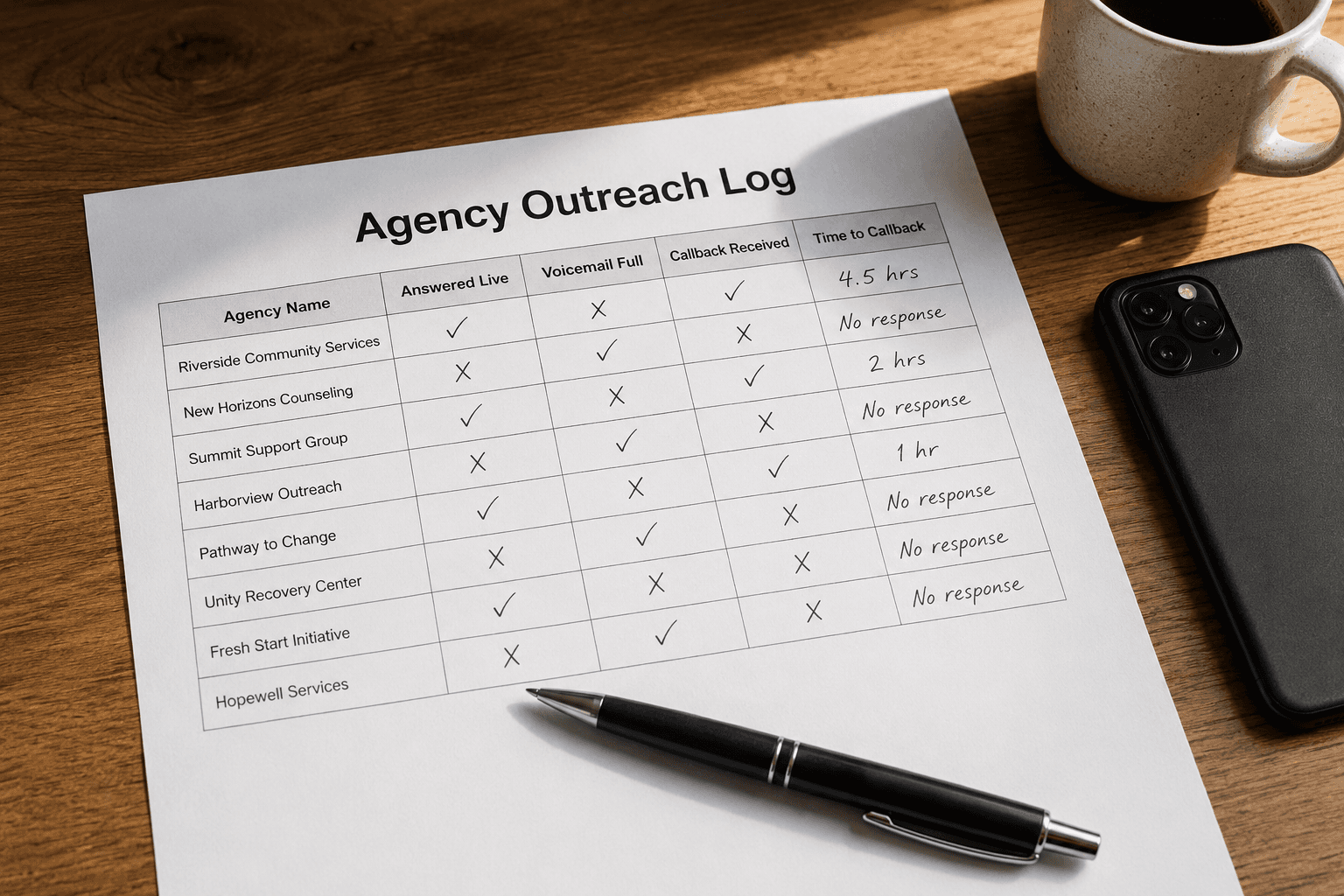
Earlier this year, our team did something that felt almost too simple to be worth writing about. We called home care agencies. Not to pitch them, not to run a survey, but to experience exactly what a family experiences when they reach out to a home care agency for the first time.
We called over 50 agencies across the United States, spread across urban, suburban, and rural markets, ranging from solo owner-operators to agencies with 20-plus employees. We called during business hours. We left voicemails where prompted. We tracked everything.
What we found was striking, not because agencies were doing anything unusual, but because the gap between what families expect and what they actually experience is wider than most agency owners realize. Given that families contact more than one agency before deciding, what happens in the first few minutes of contact matters enormously. This is what we observed.
Methodology
We called 54 home care agencies between January and March 2026. All calls were made during stated business hours, between 9am and 4pm local time, on weekdays. Agencies were selected across five states representing a mix of high-density urban markets, mid-sized suburban areas, and smaller rural markets.
Agency sizes ranged from solo operators to agencies with an estimated 15 to 25 administrative staff based on online presence and directory listings. We did not identify ourselves as Sage Care on initial contact. We called as a family member inquiring about care for an aging parent, which is the most common home care inquiry scenario.
For each call we recorded:
Whether the call was answered live or went to voicemail
Time to answer where applicable
Whether the voicemail was functional and had available storage
Whether a callback was received and how long it took
What questions the agency asked during live calls
General impressions of professionalism, preparedness, and intake quality
All findings below reflect observations from this specific sample and should be read as directional rather than statistically representative of the entire home care industry.
The Headline Finding: Most Agencies Are Not Answering Their Phones
Of the 54 agencies we called, only 37% answered live on the first attempt. The remaining 63% went to voicemail.
That number alone is significant given that Sage Care's consumer research found 81% of families expect a response within one hour of an initial inquiry, and 41% expect one within 15 minutes. An agency that does not answer a first call is already outside the expectation window for nearly half of all prospective clients before the conversation has even started.
But the voicemail findings were where things became genuinely surprising.
Of the agencies that went to voicemail:
23% had voicemail boxes that were full and could not accept messages
11% had voicemail that had never been set up at all, producing either an automated carrier message or a generic prompt with no agency name
Of those where we left a message, only 42% called back within 24 hours
The average callback time for those who did respond was 4.2 hours
22% of agencies we left voicemails with never called back at all
To put that in context: more than one in five agencies we contacted as a prospective client never responded. At all.
How Agencies Handle Inbound Inquiries
Among the 20 agencies that answered live, the quality of the intake conversation varied significantly. We tracked what questions were asked during the call and how the conversation was structured.
What the best calls looked like:
A small number of agencies, roughly 15% of live calls, handled the inquiry in a way that felt genuinely professional. They asked about the care recipient's situation before jumping to logistics, confirmed availability in our stated area, explained the next step clearly, and offered a specific time to schedule an assessment. These calls felt like the agency had done this before and had a process.
What most calls looked like:
The majority of live calls followed no discernible structure. Common patterns included:
Leading immediately with pricing questions before understanding the care situation
Asking for our address before asking anything about the person needing care
Providing no clear next step at the end of the call
Forgetting to take a callback number
The finding that surprised us most:
Four agencies we spoke with could not confirm their own pricing when asked directly. Two said they would need to call us back with that information. One said pricing "depends on a lot of things" and ended the conversation without elaborating. Given that 91% of families say seeing a price range before contacting an agency is important, an agency that cannot answer a basic pricing question during the first call is almost certainly losing clients to competitors who can.
Geographic and Size Distribution
Our sample spanned agencies in California, Texas, Florida, Ohio, and New York, covering both high-competition urban markets and lower-density rural and suburban areas.
A few patterns worth noting:
Urban agencies answered live more often than rural ones, likely reflecting higher staffing levels, but did not necessarily handle the conversation better once connected
Smaller agencies (estimated under five staff) had the highest rate of full or unconfigured voicemail boxes, suggesting that communication infrastructure is deprioritized when the owner is wearing every hat
Agencies in competitive urban markets were significantly more likely to ask about our timeline and urgency, suggesting more awareness of competitive pressure at the intake stage
Rural agencies that did answer were often more thorough in their initial questions, possibly reflecting lower call volume and more time per inquiry
The Competitive Implications
The data from this exercise points to a straightforward competitive reality: the bar for home care intake responsiveness is low, and the agencies that clear it consistently are winning a disproportionate share of available clients.
If 63% of agencies do not answer their phone on first contact, and 22% never respond to voicemails at all, then an agency that answers live, follows up within the hour, and sends a professional summary after the call is not just doing well. It is in a different category from most of its local competition.
This connects directly to what families are experiencing during their search. In Sage Care's consumer survey, 44% of respondents said they waited days to hear back from an agency, and 15% said they never received a response. Those numbers align almost exactly with what we observed calling agencies directly.
The problem is real, it is widespread, and it is largely invisible to the agencies experiencing it because there is no feedback loop. A family that never hears back does not call to complain. They just choose someone else.
For agencies thinking about how to position themselves against larger competitors with established referral networks, response speed and intake consistency are among the few areas where a small agency can genuinely outperform a franchise without outspending one.
The intake stage is also where data collection either starts cleanly or starts messy. Agencies that capture structured information from the first call, and follow up with documented next steps, build a client pipeline that is measurable and improvable. Agencies that rely on memory, sticky notes, and shared spreadsheets build a pipeline that depends entirely on one person never having a bad week.
The practical difference between those two approaches shows up in conversion rates, and agencies that track their lead-to-assessment and assessment-to-start metrics tend to improve them simply by making them visible.
What This Means for How Sage Care Is Built
Sage Care was built in direct response to the gap this exercise made visible. The agencies losing leads are not losing them because they do not care. They are losing them because the administrative work that happens after every call competes directly with the follow-up that should happen immediately after it.
When documenting a call takes 20 minutes, and the next call is already waiting, follow-up gets deferred. When voicemail is full, it is usually because checking and returning messages requires a block of focused time that never materializes between other tasks. When intake lives in a spreadsheet, leads fall through the moment the person managing the spreadsheet gets pulled in another direction.
Sage Care addresses this by automating the documentation layer entirely. Every call is recorded and transcribed. Every assessment generates a structured summary and a draft follow-up email, reviewed and sent in under five minutes.
The lead pipeline updates automatically as conversations progress, and client records sync directly into WellSky or AxisCare when care begins, with no duplicate entry. To see how that workflow runs from first inquiry through to a signed care plan, the full intake automation walkthrough covers each stage in detail.
The goal is not to replace the human relationships that make home care work. It is to make sure the operational layer never becomes the reason a family chooses someone else.
A Note on Replication
If you want to run this exercise yourself, it takes less than an afternoon. Call five to ten of your local competitors as a prospective client and track exactly what happens. Note whether they answer, how long it takes, what they ask, and whether they follow up.
Most agency owners who do this come away with a clearer picture of the competitive landscape than any market research report could provide. And most come away more motivated to tighten their own intake process than they expected.
The Bottom Line
The agencies winning home care client acquisition in 2026 are not necessarily the biggest or the best-funded. They are the ones that answer the phone, follow up the same day, and make the intake process feel organized and trustworthy from the very first conversation.
The data from this exercise suggests that clearing that bar puts an agency ahead of the majority of its local competition. Not because the bar is high. Because so few agencies have built the systems to clear it consistently.
If you want to see how Sage Care helps agencies answer faster, follow up reliably, and convert more of the leads they are already receiving, schedule a demo. There is a 30-day free trial, and the setup takes less time than the leads you are currently losing to a full voicemail box.
Frequently Asked Questions
How do most home care agencies handle inbound inquiries?
Based on our sample, the majority rely on voicemail for first contact and have no structured intake process for documenting or following up on leads consistently.
What percentage of home care agencies answer their phones during business hours?
In our sample of 54 agencies called during stated business hours, only 37% answered live on the first attempt.
What is the most common software stack used by small home care agencies?
WellSky and AxisCare are the most common AMS platforms among agencies using dedicated software. A significant portion of smaller agencies rely on spreadsheets or no formal system for intake tracking.