
5 Signs Your Home Care Agency Has Outgrown
Know the 5 signs you have outgrown manual tools and what to use instead.

Jon Levinson
CEO & Co-Founder, Sage
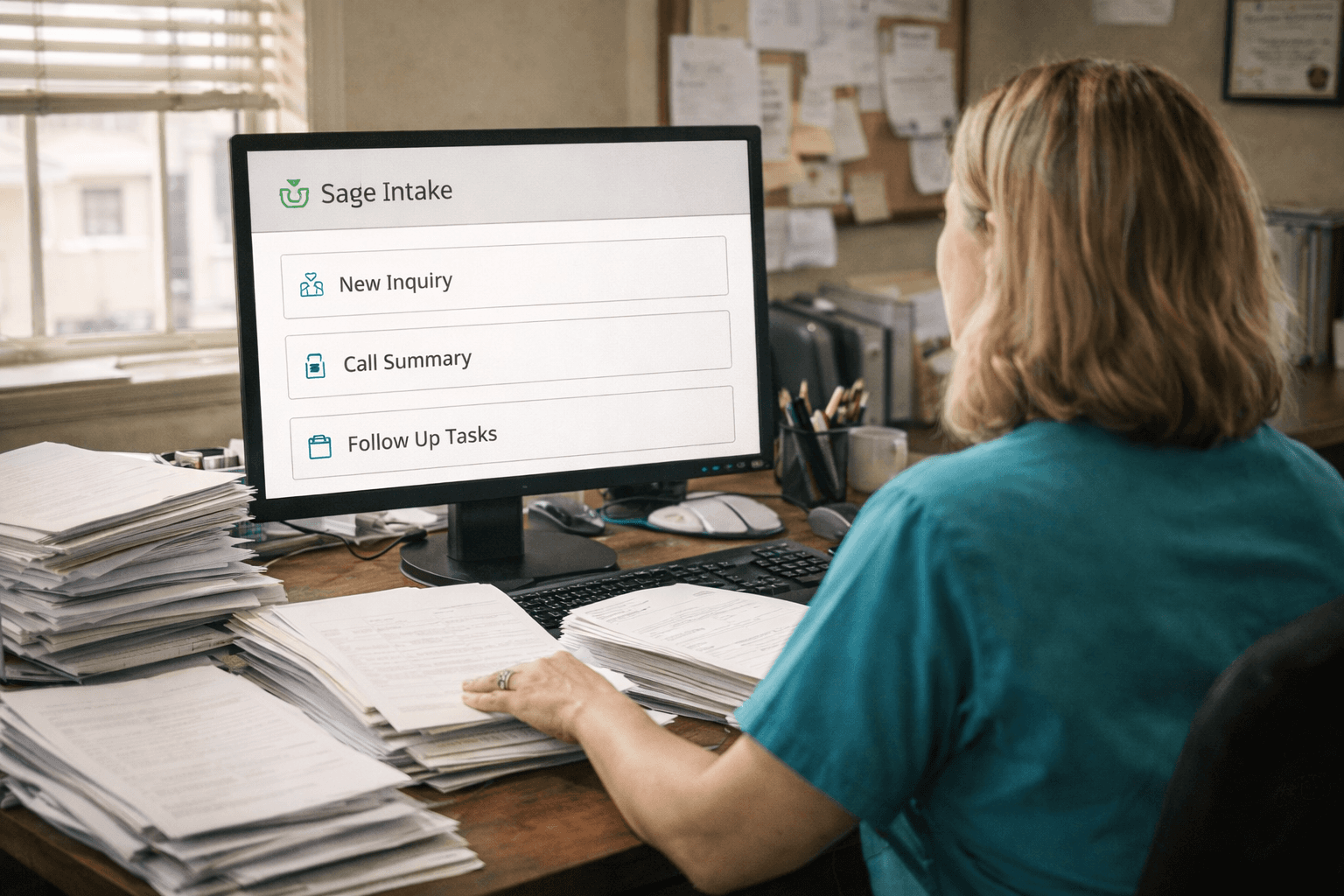
Running a growing home care business with spreadsheets and sticky notes works — until it really does not. The very tools that helped you get off the ground can start slowing you down, causing missed follow-ups, and making your agency look less professional than it really is.
Many agencies reach this point when they begin shifting away from scattered spreadsheets and toward more structured systems that organize inquiries, follow-ups, and client communication in one place — a transition many operators experience when they move from spreadsheets into a structured home care CRM workflow.
This guide walks through five clear signs that your agency has outgrown manual tracking, and what to implement instead so you can protect every lead, give families a smoother experience, and reclaim your time.
5 Warning Signs Your Systems Can't Keep Up
1. You Lose Track of Leads After the First Call
If you cannot confidently answer "what happened to the last 20 inquiries we received," your system is under strain. Most home care agencies convert only a fraction of their inbound leads, and the biggest leak is simple: no structured follow-up. When you rely on spreadsheets and paper notes, it is easy for things to slip:
A voicemail gets returned, but there is no record of the conversation
A family says "call us in two weeks" and the reminder never makes it to your calendar
You forget which version of your intake sheet has the latest notes
Research across service businesses shows that companies that follow up within an hour are significantly more likely to qualify a lead compared to those that wait even a few hours. In home care, where families are often reaching out in moments of stress, speed and consistency matter even more.
A dedicated home care CRM makes it easier to see every inquiry, its status, and the next step in one place instead of buried in spreadsheet tabs. Agencies that start structuring intake this way often notice the same operational improvements. You can learn more about this in this blog, where we talk about streamlining your home care client acquisition with AI.
2. Your Intake Process Depends on One Person's Memory
If your intake “system” is really just one trusted coordinator who "knows how we do things," you have already outgrown spreadsheets. You see this in a few ways:
Coverage falls apart when that person is off or on vacation
New staff shadow them for weeks because nothing is clearly documented
Families get very different experiences depending on who answers the phone
Home care intake automation helps standardize what happens after every call or in-home assessment. Instead of each staff member deciding what to document and how to follow up, structured systems generate organized call summaries, suggested follow-up messages, and care plan notes that your team can quickly review and approve.
Many agencies are now adopting tools that automatically summarize conversations, much like AI call summaries help home care agencies in capturing leads
3. You Spend More Time Transcribing Notes Than Talking to Families
If a 20-minute call with a family turns into another 20 minutes of typing notes into a spreadsheet, you are hitting the limits of manual tools. Many owner-operators describe their day like this: calls in the morning, then a pile of admin work at night. You replay voicemails, re-read sticky notes, and try to reconstruct conversations so everything can be entered into your systems. This is exactly where AI technology in home care is beginning to change how agencies manage documentation and follow-ups.
How AI reduces documentation time
With modern intake platforms, calls and assessments can be recorded (with consent) and automatically summarized. The system can generate:
A structured summary of the conversation
Draft follow-up emails or text messages
Suggested updates to client records or care plans
4. Your Data Lives Everywhere and Nowhere
Another sign you have outgrown spreadsheets is when you are never quite sure where the "truth" lives. A phone number might be in your mobile phone, on a sticky note from the client's daughter-in-law, and in a separate spreadsheet from the hospital discharge planner. This scattered approach creates real problems:
You cannot see the full history of calls, emails, and assessments
Staff rely on texts or side conversations for updates
Handoffs between team members become slow and error-prone
Centralizing records and communication
Modern home care software should act as a reliable system of record for contacts, activities, and communications. Many agencies are now moving toward systems that combine CRM records, call logging, and communication history in one place, often supported by VOIP phone systems.
With centralized records, you can open one profile and see every interaction with that family or referral partner.
5. You Cannot Clearly See What Is Working in Your Home Care Marketing
If you are counting rows manually or guessing, it becomes difficult to improve your marketing decisions. Spreadsheets also make it difficult to answer basic questions about your marketing and referral efforts:
Which referral partners send the most clients?
How many inquiries came in last month?
How long does it take to move a lead from first call to start of care?
Turning intake into measurable data
A structured CRM makes it easier to track where leads come from and how they move through your intake pipeline. Over time, you can see patterns, which hospitals send high-quality referrals, which channels convert best, and how quickly families move from inquiry to care start.
Agencies that begin measuring these metrics usually use the same framework outlined in this guide for tracking home care intake KPIs.
Moving Beyond Spreadsheets
Spreadsheets and sticky notes are great tools when you are just starting out. But once your agency begins handling steady inquiries, multiple referral sources, and growing documentation requirements, they quickly become limiting.
Moving to structured systems, including CRM tools, AI-assisted documentation, and integrated communication platforms, allows small agencies to handle more leads, respond faster, and provide a more professional experience for families.
If you are seeing these signs in your own agency, it is a strong signal that spreadsheets and sticky notes are holding you back. To see how Sage can simplify your intake workflow and protect every lead, you can schedule a demo. Sage includes a 30-day free trial so you can test it with real calls and real clients before you decide.
FAQs
How do I know it’s time to move off spreadsheets?
When you start missing follow-ups, duplicating data, or relying on one person’s memory to run intake.
Is AI in home care too complex for a small agency?
No. Modern tools work in the background, drafting summaries and follow-ups for your team to quickly review.
Will home care intake automation replace my intake staff?
No. It removes data entry and note-taking so your staff can spend more time talking to families.