What Happens After a Home Care Intake Call and How AI Can Handle It for You
Automate post call intake work so every home care inquiry gets timely follow up.

Sage Care Editorial
Content & Communications Team
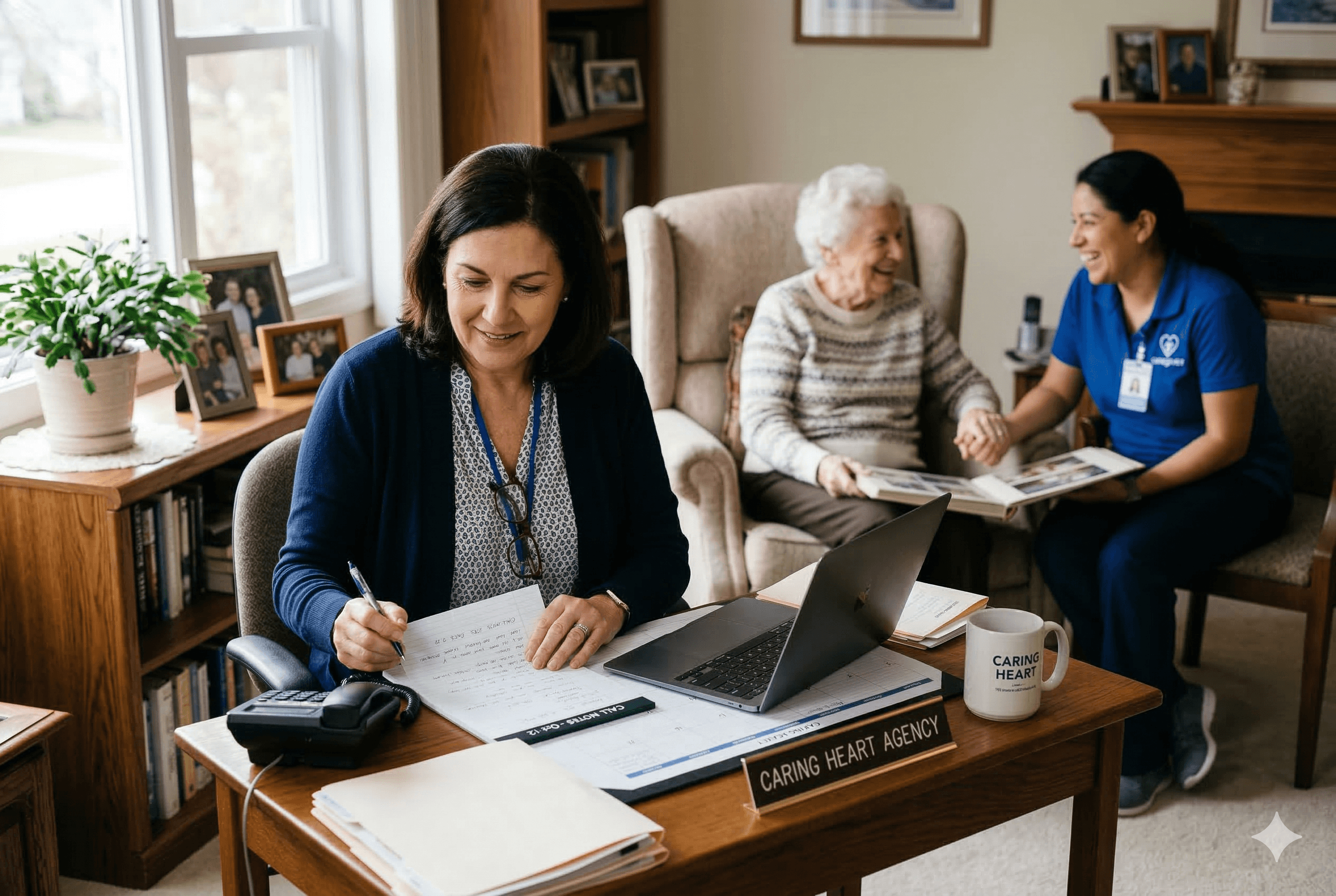
You just finished a thirty-minute intake call with a family inquiring about care for their mother. The conversation went well. They are serious. This could be a real client. Now what?
If you are like most small home care agency owners, the next hour looks something like this: you scramble to write up your notes before the details fade, you draft a follow-up email from scratch, you try to remember where you logged the last interaction with this contact, and somewhere in between you get pulled away by something else. By the time the follow-up email goes out, it is the next morning.
That gap is where leads are lost
The intake call itself is only half the work. What happens in the thirty to sixty minutes after that call determines whether a warm lead becomes a client or quietly moves on to the next agency on their list. Many agencies are now rethinking this entire post-call window, and understanding how AI is changing home care client acquisition workflows is a good starting point for seeing what is possible.
What Actually Happens After a Home Care Intake Call
The Documentation Work Nobody Talks About
Every intake call generates a significant amount of information. Care needs, scheduling preferences, health history details, family dynamics, insurance questions, geographic requirements. During the call, you are focused on listening and building rapport. Afterward, all of that information needs to be captured, organized, and acted on.
For most agencies, this documentation step is entirely manual. Notes go into a Word document, a spreadsheet, or sometimes a paper notepad. The quality of those notes depends on how much time the coordinator has, how good their memory is, and whether anything else demanded their attention in the meantime.
This is one of the most common points where small agencies fall behind larger competitors. Franchises with dedicated intake staff can process documentation in parallel. A solo operator handles it sequentially, which means every call adds to a growing backlog of admin work.
Agencies that have already moved from spreadsheets to a structured system for managing intake records typically find that documentation speed improves significantly just from having a consistent place to put information.
The Follow-Up Email
After documentation comes outreach. A good follow-up email after an intake call does several things at once:
Confirms that the agency received and understood the family's needs
Summarizes the key details discussed so the family feels heard
Outlines the proposed next steps
Reinforces confidence in the agency's professionalism
Writing that email well takes time. Writing it quickly, while the details are still accurate and the tone is warm, is harder than it sounds when you are also managing six other things. Most agency owners either send a generic template that feels impersonal or they write something thoughtful, but do it hours later when the lead has already cooled.
With AI call summaries generated right after each intake call, you can turn those accurate notes into a warm, personalized email in minutes, and can significantly improve client acquisition.
Updating the Lead Record
Alongside documentation and follow-up, the intake record itself needs to be updated. Lead status changes. Notes get added. The next follow-up date needs to be logged. If your agency uses any kind of home care CRM or contact management system, this step requires opening the record, entering the new information, and making sure nothing from the call was missed.
When this step is skipped or delayed, lead records become unreliable. Coordinators lose track of where prospects are in the pipeline. Leads that were close to converting get forgotten because nobody flagged them for a check-in. This is one of the core reasons why tracking home care intake KPIs like pipeline stage and follow-up timing matters so much for small agencies trying to understand where leads are actually going.
The Care Plan Draft
Leads that move beyond initial inquiry into a scheduled assessment or a more detailed conversation typically need a care plan draft before a decision is made. That document outlines proposed services, visit frequency, caregiver requirements, and care goals. It is what families review when they are weighing one agency against another, and how polished it looks often influences which agency they choose.
Writing a care plan from scratch after every assessment is one of the most time-intensive steps in the entire intake process. It requires pulling together everything from the call, structuring it clearly, and formatting it professionally enough to present to a family that is making a major decision about their loved one's care.
How AI Changes the Post-Call Workflow
What AI Can Generate After Every Call
Modern AI tools built for home care intake can listen to a recorded call or assessment and automatically produce several outputs within minutes of the call ending:
A structured call summary with key details organized by category
A draft follow-up email personalized to the family and their specific situation
Suggested updates to the lead record including status, care needs, and next steps
A draft care plan based on what was discussed
The coordinator reviews each output, edits where needed, and approves with a single action. What previously took twenty to thirty minutes of focused writing now takes under five minutes of review.
This is not about removing human judgment from the process. The coordinator still reads every summary, adjusts the tone of every email, and makes the call on next steps. AI handles the blank-page problem, the one that turns a thirty-minute call into an hour of admin work afterward.
Agencies already using VoIP and call recording as part of their intake stack tend to unlock the most value from this workflow, since every call is already captured and ready for AI to process.
Faster Follow-Up Without Sacrificing Quality
One of the most immediate benefits of AI-assisted post-call workflows is response speed. When a draft follow-up email is generated automatically after a call, the coordinator can review and send it within minutes instead of hours. The email is specific to that family's situation, not a generic template, because the AI pulled details directly from the conversation.
Families notice the difference. A personalized follow-up email that arrives within thirty minutes of a call communicates professionalism and attentiveness in a way that a delayed generic message cannot. For a small agency competing against larger franchises, that response quality at speed is a meaningful differentiator.
Keeping Records Accurate and Up to Date
AI-generated call summaries also solve a quieter problem: inconsistent record-keeping. When documentation depends on a coordinator's energy level, available time, and note-taking habits, record quality varies. Some calls get detailed notes. Others get a two-line summary written three hours later.
When AI generates a structured summary after every call, records stay consistent. The same categories get captured every time. Lead records reflect the actual state of each conversation rather than whatever the coordinator had bandwidth to write down. This consistency becomes especially valuable as agency volume grows and multiple coordinators are handling intake.
Agencies using integrated agency management systems that connect call records, summaries, and care plan drafts in one place tend to see the biggest gains from this kind of consistency.
A Note on HIPAA and Data Security
Any time AI tools are processing conversations that include client health information, HIPAA compliance is a legitimate concern. The calls happening during home care intake often include sensitive personal health details, and those details need to be handled appropriately.
This is not a reason to avoid AI tools. It is a reason to choose them carefully. Platforms built specifically for home care operate under business associate agreements and handle protected health information with the security controls that healthcare-adjacent work requires. If you are evaluating any AI tool for your agency's intake workflow, this compliance guide for home care leaders is worth reading before you make a decision.
What This Looks Like in Practice
Here is how the post-call workflow changes when AI is handling the documentation:
Before AI:
Call ends
The coordinator writes notes from memory
Drafts a follow-up email from scratch
Updates lead record manually
Sends email two to four hours later, sometimes the next day
Care plan drafted over several sittings across the next few days
After AI:
Call ends
AI generates a structured summary, a draft email, record updates, and a care plan draft
The coordinator reviews and approves in under five minutes
Follow-up email sent within thirty minutes of the call
Lead record updated and accurate before the next call starts
The workflow still requires a human. The human is just doing the high-value part: reviewing, adjusting tone, making judgment calls, and building the relationship. The blank-page work is gone.
For agencies currently weighing the difference between staying manual and adopting software, this comparison of home care software versus manual processes breaks down the real operational cost of each approach.
Stop Letting Post-Call Admin Cost You Clients
The intake call is only the beginning. What happens in the hour after that call determines whether a promising lead becomes a client or moves on to a faster, more organized competitor.
Sage automates the post-call workflow for home care agencies: AI-generated summaries, draft follow-up emails, care plan drafts, and record updates, all ready for your review within minutes of a call ending. Your team stays in control. The admin work takes care of itself.
Schedule a demo to see exactly how Sage fits into your intake process. Sage offers a 30-day free trial with no commitment required.
Frequently Asked Questions
What should happen immediately after a home care intake call?
The coordinator should update the lead record, document key details from the conversation, and send a personalized follow-up email within one to two hours. The faster and more specific the follow-up is, the higher the likelihood of conversion.
Is AI-generated documentation accurate enough to trust for home care intake?
AI-generated summaries are drafts, not final records. A coordinator always reviews and approves before anything is sent or saved. The AI handles the first pass, which eliminates the blank-page problem and significantly reduces documentation time. Human review ensures accuracy.
How does AI handle sensitive health information shared during intake calls?
HIPAA-compliant platforms built for home care process call data under business associate agreements with appropriate security controls. Agencies should verify compliance before adopting any AI tool.


