
The Home Care Intake Automation Playbook: From First Call to Signed Care Plan
A step-by-step intake playbook for home care agencies, from first call to signed care plan.

Sage Care Editorial
Content & Communications Team
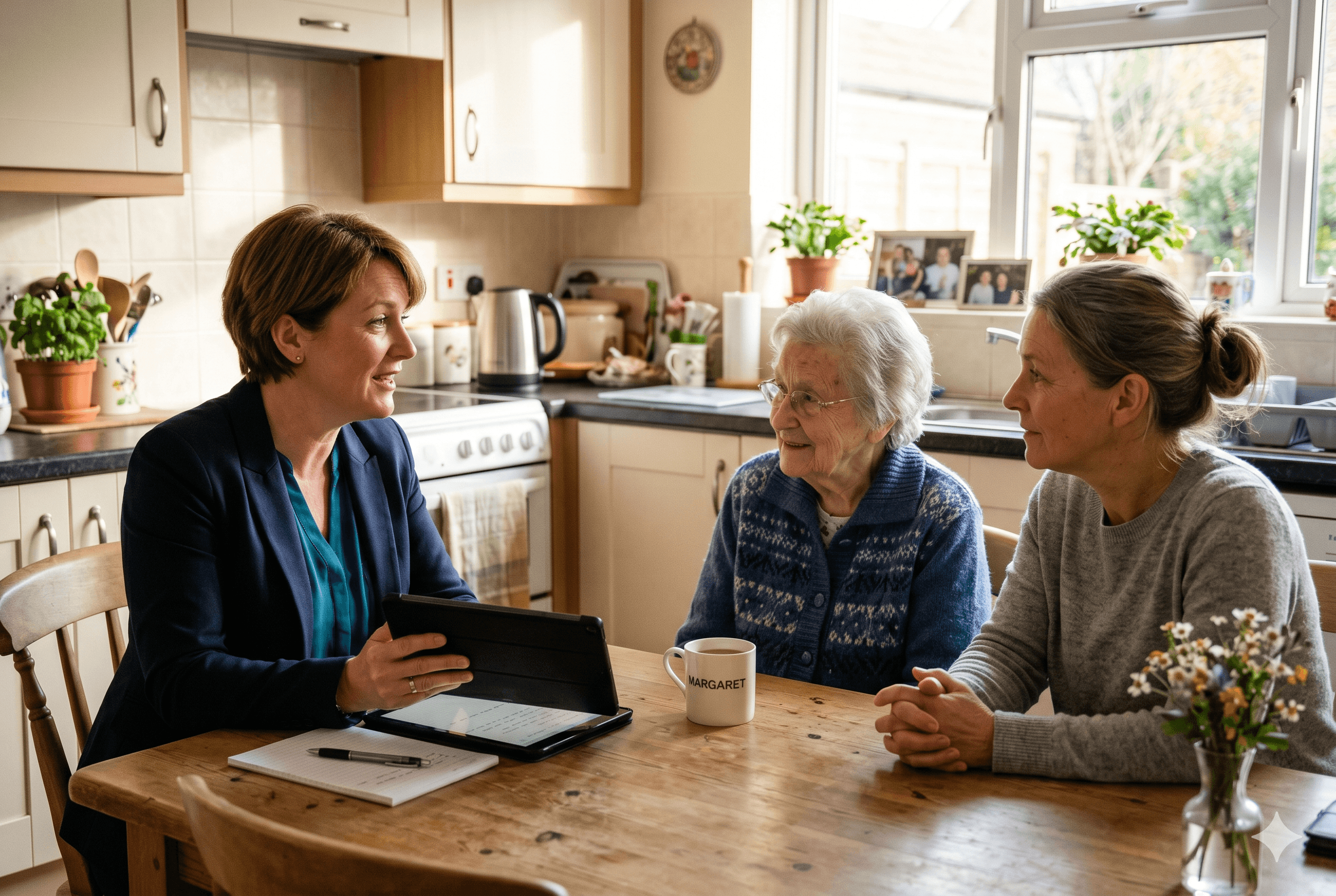
When a family reaches out to your agency, the clock starts immediately. Research shows that 81% of home care consumers choose the first agency that responds to their inquiry, and nearly half expect a response within one hour. For a small agency where the owner is also the intake coordinator, scheduler, and sometimes the caregiver, that window is brutally tight.
This playbook walks through every stage of the home care intake process, from the moment a lead comes in to the moment a care plan is signed, and shows where home care intake automation can eliminate the manual work that slows agencies down and costs them, clients.
Why Intake Is the Make-or-Break Moment for Small Agencies
Most small home care agencies do not lose clients because of poor care. They lose them before care ever starts, during the intake process, because a follow-up was slow, a call went undocumented, or a care plan took too long to arrive.
Intake is the first real experience a family has with your agency. Every delay, every missed detail, and every generic email sends a signal about how organized and responsive you will be once care begins. For owner-operators competing against larger agencies with dedicated intake staff, the intake process is where the gap shows most clearly, and where the right systems can close it fastest.
The five stages below cover the full intake journey. Each one includes the most common breakdown points and what a connected, automated workflow looks like in practice.
5 Stages of an intake journey
Stage 1: The Initial Inquiry
The intake process does not start when you answer the phone. It starts the moment someone finds your agency, whether through a Google search, a hospital discharge planner, a referral from a physician, or a mention from a neighbor.
Every inquiry that comes in is valuable. Leads in home care are genuinely scarce, which means a missed call or a slow follow-up does not just cost you a conversation. It costs you a client, and potentially tens of thousands of dollars in long-term revenue.
What Usually Goes Wrong Here
Most small agencies lose leads not because they lack empathy or expertise, but because they lack systems. A call comes in while the owner is on another call. A voicemail gets overlooked. A form submission sits in an inbox until Tuesday. By the time anyone follows up, the family has already signed with someone else.
This is the first stage where home care software with built-in call management changes the outcome. When calls are logged automatically, voicemails are transcribed, and every inquiry is attached to a contact record, nothing falls through the cracks.
Stage 2: The First Call
The first live conversation with a prospective client or their family is where trust is either built or lost. Your job in this call is to listen well, ask the right questions, and communicate that your agency can handle their specific situation.
What you should not be thinking about during this call is how you are going to document everything afterward.
The Documentation Problem After Every Call
Most intake coordinators spend 15 to 30 minutes after each call writing up notes, drafting a follow-up email, updating their contact records, and trying to remember exactly what the family said about the client's mobility limitations or medication schedule. That is not time spent serving clients. It is administrative overhead that accumulates and eventually overwhelms a small team.
Sage Care addresses this directly. After every call, Sage Care's AI generates a call summary, a draft follow-up email, and record suggestions based on what was discussed. You review, edit if needed, and approve in under five minutes. What used to consume half an hour now takes less than five.
This is also where having a home care CRM built into your intake workflow pays off. When call recordings, transcripts, and AI-generated summaries are automatically attached to the right contact record, you always have a complete picture of every client relationship without manually entering anything.
Stage 3: The In-Home Assessment
The in-home assessment is the most important touchpoint in the intake process. This is where you meet the client and their family in person, evaluate care needs, answer detailed questions, and begin building the relationship that will carry through the entire care engagement.
It is also, traditionally, one of the most documentation-heavy steps in the process.
Capturing Assessment Details Without Losing the Moment
The challenge with assessments is that the most important thing you can do during the visit is be fully present with the family. Taking notes on a clipboard or typing into a tablet while a family member explains their mother's condition is not a great experience for anyone.
Sage Care supports in-home assessment recording directly within the app. After the visit, the recording is transcribed and processed by AI, which generates a structured summary, flags key care needs, and drafts an initial care plan outline for your review. You come back to the office with everything documented and a draft already started.
This is particularly valuable for agency owners who are doing assessments themselves. When you are wearing every hat, anything that compresses post-visit admin time directly extends your capacity to take on more clients.
Stage 4: The Follow-Up Window
After the assessment, families almost always need time to discuss their options. This follow-up period, typically 24 to 72 hours, is where many agencies lose momentum.
The families who choose you in this window are the ones who feel like you stayed in touch, answered their questions quickly, and gave them confidence that you would be organized and responsive as their care provider. The families who drift away are the ones where the agency went quiet, sent a generic email, or took three days to send the care plan they promised.
Consistent Follow-Up Without Constant Manual Effort
Sage Care's AI-generated follow-up emails are not templated form letters. They are drafted based on the actual content of your call and assessment, so they reference the specific concerns the family raised and the services you discussed. Families notice the difference between a personal message and a mass email.
Because every follow-up draft is ready for review immediately after the call or assessment ends, you can approve and send within minutes instead of hours. That kind of responsiveness is hard to replicate without the right home care software supporting your process.
Stage 5: The Care Plan and Sign-Off
The care plan is the formal document that defines the scope of care, the schedule, the specific tasks caregivers will perform, and the expectations on both sides of the relationship. Getting it right is important. Getting it done quickly is also important, because delays at this stage create doubt.
From Assessment Notes to a Draft Care Plan
Agencies that are still manually converting assessment notes into care plans are spending hours on a task that should take minutes. With Sage Care, the AI-generated assessment summary includes draft care plan content that you can review, refine, and finalize. Bidirectional sync with WellSky and AxisCare means that once the plan is approved, patient data flows directly into your agency management system without duplicate data entry.
For a deeper look at how to evaluate the full software stack for your agency, the guide to non-medical home care software covers what to look for at each stage of agency growth.
Why the Whole Playbook Has to Work Together
Each stage of the intake process feeds the next. A missed inquiry means there is no call. A poorly documented call means the assessment starts without context. A delayed care plan means the family chooses someone else.
This is why point solutions, like a standalone CRM or a separate note-taking tool, only solve part of the problem. What small agencies actually need is a connected workflow where every stage of intake is supported, documented, and handed off without manual effort.
That is the vision behind Sage Care. One platform covers the inquiry, the call, the assessment, the follow-up, and the care plan, with AI handling the documentation at every step so your team can focus on the conversations that actually win clients.
For agencies still running intake on spreadsheets, the jump to a connected intake workflow is significant, but the payoff is real. Agencies that automate intake convert more leads, respond faster, and present a more professional experience without adding headcount. You can read more about what home care consumers say they want from agencies in this survey of 500+ responses before deciding where to focus your improvement efforts.
Ready to Improve Your Intake Process?
If your agency is losing leads because follow-up is slow or admin work is piling up, Sage Care was built to fix exactly that. The 30-day free trial gives you time to see how the full intake workflow, from first call to signed care plan, works in practice for your agency.
Schedule a demo and see how Sage Care can help your team convert more inquiries into signed clients with less effort at every stage.
Frequently Asked Questions
What is home care intake automation?
Home care intake automation uses software to handle the documentation and follow-up tasks that happen after calls and assessments, such as generating summaries, drafting emails, and updating client records, so staff spend less time on admin and more time with clients.
How long does the intake process typically take without automation?
For most small agencies, each intake cycle from first call to signed care plan takes three to seven days, with 15 to 30 minutes of manual admin work required after each call or assessment.
Does intake automation work for small agencies with one or two staff members?
Yes. Intake automation is especially valuable for small agencies because it extends the capacity of a lean team, allowing one or two people to manage the volume and responsiveness that would otherwise require a dedicated intake coordinator.


