The New Buyer’s Journey in Home Care: What Families Expect Today
How modern families choose home care and how intake automation keeps you competitive.

Sage Care Editorial
Content & Communications Team
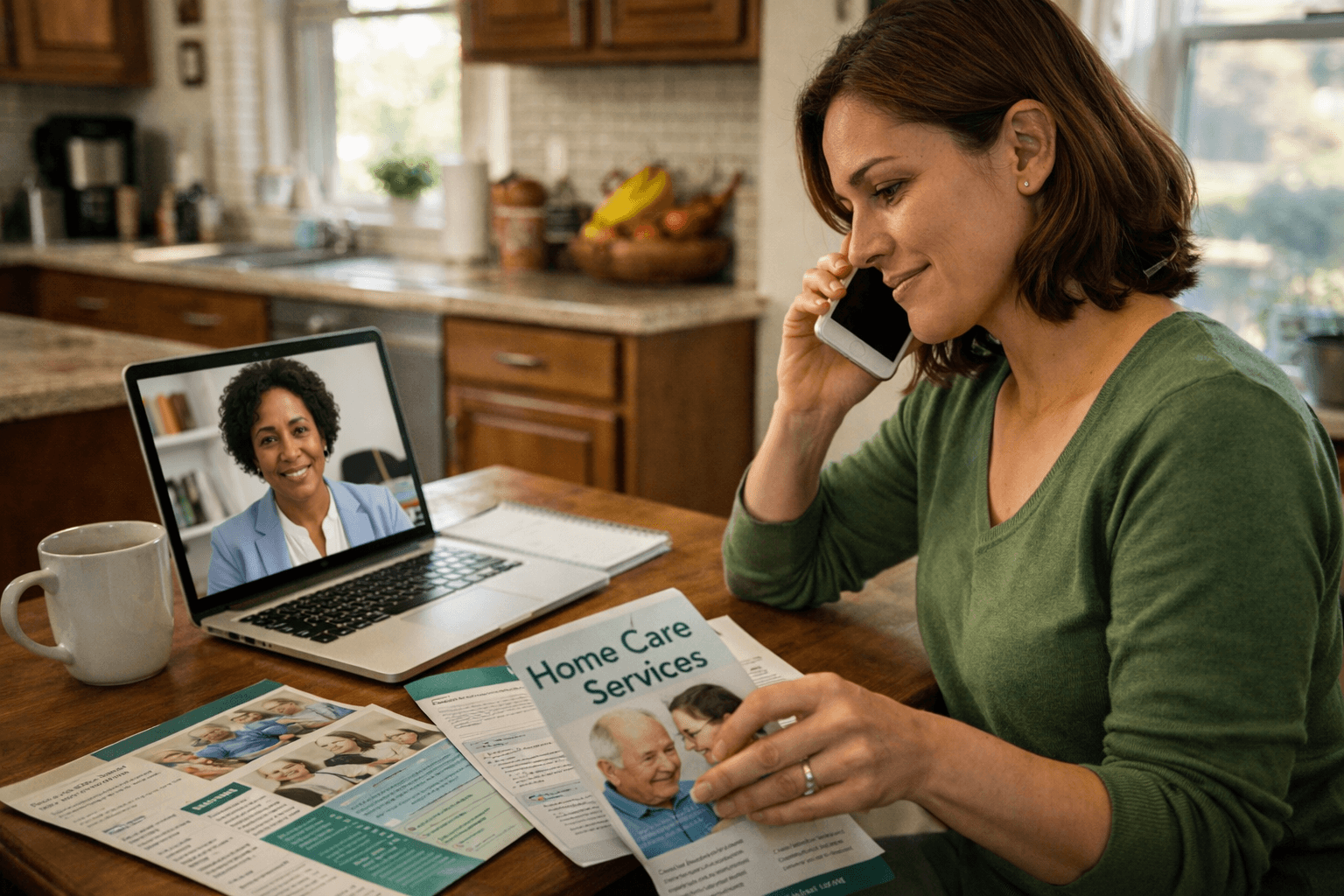
Families shopping for home care today behave very differently than they did even five years ago. They research more, compare more, and expect a level of responsiveness that many small agencies struggle to deliver consistently.
If you run a young home care business with a tiny team, understanding this new buyer’s journey is the difference between converting a hard-won lead and losing it to a larger competitor.
This guide walks through what that journey looks like now, what families expect at each step, and how home care intake automation and modern home care software help you keep up without adding headcount.
Step 1: Families begin with quiet online research
The journey usually starts long before a phone call. Adult children search late at night after a fall, a hospital visit, or a moment that makes it clear their parent needs help. At this stage they are looking for:
Clear explanations of services and pricing models
What the first weeks of care look like
Reassurance that you have handled similar situations
Your website and Google Business Profile are doing the first intake conversation for you. Educational content is what positions your agency as a trusted guide instead of just another option. That is why agencies investing in consistent content as part of their home care marketing strategy are discovered earlier and trusted faster.
AI search is also changing visibility. Tools pull from content that answers questions directly and clearly. When your posts explain things like the intake process or in-home assessments in the first few lines, they are more likely to be surfaced.
Step 2: First contact must be fast and human
Once a family reaches out, their expectations are simple and immediate. They want a prompt response, a calm voice, and proof that you understand their situation. For most small agencies, that call comes in while the owner is driving, staffing a shift, or handling scheduling. You do not need an AI receptionist. You do need a reliable way to:
Capture every inquiry
Log the details
Follow up quickly and consistently
A structured system that ties call activity, notes, and next steps together allows you to respond like a much larger organization. This is exactly the operational shift described in this guide to systemizing your agency from spreadsheets into a real home care CRM workflow.
With home care intake automation, the conversation becomes a structured note, a draft follow-up email, and a tracked opportunity in minutes instead of another task at the end of a long day.
Step 3: Families compare agencies side by side
Almost no one talks to only one agency anymore. Families will speak with two or three providers, then compare:
Who responded first
Who seemed prepared
Who explained the process clearly
Who sent a professional follow-up
Even if your care quality is excellent, you can lose out if your follow up is inconsistent. The new buyer’s journey expects professional, documented communication. A simple recap email with next steps can make your agency feel more organized and trustworthy than a larger competitor. That speed and consistency are exactly why AI call summaries help agencies win more clients.
A home care software that combines VOIP call recording, contact history, and AI generated summaries lets you send that recap without adding another task to the end of your day. Every call and in home assessment becomes a structured artifact in your home care lead management pipeline rather than a memory you hope to recall later.
Step 4: The in-home assessment is part of the decision
For many families, the in home assessment is no longer something they schedule after deciding on you. It is part of how they decide. They are evaluating:
How prepared you are
Whether you already understand their concerns
Whether you leave them with a clear next step
If you rely on paper forms and scattered notes, this step can feel improvised. With intake automation, you can walk into the home already equipped with a summary of prior conversations, known risks, and family dynamics.
Recording the assessment (with consent) and letting AI generate a structured care plan draft and follow up tasks means you leave the home with a clear, documented next step rather than a pile of notes you might not process for days.
With a structured intake workflow, you walk in with a summary of previous conversations and leave with a documented plan. This is the same operational improvement described in the journey from first inquiry to care plan approval.
Speed and clarity at this stage dramatically improve conversion.
Step 5: Fast start of care is now expected
Families assume that once they say “yes,” things will move quickly. Long delays between assessment and the first visit raise doubts and give them time to reconsider or call another agency.
The delay is rarely about willingness. It is usually about paperwork, manual data entry into your AMS, and back and forth coordination. If you already use an AMS like WellSky, having your home care software sync patient data and care plan details bidirectionally removes a big bottleneck.
When intake documentation flows directly into your AMS through integrations, the timeline shortens without extra effort. If you are evaluating how these systems work together, this guide on what an agency management system is and how it connects to intake explains the structure.
Step 6: Ongoing communication builds long-term trust
The buyer’s journey does not end at admission. Adult children expect consistent updates, especially in the first few weeks. And, a modern home care CRM with communication history and relationship mapping ensures every team member knows what has already been discussed.
When follow-ups are generated from real conversations instead of written from scratch each time, communication becomes steady and reliable. So, for a small team, this is how you deliver big-agency professionalism without adding staff.
How this new journey changes your operations
Understanding the journey is only the first step. To meet these expectations without burning out, three operational shifts matter most:
Capture every lead automatically
Turn every interaction into structured data
Reduce manual admin so you can respond faster
These are the same foundations behind measurable intake performance, outlined in these home care intake KPIs for tracking calls, conversions, and growth. The goal is not to change how you care. It is to remove the paperwork that slows you down.
How Sage supports the modern buyer’s journey
Sage is built for the high-value gap between first inquiry and start of care. It combines:
Home care CRM functionality for intake
Built-in calling and assessment recording
AI-generated summaries and follow-ups
AMS integrations for clean data flow
You still have the human conversations. Sage ensures they turn into structured next steps. For a lean agency competing with larger providers, that consistency is how you look and operate like a much bigger organization.
See how Sage fits into your buyer’s journey
You may not have hours for paperwork after every call. You do control how quickly and professionally you respond to families under stress. Sage streamlines the path from first inquiry to care plan without changing your process or adding complexity.
Schedule a demo and start your 30-day free trial to see how home care intake automation helps you convert more of your hard-won leads.
FAQ: The new home care buyer’s journey
How has the home care buyer’s journey changed?
Families now research online, compare multiple agencies, and expect fast, documented follow-up at every step.
Why do small agencies need intake automation?
It reduces administrative work so you can respond faster, stay organized, and convert more limited leads.
Does AI make the experience feel impersonal?
No. When used behind the scenes, it helps you capture details and communicate more clearly while keeping human relationships at the center.